Home planning
Pergola furniture in humid climates: plan cushion drying, storage and use after rain
Coordinate cleaning, drying and storage with the actual furniture and cushion instructions, using after-rain checks and household responsibilities to keep the space manageable.
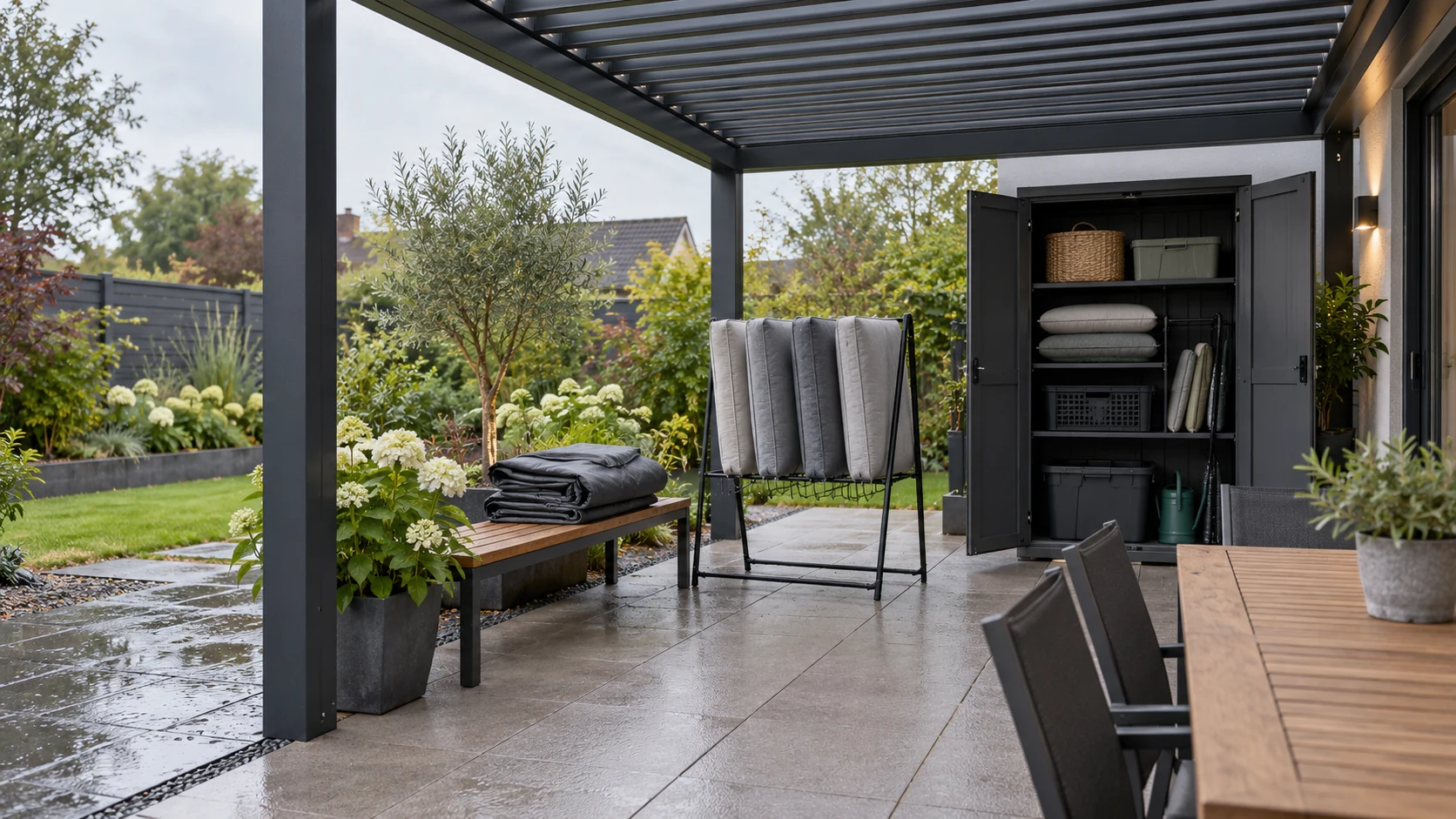
Check fabric, filling and furniture frames separately
Begin by collecting the separate instructions for cushions, pillows, furniture and covers. Outdoor use does not mean every item accepts the same cleaning method. Washable fabric does not establish that its filling can receive the same treatment, and a zip does not automatically authorize removing the cover. Check whether the fabric should air dry, whether the filling may get wet and whether removing the casing can affect its shape. Ask the furniture manufacturer before acting when the instructions are unclear. Record fabric, filling and frame requirements separately rather than treating one care method as suitable for the entire item. Keep labels and purchase records so household members can find the correct method later.
Provide real places for the after-rain routine
After rain, check each item's condition against its instructions before deciding what can be used and what needs cleaning or drying. Do not pack unfinished cushions into a cabinet simply to restore a tidy appearance. Provide a temporary care location that follows the furniture instructions, is easy to observe and reach, and leaves circulation clear. Test the storage cabinet with actual items, including doors, carrying turns and retrieval order. Furniture care remains governed by its own requirements; being under a pergola is no reason to skip checks or assume the upholstery will always stay dry.
Test the workload with a hypothetical weekend routine
Imagine a family leaving for several days after a weekend gathering. The many decorative cushions need attention, but suitable storage is missing. Fewer cushions kept outside and separate storage for guest items may suit the routine better than a larger decorative cabinet. Have the person responsible rehearse checking, carrying, placing and retrieving them, noting awkward steps. This hypothetical case predicts no drying time and sets no universal cushion count. It matches the scale of furnishing to the care the household accepts, instead of requiring an improvised rearrangement of everything after rain.
Build a short routine around events and instructions
Separate after-rain checks, post-gathering tidying and scheduled cleaning required by instructions, assigning responsibility and cover during absences. Include side-accessory use within its operating limits; seeking airflow does not justify operation in unsuitable conditions. Observe the real workload before changing furniture quantities or positions, without inventing a universal drying duration. Check furniture cleaners and pergola-finish care separately instead of transferring a method between surfaces.
At seasonal changes or furniture purchases, recheck storage capacity and carrying routes. If the household cannot sustain the routine, reduce rarely used accessories instead of hiding unfinished care in a cabinet. A brief record should show the next person what is complete and what still needs attention.
- Keep separate instructions for fabrics, filling, frames and covers.
- Rehearse checking, drying arrangements, carrying and storage with real items.
- Assign after-rain, post-event and scheduled tasks, including handover.
Can cushions labeled for outdoor use remain under the pergola indefinitely?
The label alone is insufficient. Check fabric, filling, cleaning and storage requirements separately, and inspect according to actual conditions. Establish suitable drying and storage arrangements before deciding how many cushions remain outside. Pergola cover does not replace care instructions, and a dry-looking surface should not be treated as proof that all care is complete.
More questions, practical answers →