Retractable awning choices
Can an awning with a sun sensor open safely on its own?
Automatic opening needs confirmed site clearance, operating limits and control priorities, not merely a test that brighter sunlight triggers movement.
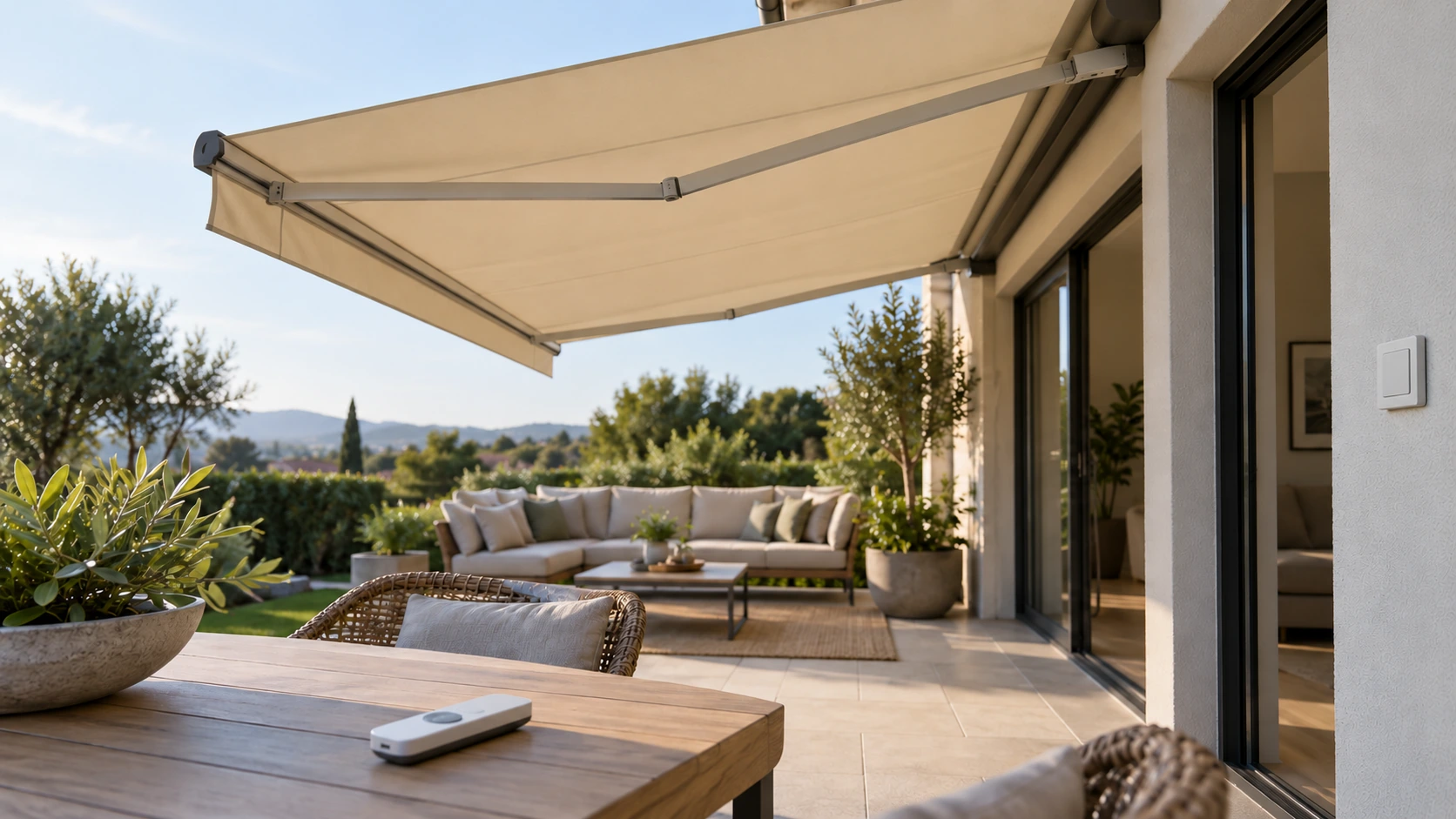
Define the need behind sunlight-triggered operation
Automatic opening in stronger sunlight may be intended to shade the patio or reduce direct sun at nearby windows. Those goals involve different occupied and unattended situations, so explain them to the supplier. A sunlight sensor acts on its designed input; it does not decide whether a drying rack, ladder or temporary furniture occupies the movement zone. Draw that zone and list objects commonly placed there. Where the patio changes frequently, discuss when automatic opening should be enabled alongside the clearing routine instead of leaving a default setting active indefinitely.
Verify control priorities and operating conditions
If the proposal also uses wind sensing, timers or phone control, ask how competing instructions are prioritized for that exact configuration. Another brand’s logic is not the default for this system, and sunlight automation does not automatically include weather protection. Confirm what prevents reopening, how users suspend automatic mode and what happens after power returns. Configuration should follow manufacturer documentation through the appropriate service provider. Include these points in handover requirements so the demonstration covers more than the attractive moment when increasing sunlight opens the awning.
Check occupied and unoccupied scenarios
Imagine an empty house while a cleaner works outside the windows. Uncommunicated automation could move equipment in that work area. Instructions should therefore cover cleaners, maintenance visits and temporary users as well as the household. Establish how automatic operation is suspended before work and who restores it afterward, following the selected system’s instructions. Do not stand in the movement zone to test detection unless a relevant manufacturer procedure is being performed by appropriate personnel. Scenario review should uncover missing responsibilities and communication, rather than challenge protective limits.
Treat automatic mode as a managed function
At handover, let regular users locate the automatic-mode control, understand available status information and know which settings require review after replacing controls. If feedback is unclear, ask how to verify the mode; lack of movement once is not proof that automation is off. Revisit arrangements before travel, seasonal shutdown or layout changes. The value of automatic opening depends on a clear shading objective and a routine users can maintain. Sun-triggered operation alone does not settle suitability; the actual system and site conditions must establish the complete operating arrangement.
- Identify whether automation serves patio use or indoor daylight.
- Confirm suspension, command priorities and power-return behavior.
- Include cleaners and service visitors in the suspension routine.
Can an awning with a sunlight sensor run unattended indefinitely?
A sunlight sensor alone does not establish that. Verify permitted conditions, clearance of the movement zone, automatic-mode suspension and other command priorities. Cleaning, servicing, travel and layout changes may require different arrangements. Follow the product instructions rather than treating sunlight triggering as complete weather or obstacle protection.
More questions, practical answers →