Retractable awning choices
An awning retracts when it seems calm: give support useful observations
Record timing, indicators, power and nearby changes instead of immediately blaming the motor or repeatedly resetting the system.
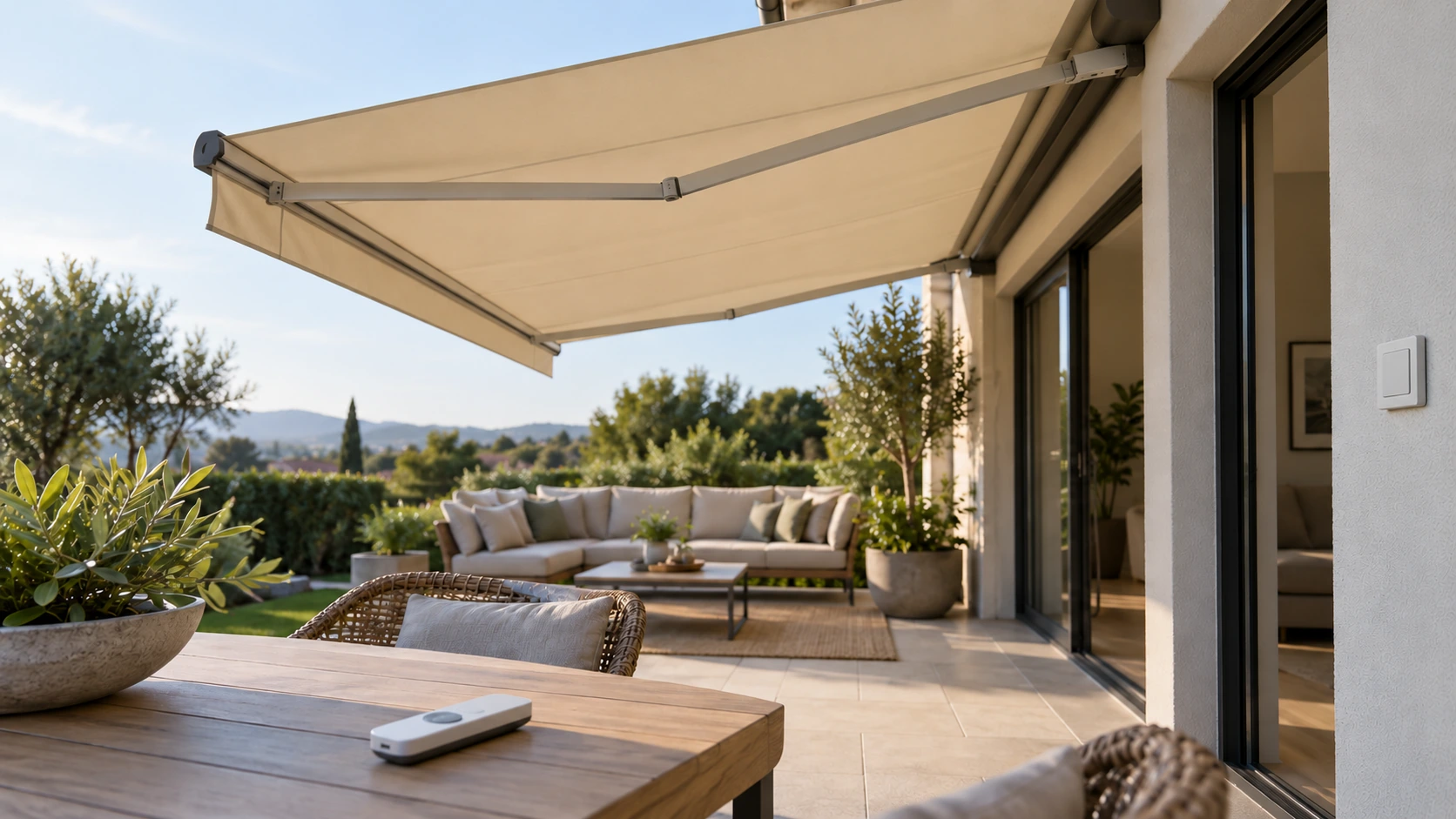
Separate apparent calm from a confirmed diagnosis
An awning retracting when the patio feels calm does not by itself diagnose a failed wind sensor. Detection methods, command sources and state logic vary by configuration. Record the time, previous position, any known user command and visible indicators. Do not repeatedly reopen it to prove the conditions are acceptable or remove the sensor to keep using it. Follow the instructions for stopping and contacting support if unusual sound, obstruction or other abnormal behavior occurs. Distinguishing observation from interpretation gives the technician a much better starting point.
A time record is more useful than repeated resets
Use a short record of intervals, recurring times, controller messages and recent changes to batteries, equipment or network settings. Retain relevant information without continuously recording private patio activity. If the system offers an approved diagnostic log, ask support how it should be used rather than entering unfamiliar settings. Repeated resets may remove useful evidence or change the condition being investigated. Include actions already taken, their timing and results so the provider can avoid repeating ineffective suggestions and distinguish the original symptom from subsequent configuration changes.
Review recent changes without assuming causation
A problem beginning after new phone automation is a useful clue, not proof of the sole cause. List configured remotes, switches, sensors and schedules for the provider to review against the actual system. Branch contact, rearranged objects or a battery change may also matter; report facts without overstating causation. Perform only checks permitted by the instructions. Do not bypass, disconnect or force protection out of service for diagnosis. Providing equipment identifiers and observations before a visit helps the technician prepare for the specific configuration instead of arriving with only a vague fault description.
Finish the request with concrete service questions
Ask support whether continued use is permitted, what additional observations are needed and which next actions belong to the user or a professional. Avoid demanding an unsupported remote guarantee or adopting generic threshold changes without applicable documentation. After service, record the confirmed cause, changes made and updated instructions. If the cause remains uncertain, preserve that status rather than declaring a repair complete. The objective is a traceable assessment and resolution, not assuming a lasting fix because the awning happened to stay deployed during one brief observation.
- Record timing, previous state, indicators and known commands.
- List recent replacements and added automation.
- Preserve symptoms and follow support instructions rather than repeated resets.
Does unexplained retraction in calm conditions mean the motor has failed?
Not necessarily. Record timing, indicators, known commands and recent configuration changes, then provide drive and sensor identifiers to support. Avoid repeated deployment, resets or sensor removal by trial. Ask whether use may continue and what checks are appropriate, recording a diagnosis or repair only after confirmation.
More questions, practical answers →