Design details
Wood-effect aluminium pergola: approving the finish
Prepare a wood-effect aluminium pergola finish enquiry with sample references, texture direction, component coverage and batch approval questions for the supplier.
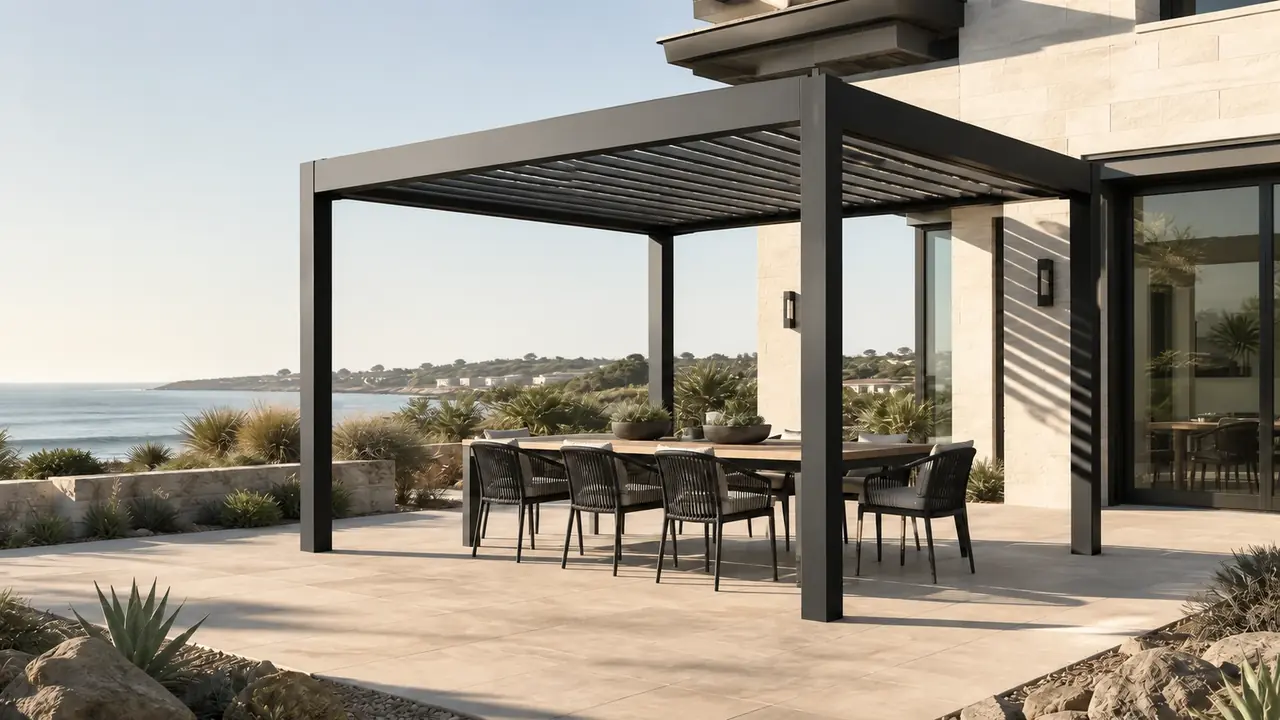
Approve a wood-effect aluminium pergola finish against an identifiable sample. A timber-coloured photograph leaves the surface process and component coverage unanswered. It also tells you little about the appearance at a joint.
Availability of a wood-effect finish for TTH models is unconfirmed. The following steps set out what to ask a supplier before approving one.
Get the finish reference
Ask for the supplier’s finish name or code and the proposed application process. Record which parts it covers. A sample on a flat panel cannot establish what will be supplied on posts or blades. Joints and caps need checking, along with the accessories.
List any parts that remain a different colour on the finish schedule.
The wood appearance is a surface choice. The structure’s material remains as specified for the product. Our aluminium versus timber lifecycle article helps separate appearance from the maintenance requirements and product documentation.
Look at the sample where it will be used
Where the supplier offers a physical sample, view it beside the actual facade and paving. Check the furniture against it too. Use the light conditions relevant to the site.
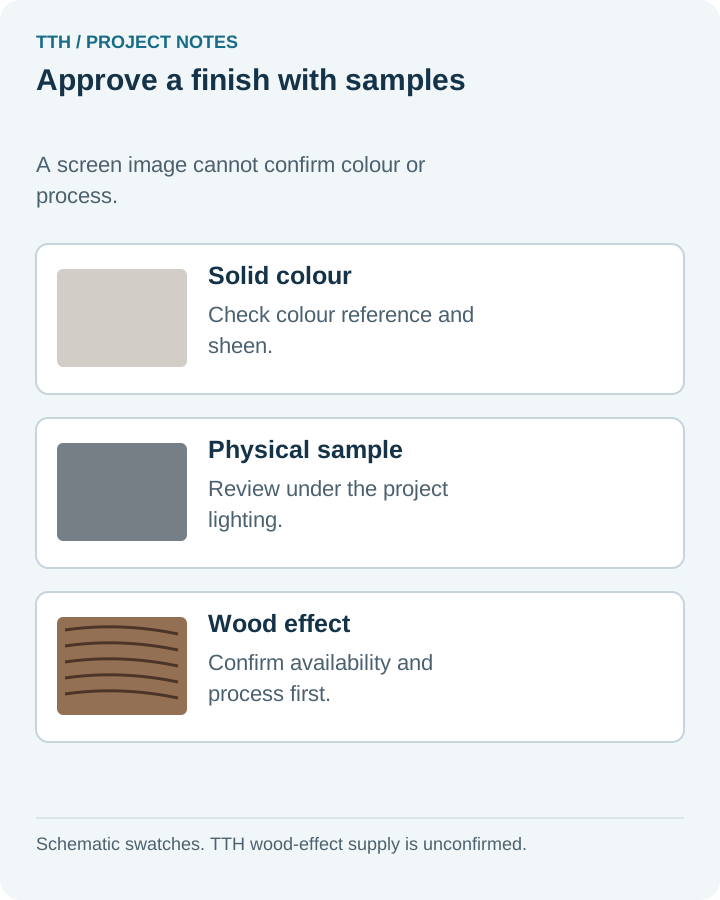
A screen image helps narrow the choice. Display settings and photography can change how the finish looks.
The colour sample guide explains the approval process. For a wood effect, inspect grain scale and pattern repetition. Check the sheen and the contrast between light and dark marks. Describe what the buyer accepts rather than approving an undefined “natural wood look”.
Mark the grain direction
Mark the desired grain orientation on a simple frame elevation, then ask whether it is achievable with the offered process and components. Long beams, vertical posts and corners may present the pattern differently. Check which faces are visible from the principal seating and arrival directions, and discuss how joints and end details will appear.
A continuous pattern across separate components needs confirmation. For a prominent joint, request a relevant detail or representative sample.
But keep renderings in their proper place. They can communicate a preference; they are not evidence of the finish on the proposed product.
| Approval item | Information to request | Record to retain |
|---|---|---|
| Finish identity | Supplier name, code and process description | Agreed finish reference |
| Component coverage | Included parts and contrasting elements | Marked component schedule |
| Texture and sheen | Pattern direction and available sample | Labelled approved sample or agreed reference |
| Order consistency | How the supplier identifies the supplied finish | Order and finish records |
| Future repair | Model-specific care and repair guidance | Instructions and supplier contact |
Keep the reference with the order
Keep the approved reference with the drawing revision and order. A proposed substitute needs another review before application.
For phased installations or repeat orders, ask how a later batch will be compared with the retained reference. Agree any limits on that comparison. An exact visual match across separate orders should not be promised without evidence.
The same approach matters for repair. The coating repair and colour records guide explains why a photograph alone is a weak basis for choosing a touch-up. Ask for the care instructions relevant to the offered finish, including what the supplier advises for cleaning and damaged areas. Do not borrow generic maintenance promises from another coating process.
Ask about availability before offering it to a customer
Review the TTH 145 / 175 family to identify the proposed model. Send the preferred appearance and sample requirements through the TTH enquiry form.
Ask whether the finish can be offered for that configuration and which components it covers. Request the approval information. If it is unavailable, compare confirmed alternatives. Keep the wood-effect request conditional until there is a written response.
Finish questions
Does “wood-effect aluminium” identify one coating process?
No. Treat it as an appearance description until the supplier identifies the actual finish and its process. Review the accompanying product and care information rather than infer performance from the name.
Can a photograph serve as the final approval sample?
It can communicate a preference, but appearance may vary across screens and lighting. Agree the approval method with the supplier and retain an identifiable reference rather than rely on an unlabelled image.
Will a replacement component match years later?
That cannot be assumed. Weathering, the supplied process and later batch differences may matter. Keep the finish reference and ask the supplier what comparison and replacement information can actually be provided.
