Retractable awning choices
Awning controls for a wheelchair user: test the whole approach
Let the actual user test the full route and operation, including stopping; switch height is only one part of reach, visibility and effort.
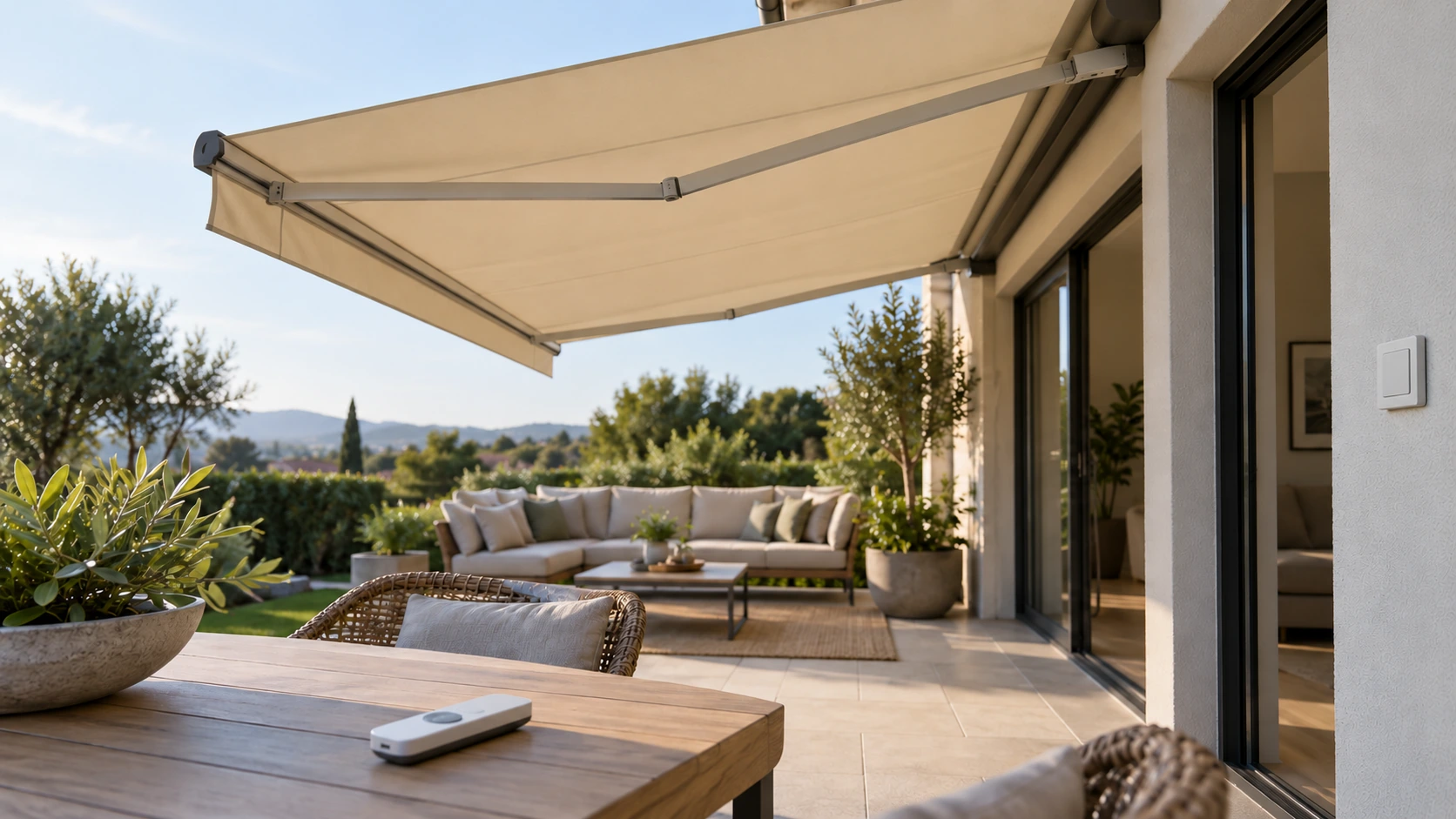
Begin with the route to the control
Start with whether the wheelchair user can reach the normal operating position, not merely whether a wall location looks low. Review thresholds, level changes, furniture and turning space with the actual user. Wheelchairs, posture and upper-body movement differ, so an installer reaching a button while standing is not a substitute for user involvement. Public or commercial settings also need assessment against applicable local requirements by appropriate specialists. This is a participatory trial method, not a universal set of dimensions or a compliance conclusion for every site.
Check posture and visibility while reaching
From an ordinary seated posture, let the user retrieve the remote, identify buttons, issue permitted commands and stop movement. Note excessive leaning, furniture obstructions or awkward wheelchair positions. A remote on a table is not automatically easier than a wall control; clutter, approach direction and storage habits matter. Retain the view needed during operation rather than trading visibility for reach. Phone control may supplement the arrangement if the user finds it suitable, but should not be assumed to suit everyone’s preferences or abilities merely because it is available.
Include shared use and storage in the trial
Imagine a successful demonstration followed by the family putting the remote in a high cupboard. Access has not truly been resolved. Agree a consistent reachable storage location and make sure other users maintain it. Furniture moves, charging or cleaning should not permanently consume the operating approach. Test ordinary conditions rather than emptying the patio for one successful photograph. If assistance is needed for particular steps, identify who provides it and whether the user accepts that arrangement instead of claiming independence while leaving essential help undocumented.
Carry the trial results into the purchase decision
Record the confirmed route, control position, button identification and storage arrangement as shared requirements for installation and handover. Keep unresolved difficulties visible while comparing alternative controls or layouts. Have the actual user review the final furnished condition, then recheck after remote replacement, automation changes or ground alterations. The objective is not a broad accessibility label attached to a product. It is a complete site arrangement that incorporates this person’s actual actions, preferences, autonomy and any support they choose to use.
- Include the actual user in route and control trials.
- Check seated reach, identification, stopping and visibility together.
- Agree consistent storage and restoration of furniture access.
Does lowering the awning switch make it suitable for wheelchair use?
Not necessarily. Assess approach, seated reach, identification, visibility and everyday storage with the actual user and normal furniture. Include stopping and any chosen assistance. Public settings also need applicable local requirements checked. One height or a standing adult’s reach cannot establish the complete experience.
More questions, practical answers →