Retractable awning choices
An older relative prefers a manual awning: test the actual routine
Respect the user’s preference and test handle storage, turning and closing together, comparing alternatives against observed difficulties rather than age alone.
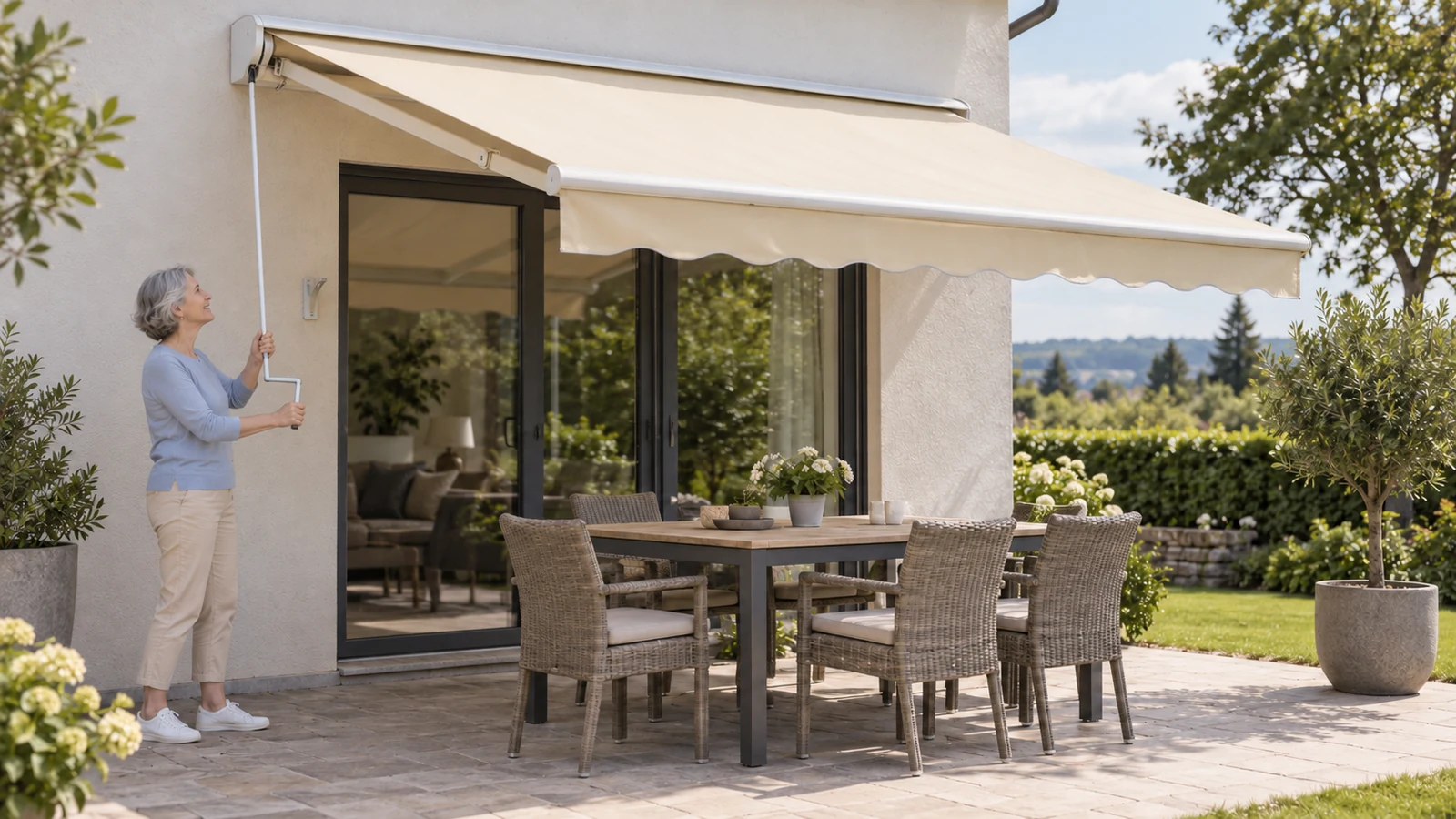
Understand the preference for manual operation
An older relative may prefer a physical routine, dislike phone dependence or simply be unfamiliar with other controls. Understand the reason instead of deciding from age alone. Compare actual selected equipment, not assumptions that all manual systems are difficult or all powered systems easy. Ask who uses the patio, when it opens and closes and whether independent operation matters. Family members can record requirements, but the strongest person’s successful demonstration does not establish suitability. A lasting choice should be understood and willingly used by the person who will operate it regularly.
Test from retrieving the handle onward
Do more than turn the crank a few times. Include retrieving it, approaching the position, performing permitted opening and stopping, retracting and storing the tool. Observe unstable posture, awkward reach or furniture conflicts while following the instructions. If showroom mounting differs greatly from home, ask how the site arrangement will work instead of treating the demonstration as conclusive. Record difficulty or unwillingness honestly rather than encouraging the person to push through it. The trial should reveal constraints, not become a test everyone is expected to pass regardless of their preferences.
Preserve choice when comparing alternatives
If retrieving the handle is difficult but turning it is acceptable, consider suitable storage and layout before changing the entire system. If sustained operation is burdensome, compare actual powered controls, indicators and service requirements against that specific difficulty. A phone is not necessarily the only interface, but the supplier must confirm available options. No configuration should be promised to cover every future physical change, and one successful trial is not permanent proof. Retain a clear service route so changing needs can prompt reassessment instead of leaving the user with an arrangement that has become impractical.
Let the user explain and operate at handover
At handover, repeat the trial with the real furniture and storage arrangement. Ask the user to explain normal steps, stopping and whom to contact for help. Family members can record support tasks without hiding all instructions inside an account accessible only to someone else. Separate professional adjustments from everyday operation. The final choice should reflect preference, site access and actual effort rather than assumptions about age. Respecting choice and checking practical use can coexist, making the equipment a tool the person wants to use rather than a recurring household disagreement.
- Understand preferences without deciding from age alone.
- Test retrieval, turning, stopping and storage as one routine.
- Review with actual furniture and retain service contacts.
Does operating a showroom crank prove a manual awning will suit an older user?
Check home mounting, handle retrieval, furniture and the complete closing routine. A few turns demonstrate only part of the experience. Respect the user’s preference, record difficulties and compare layout or control changes. Recheck operation, stopping and support at handover rather than relying on another family member’s judgment.
More questions, practical answers →