Commercial projects
Why a wedding pergola still needs a weather fallback plan
Plan ceremony changes, guest relocation, equipment and supplier coordination rather than treating a pergola as guaranteed all-weather capacity.
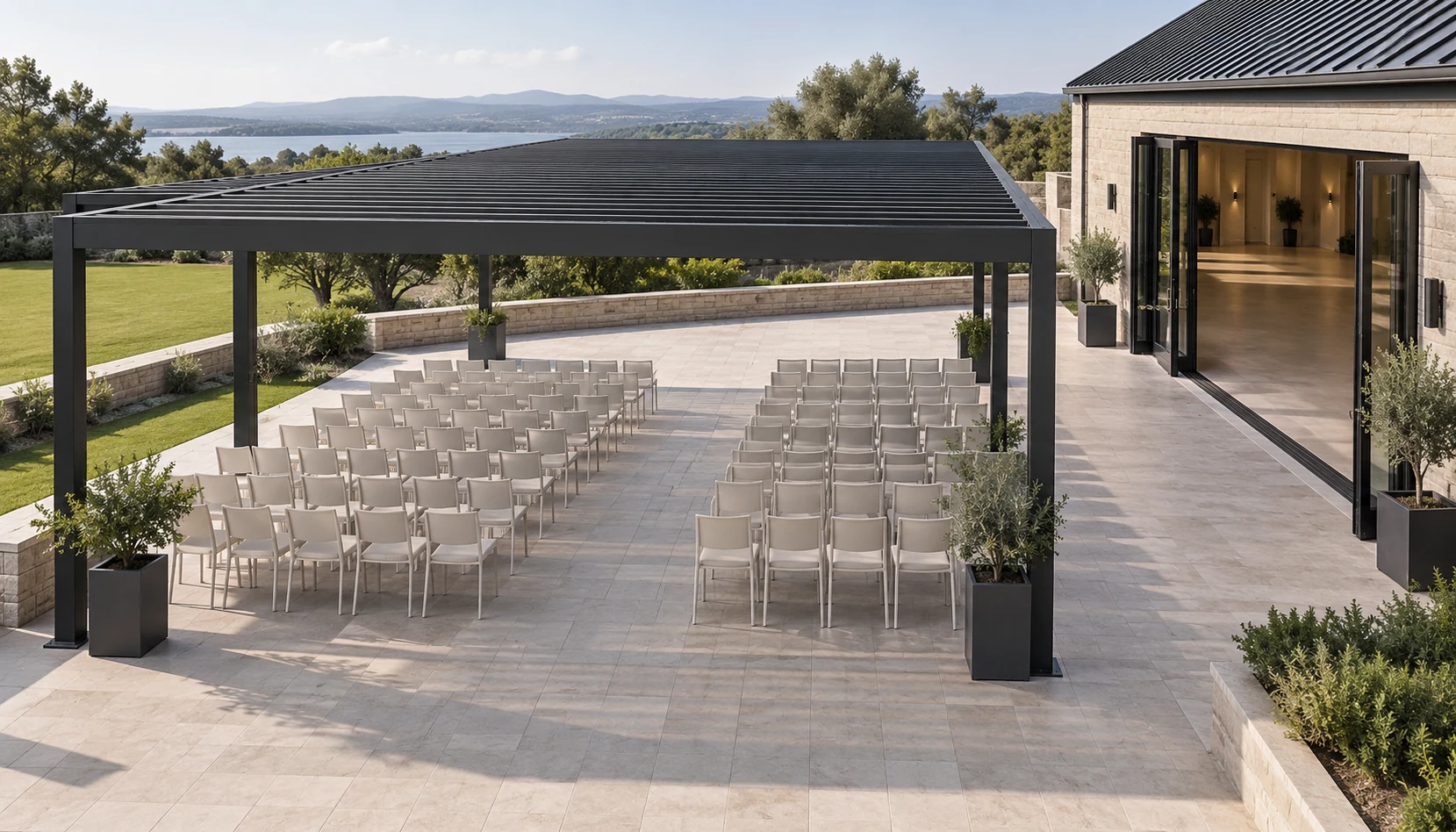
Separate ceremony needs from roof functions
A wedding pergola can organise a ceremony space, but the event also depends on arrivals, audio equipment, clothing, flowers and photography positions. Side wind, surface water or access disruption can affect an event even when the roof operates as instructed. Describe the actual configuration and conditions accurately rather than promising every-weather use. List essential seating, routes, backdrop and equipment requirements, then identify changes that make the original plan unsuitable. Site professionals should review capacity and applicable event requirements.
Assign the weather decision
A weather fallback cannot simply say use judgement on the day. The venue, planner and couple should know who gathers information, who decides and when suppliers need notification. Use venue procedures, equipment instructions and appropriate professional advice; this guide sets no universal wind or rainfall trigger. The process must remain workable during a busy event rather than leave every supplier waiting for someone else. A single coordinator and contact list help ensure photographers, the celebrant and caterers receive changes.
Rehearse separate routes for people and equipment
If a ceremony moves indoors, guests, flowers, speakers and setup crews should not all converge on the same doorway. Establish the guest destination first, then decide which equipment moves, which decorations remain and who retrieves them. Clearing work must not obstruct occupied routes or require staff to continue removing elevated decorations in unsuitable conditions. Set up the backup space with actual seating and equipment to confirm it supports the essential ceremony instead of relying on a contract’s brief mention of an indoor alternative.
Keep decoration within reviewed interfaces
Wedding flowers, drapes and lights are often finalised late, yet hanging items can change loading and access. Submit the real arrangement to those responsible for structure and equipment and use only reviewed interfaces. A light-looking item does not justify attaching it to louvers or moving linkages. Decorators also need to understand operating movement. Reassess any temporary enclosure instead of treating a short event duration as a reason to skip review.
Make the fallback a clear service process
Explain how the venue responds to changing conditions, not that weather can never affect an event. Booking information can outline notification, relocation and how associated costs are agreed. After the event, review what happened and update equipment positions and contacts so the next booking uses an improved arrangement.
- Name the decision-maker, notification channel and usable backup space.
- Rehearse guest movement, equipment transfer and decorations left in place.
- Have additional hanging items and enclosures reviewed by responsible parties.
Is an indoor fallback still needed when a wedding pergola roof can close?
Determine fallback needs from the site, equipment and event requirements rather than roof closure alone. Side wind, ground conditions, access and equipment can still affect the event. Assign the decision-maker, guest destination and supplier notification process, and verify that the backup space supports the essential planned activities.
More questions, practical answers →