Solar canopy decisions
Birds, Nests and Debris on Solar Carports: A Maintenance Plan
Plan responses to nests and debris on solar carports by coordinating drainage, electrical concerns, maintenance access and local wildlife requirements.
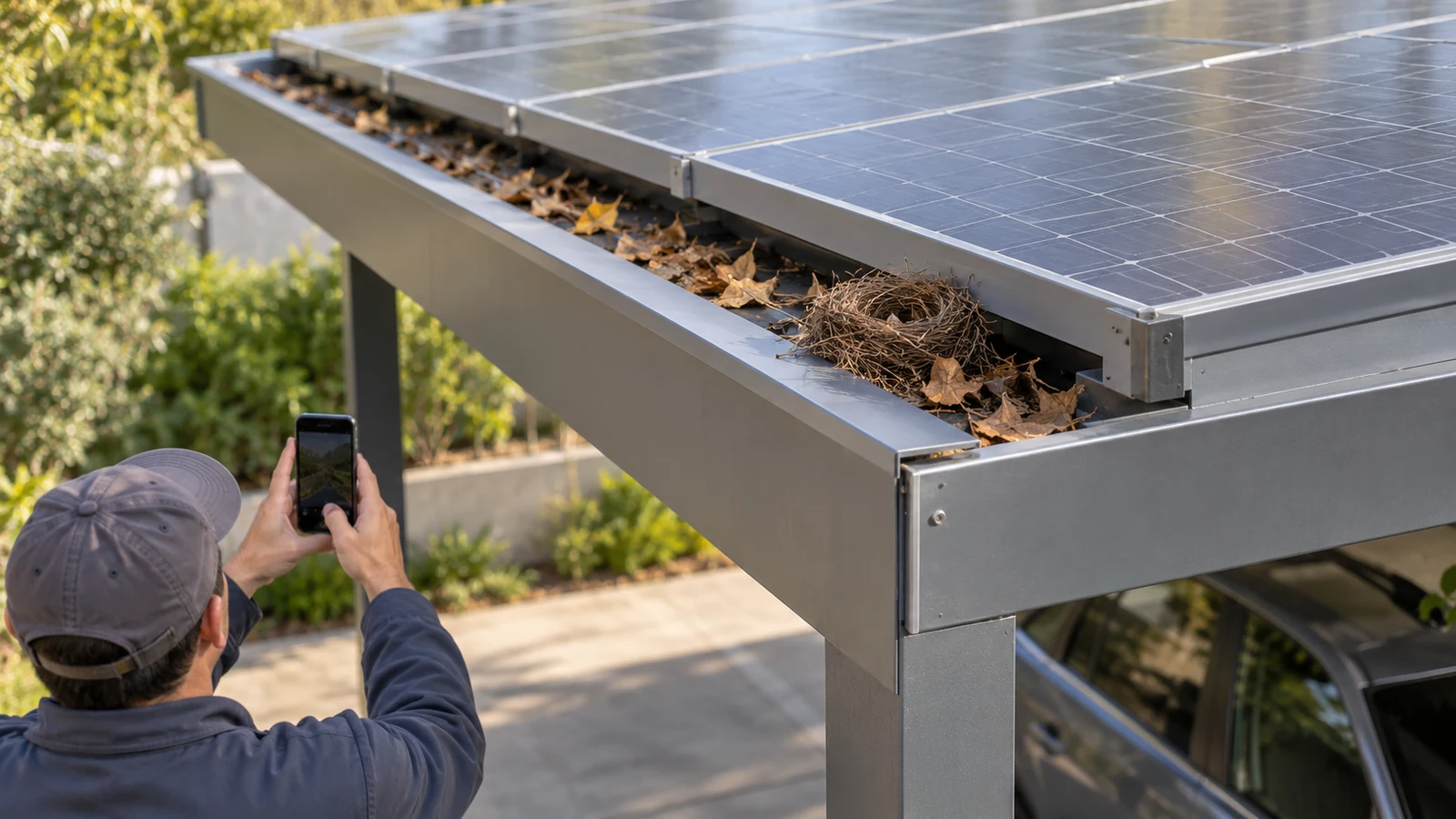
Record the situation before arranging removal
When nests, leaves or other debris appear, record their location and visible effects from a safe position. Drainage, maintenance access or proximity to cables may need attention, but ordinary users should not climb or reach into equipment to investigate. Send dates, locations and photographs to facilities and solar maintenance personnel so they can decide which specialists are needed. DOE maintenance and installation guidance supports environmental and access planning. Actual nest handling also requires checking local wildlife rules; general cleaning authorization does not mean removal is permitted at any time.
Separate cleaning, equipment and wildlife tasks
One accumulation can involve leaf removal, drainage checks, electrical assessment and an occupied nest, with different contractors responsible. Define scope, authority and restricted areas before work so cleaners do not continue beyond their competence. Avoid unspecified chemicals or indiscriminately sealing gaps. Mesh or other barriers may affect ventilation, drainage, access and equipment conditions, requiring design and supplier review. Species, timing and permission questions should be confirmed by personnel familiar with local requirements. A maintenance request should identify these interfaces instead of assigning every task under a general cleaning label.
- Record locations, dates and visible effects safely.
- Assign equipment, drainage and wildlife responsibilities separately.
- Review ventilation, drainage and access before adding barriers.
Review recurring locations before choosing a response
Imagine debris collecting at the same canopy edge each leaf season. Adding fine mesh may seem obvious, but an unreviewed barrier could impede drainage and worsen maintenance. Record recurring locations, nearby vegetation and access difficulties, then compare revised maintenance with reviewed protective options. For nests, establish activity and local handling restrictions before copying another site's method. The scenario shows why prevention needs assessment; it does not establish that any mesh material or attachment is suitable for a TTH structure or a particular solar module assembly.
Use work records to guide later checks
Handover should identify treated areas, equipment or drainage findings, remaining restrictions and follow-up checks. Retain approvals for materials and attachments so later teams can distinguish original design from additions. Site staff can continue observing without removing barriers or adjusting cables themselves. Reassess ineffective measures rather than accumulating unapproved accessories. The aim is coordinated equipment maintenance, site use and local environmental requirements, not a promise that birds or leaves will never return. Clear records also help the next contractor understand the limits of previous work.
Can cleaners immediately remove a nest beneath a solar carport?
First document it safely and check nest activity, local wildlife requirements and equipment proximity. Assign suitable personnel and timing. Any added mesh or closure also needs drainage, ventilation, maintenance and equipment review, with approvals retained.
More questions, practical answers →