Large pergola projects
A winery pergola during harvest: why the seasonal plan changes
Review visitor activity and production transport together for harvest-season pergola availability.
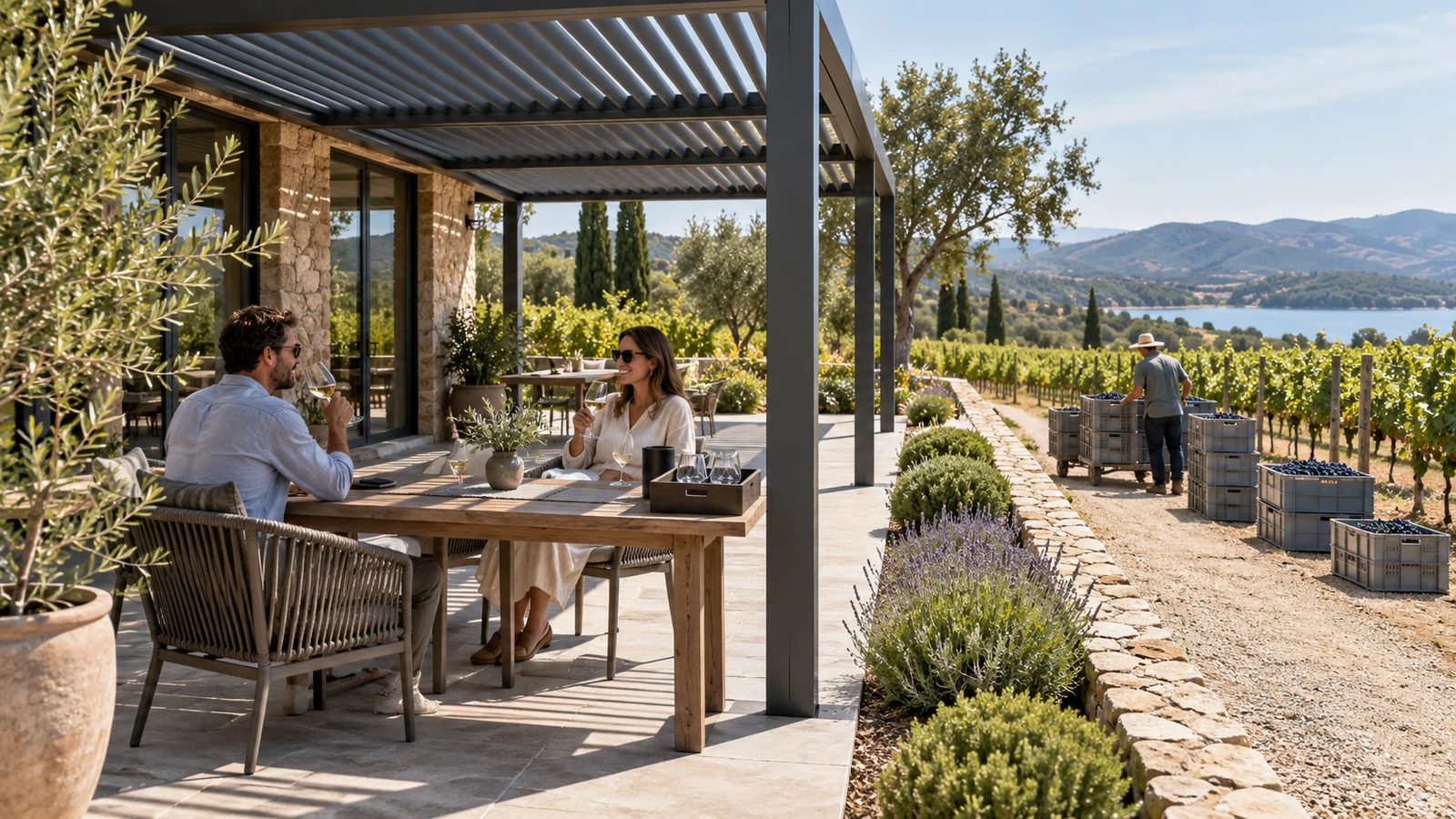
Put harvest work back into the site plan
Do not rely only on the ordinary visitor map during harvest. Production transport, receiving and staff tasks may increase alongside tours, so production and visitor teams should jointly confirm what remains open. UK workplace guidance can inform questions about pedestrians and vehicles; local requirements and site assessment determine the actual arrangements. This article gives no transport operating method or safety certification. Pergola planning should reflect harvest conditions rather than spacious quiet-season photographs, preventing a completed structure from revealing an unresolved conflict between hospitality and production.
Define visitor boundaries and pause triggers
Identify reviewed visitor, production and circulation areas, plus conditions that change or pause terrace use. A vague watch-for-vehicles note does not assign observation, decision or an alternative destination. Site specialists define suitable separation, signs and management; decorative barriers are not assumed protective equipment. Seasonal staff and temporary suppliers need current instructions relevant to their work rather than obsolete plans. Public directions should show necessary visitor guidance while internal production information remains managed appropriately, without exposing every operational detail for promotional convenience.
Test an unexpected production task
Suppose an additional production movement is scheduled while a visitor group waits on the terrace. Use a tabletop exercise to identify who receives the change, decides availability and guides visitors. Coordination should follow the site plan rather than ad hoc negotiation between a guide and driver. The example neither makes production subordinate to every booking nor automatically cancels the visit. It defines how changes travel between teams, with explicit states and owners instead of relying each harvest on a few experienced people remembering everything.
Record restoration after seasonal changes
Retain seasonal availability and exceptions, updating changed production, temporary facilities or visitor programmes. After harvest, verify physical restoration before reissuing an earlier plan. Keep product maintenance distinct from operations and avoid turning one open-day photograph into year-round availability.
Conditional zones should share their conditions with booking staff. A selectable name without current production status can create commitments the site cannot deliver. The retained seasonal record should support the next harvest with observed changes rather than requiring a fresh reconstruction from memory.
- Review the seasonal plan with production and reception.
- Assign availability-change triggers and owners.
- Verify restoration before resetting booking conditions.
Does a smooth quiet-season layout need a harvest review?
Yes. Review actual transport, temporary facilities and visitor activity together. Assign boundaries, change triggers and alternatives, synchronize booking status and verify restoration afterward rather than treating an old plan as current evidence.
More questions, practical answers →