Hardtop pavilion planning
A small wedding ceremony pavilion: backdrop and photography positions
Check ceremony focus, independent backdrops and camera positions alongside guest views.
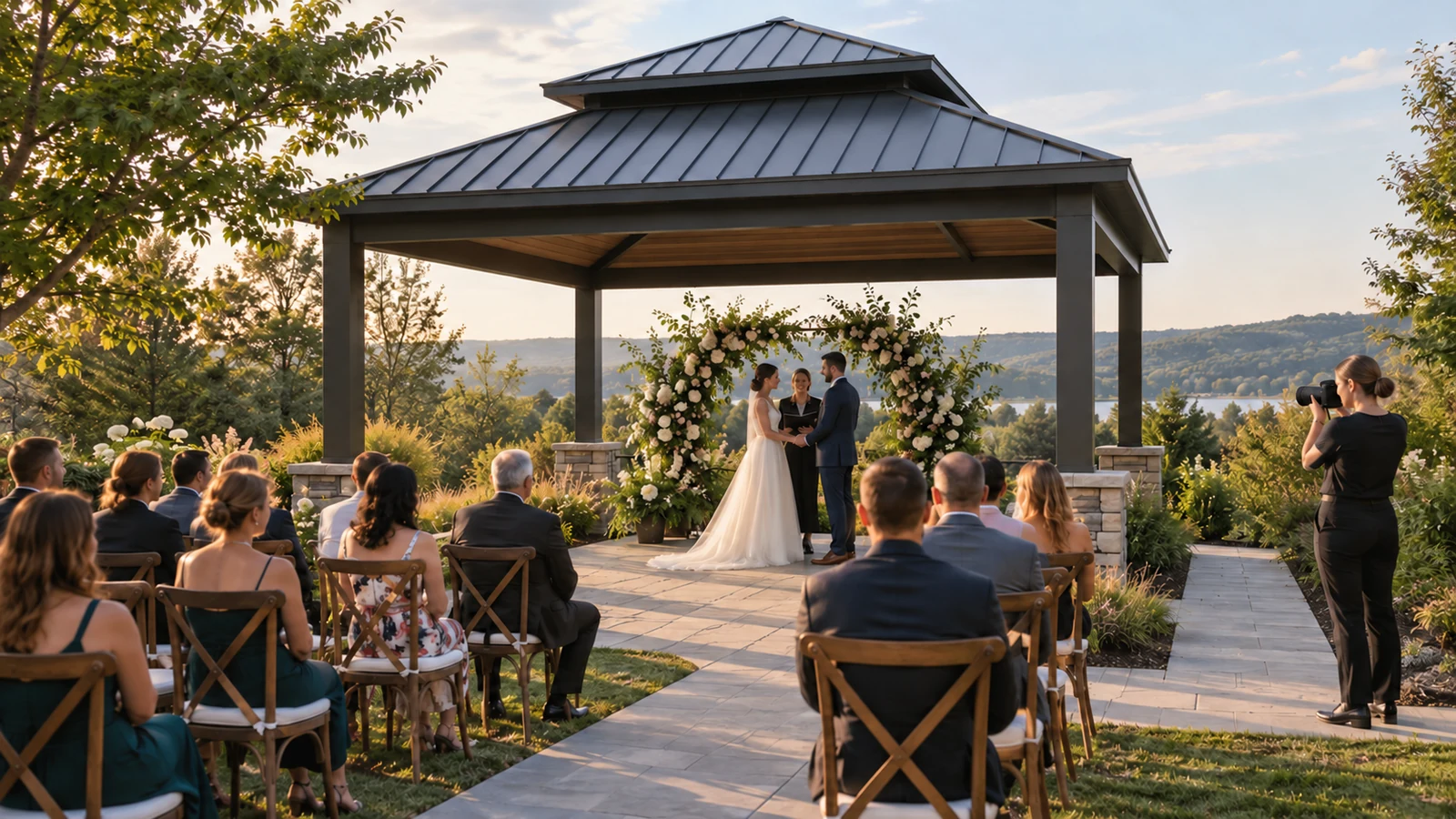
Define the ceremony focus
Start with the actual positions of the couple, officiant and other participants before choosing backdrop proportions. Roof and column boundaries may differ from the camera frame and guest views, so a front rendering is insufficient. Map standing, seated and arrival positions for the planner, photographer and venue together. This article does not assume structural capacity for floral or lighting equipment. Independent backdrops and temporary decorations have their own requirements, which need confirmation before arrival rather than an improvised connection to pavilion members.
Test photography and guest views separately
Rehearse with a representative backdrop outline and actual chairs. Check views from different seats while the photographer verifies distance and angles. Photography may involve movement, not one fixed camera icon. Include spaces behind columns, entrances and staff positions so recurring crossings are noticed before the ceremony. Test any curtain or decoration state used during the event. Venue planning determines the final seating and access arrangement; an attractive photograph does not establish suitability from every guest position or throughout the full ceremony.
Compare a larger backdrop configuration
Suppose a wider backdrop fills the frame but obscures some guest views and restricts camera movement. Before fabrication, use a non-attached outline to discuss size, participant positions or the photography plan with responsible parties. More space and a larger backdrop are not automatic solutions. Test each change against the actual ceremony sequence. If group photographs follow immediately, include arrival and departure for that activity too, so the ceremony and photography teams are not planning around incompatible assumptions.
Match event-day setup to the agreed version
Keep one final version identifying backdrop, independent equipment, participant positions and checked camera areas, with authority for last-minute changes. Recheck different furniture or accessories on the day. Remove decorations under their relevant arrangements and preserve the pavilion condition. Describe event photographs without treating external styling as standard supply or structural evidence.
Identify elements intended for photography separately from guest guidance. A temporary visual composition should not conceal an entrance or direction needed for the actual event.
- Set ceremony positions before backdrop proportions.
- Test seated guests and moving cameras separately.
- Share one version across venue, photography and styling.
Is a backdrop ready to use if it looks right in a front photograph?
Check guest views, camera distance and movement, and participant access. Rehearse the actual arrangement and confirm decoration requirements without assuming structural attachment. Keep venue, planner and photographer aligned on changes.
More questions, practical answers →