Retractable awning choices
A veterinary waiting awning: preserve supervision and clear routes
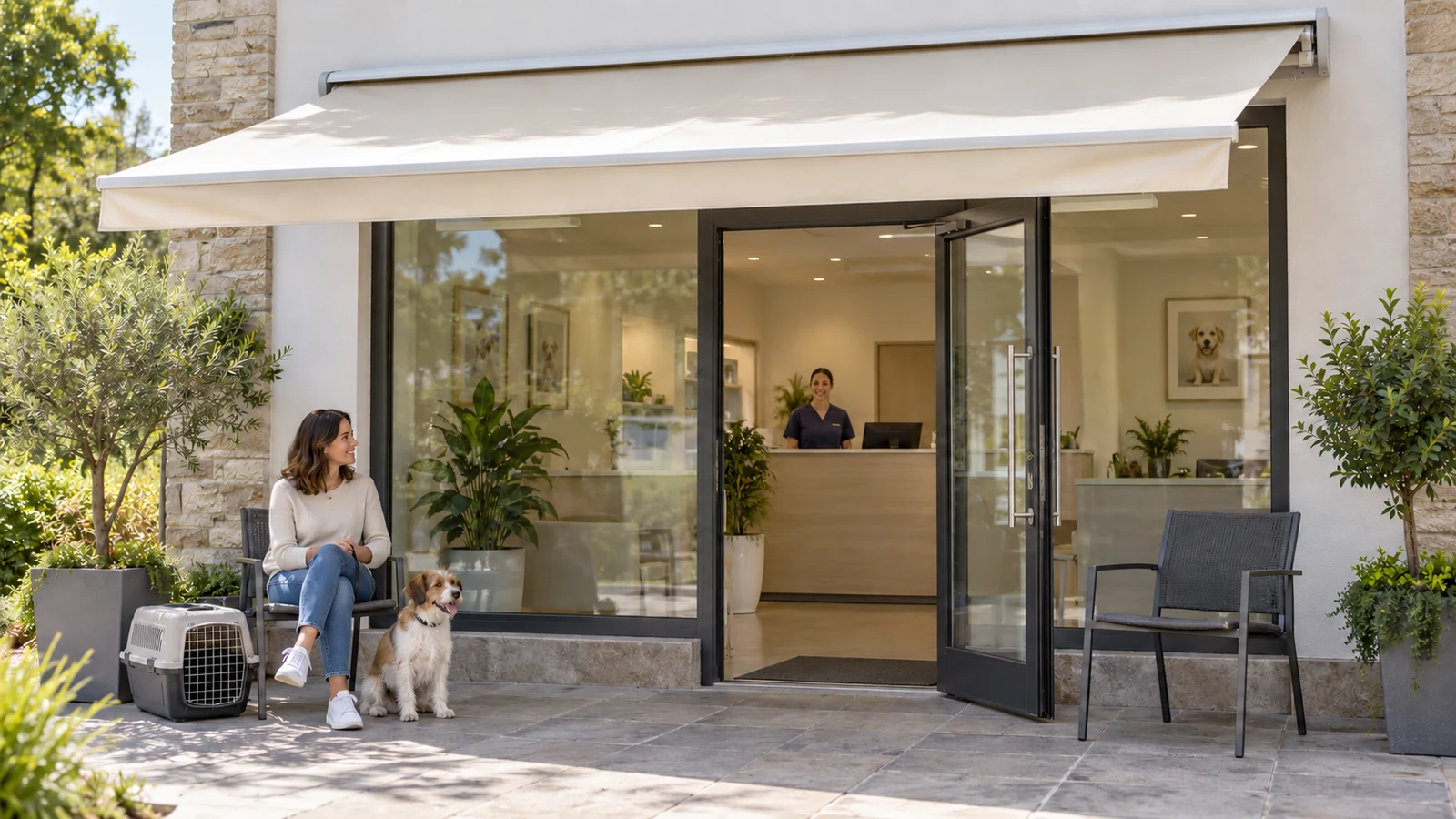
Include leads, carriers and reception sightlines in the waiting layout; shaded seating must remain compatible with supervision, circulation and equipment operation.
Understand how clients and animals arrive
An awning may be proposed to reduce indoor crowding, but outdoor waiting involves more than chairs. Record arrivals with leads, carriers, carts and accompanying people, asking reception and clinical staff which visual contact must remain. Shade is not a medical or behavioral guarantee, nor suitable waiting provision for every animal. The practice determines its waiting arrangements against actual service and applicable requirements. Procurement should follow those needs so carrier space and combined human-animal movement are considered instead of merely counting the chairs shown under a fabric outline.
Map lead routes and occupied seating together
Show the entrance, reception-visible area, occupied seating and route to consultation. Check where leads and carriers may enter circulation. A client beside a door may need space to pull out a chair, collect belongings and manage an animal simultaneously. Staff can simulate those movements without involving distressed animals in a layout trial. Appropriate people should review applicable access requirements; a small pet does not imply a small human circulation need. Clear routes also support the practice’s chosen calling and escort process rather than leaving staff to navigate around ad hoc obstructions.
Coordinate operation with waiting-area management
Assign instructed equipment operation to staff who can observe the required area and communicate with reception, keeping controls out of casual customer use. Use the agreed temporary waiting alternative during cleaning, service or necessary state changes rather than testing abnormal movement among clients and animals. If automation is included, verify its actual role without assuming sensors detect every lead or object. Reception needs an explicit availability state, not merely a view of deployed fabric, and that information should pass reliably to relief staff.
Treat outdoor waiting as an adaptable service arrangement
Weather, clinical needs or site changes may alter whether the outdoor area is used. The practice should provide clear alternatives rather than advertise an all-weather animal-waiting guarantee. Procurement and handover can review seats, sightlines, equipment position and maintenance scope, recording unobserved conditions. Reassess routes and movement after fences, signs or cleaning facilities are added. A suitable arrangement supports the practice’s supervision and service routine, making waiting and guidance understandable instead of adding a patch of shade disconnected from how clients are actually managed.
- Record arrivals with leads, carriers and accompanying people.
- Preserve reception sightlines and the full consultation route.
- Assign equipment operation and a temporary waiting alternative.
Are more shaded seats always better outside a veterinary practice?
Start with supervision, leads, carriers, circulation and the practice’s waiting routine. Fitting empty chairs does not establish usable occupied space. The practice should decide when outdoor waiting is appropriate and provide assigned operation and alternatives. Shade is not a universal medical or comfort guarantee for every animal and condition.
More questions, practical answers →