Hardtop pavilion planning
A bicycle repair pavilion: work stands, removed wheels and customer space
Plan a repair pavilion around work stands, bicycle movement and removed wheels.
Define the repair activity
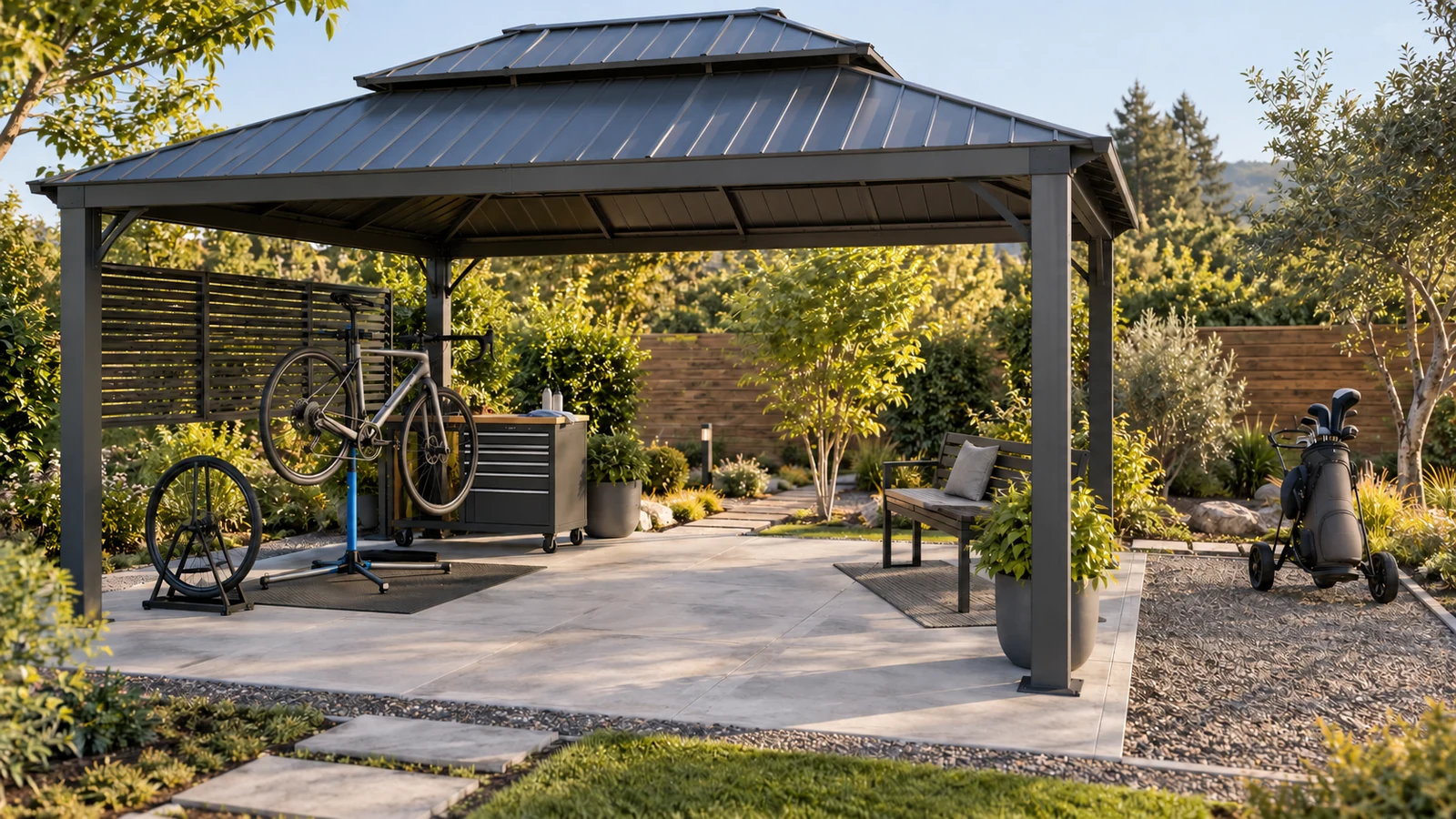
Define the intended repairs and independent stands before planning a bicycle repair pavilion. A parked bicycle photograph does not represent turning, removed wheels or people moving around the work. Map deployed equipment and bicycle length within the usable column boundaries, including any waiting customer. Confirm pavilion and equipment responsibilities separately. A column is not an assumed clamping or pulling point. Use equipment under its own instructions and obtain specific approval for any proposed connection rather than changing structural use to avoid providing a proper stand.
Give removed parts defined locations
Assign temporary positions for wheels, tyres, toolboxes and packaging instead of treating every unused patch of floor as storage. Check open cupboards, extended drawers and tool return against the bicycle and customer exit. Manage cleaning supplies, spare components and personal belongings under the activity requirements. Charging or other specialist equipment needs its own environmental assessment; a roof does not establish long-term storage suitability. Include floor conditions, task lighting and waste arrangements in the complete operating plan rather than assuming the structure quotation supplies them.
Test customer waiting during wheel work
Suppose a customer asks about the repair while a worker needs to move a removed wheel. Rehearse without performing the repair to see whether the visitor stands in that movement path. Adjust the explanation point, tools or waiting position as needed. Include arrival and departure, since longer bicycles may turn differently. The exercise does not prescribe a universal width or number of serviceable bicycles. Confirm the layout using actual vehicle types, equipment and site requirements with the people who will operate it.
Distinguish working and non-working layouts
If the pavilion also hosts rest or reception, define where stands, loose parts and unfinished bicycles go afterward. Keep opening and closing records identifying work still in progress. Reassess new equipment or bicycle types rather than carrying forward an old layout conclusion. Separate the pavilion, independent repair facilities and operating support in procurement.
Where display and repair bicycles share the site, identify their status explicitly. Location memory alone becomes unreliable as soon as furniture or vehicles are moved.
- Check deployed equipment and repair movements.
- Assign wheels, tools and customer waiting positions.
- Rehearse again when vehicles or equipment change.
Can a pavilion column serve directly as a bicycle repair support?
Do not assume so. Use suitable independent equipment under its instructions and confirm any structural connection specifically. Map turning, removed wheels, tools and waiting customers before accepting the layout.
More questions, practical answers →