Retractable awning choices
Umbrella or retractable awning when your patio seats keep moving?
Map changing seat positions, then compare the umbrella base, fixed awning reach and daily closing routine instead of choosing by nominal shade area.
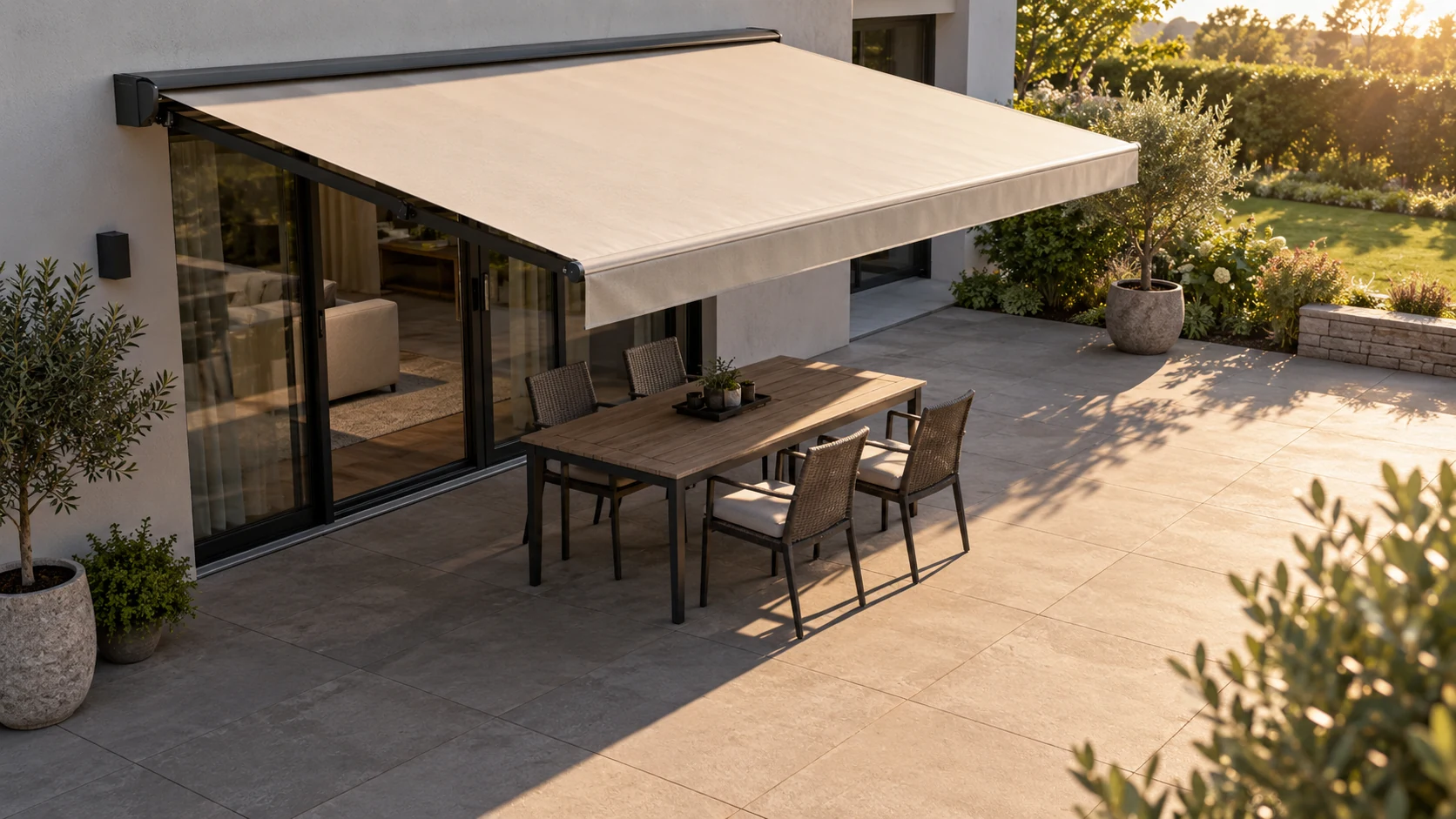
Start with why the seats move
Seats may move to follow shade, clear space for children, dry laundry or accommodate visitors. These reasons lead to different choices. If one dining table moves only slightly between morning and evening, examine the fixed awning shadow during those hours. Activities at opposite ends of the yard call for a comparison with movable shade or separate fixed systems. Overlay weekday, weekend and visitor layouts, marking where people actually sit. This reveals why furniture moves and prevents buying a larger system that leaves the original inconvenience unresolved.
Account for the base and the mounting wall
An umbrella can change position, but its base, handling and storage remain part of the proposal. A large model is not automatically practical for one person to move frequently. A folding-arm awning may leave the ground free of front posts, yet requires verified mounting conditions and cannot follow the chairs. Draw the actual umbrella base as occupied space and request its handling instructions. On the alternative plan, show the awning mounting zone and deployment envelope. Neither an omitted base nor an apparently empty wall is a reliable design assumption.
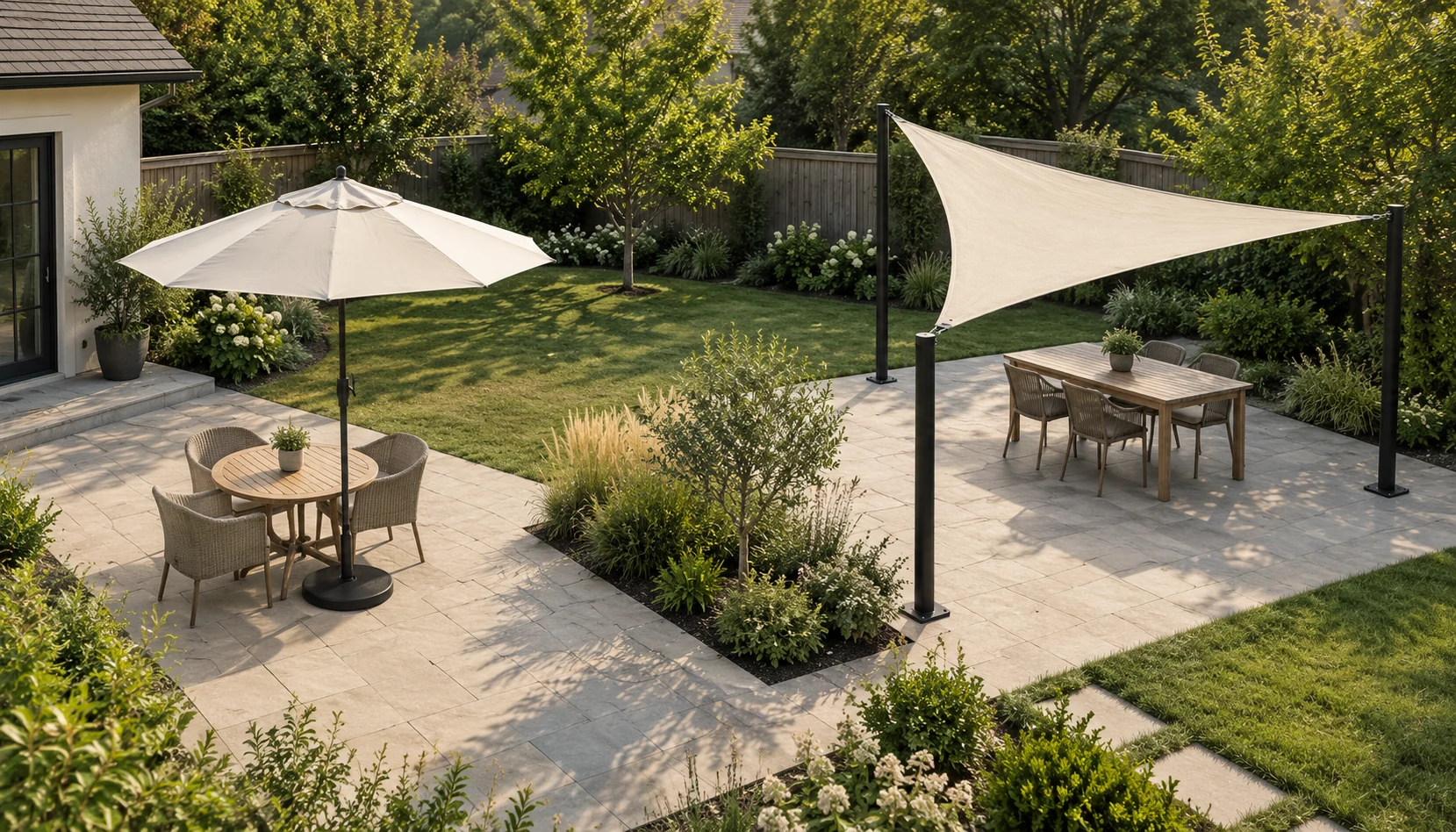
Compare one complete layout change
Test a hypothetical weekend: play space in the morning, two loungers later and a dining table in the evening. Record who moves each item, the route taken and when shade equipment is stowed. Check whether bases or handles obstruct household members with limited mobility and whether one person can realistically manage the change. This compares routines rather than assigning wind resistance to either category. Follow the purchased equipment instructions and site arrangements as weather changes; portability or retractability does not establish suitability for continued use in adverse conditions.
Choose around the effort of resetting the space
Compare a complete cycle: opening, adjusting, stepping away and returning the patio to its evening state. A fixed dining focus may favor equipment that reduces ground-level rearrangement; genuinely changing activities may justify a movable option with suitable storage. Neither observation establishes price or lifespan without product details. Tell the supplier which daily tasks you will not accept and request an operating demonstration. Include bases, controls, installation and required storage accessories in quotations so each option represents a complete, usable arrangement rather than an attractive deployed photograph.
- Overlay three furniture layouts and occupied seating positions.
- Include bases, carrying routes and awning mounting requirements.
- Compare the complete opening and closing routine yourself.
Do frequently moved chairs always mean an umbrella is better?
No. Determine whether chairs move to follow shade or because activities change location. Small adjustments around a fixed table may be addressed by an appropriate awning shadow, while genuinely separate activity zones deserve a movable-shade comparison. Include base space, permitted handling and storage.
More questions, practical answers →