Large pergola projects
A hotel terrace waiting pergola: distinguish waiting and seated service
Distinguish terrace waiting from seated service through calling, belongings and escort movements.
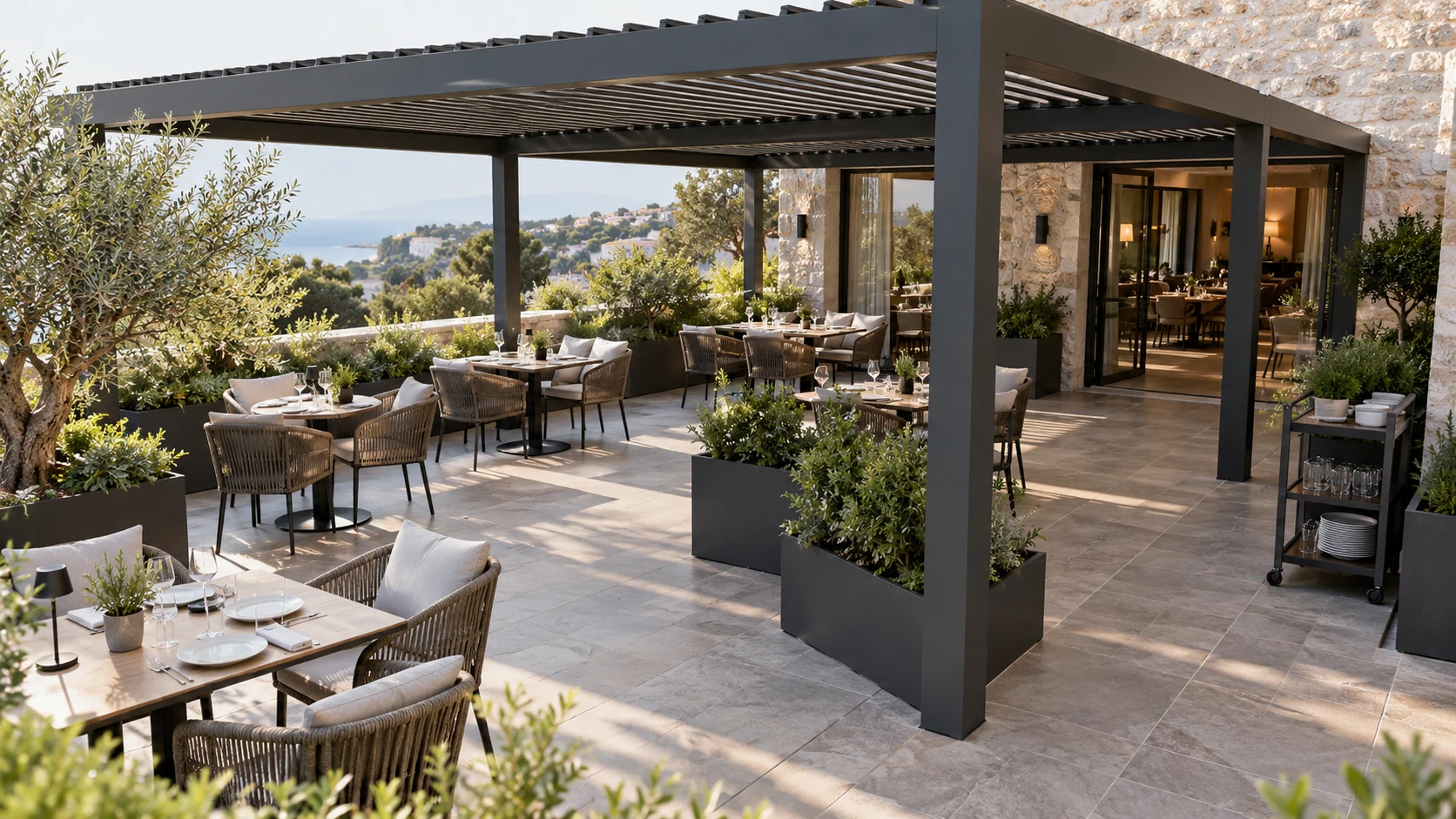
Define what guests are waiting for
Define whether the pergola hosts table waiting, companions or reception before deciding the service offered. Waiting guests and seated diners differ in duration, belongings and staff contact, so one seating chart can hide important distinctions. Identify the boundary, contact point and escort process so guests understand their status. A large pergola offers space but does not automatically increase operating capacity or create dining tables. This guide addresses waiting and handover rather than deriving attendance from roof area or treating temporary chairs as proof of restaurant expansion.
Give calling and escorting a receiving position
Map reading information, receiving a call, collecting belongings and joining the escort, checking effects on occupied tables. Include representative bags, umbrellas and pushchairs rather than seated outlines alone. Use concise help guidance, with the operator choosing the calling method. If refreshments are offered while waiting, assign vessels and collection so departure does not leave unowned items. The waiting-to-dining handover should tell staff who takes responsibility next, not merely point the guest toward an approximate location and assume reception is complete.
Test two groups being called close together
Suppose two groups are called close together as another arrives and someone asks about the expected wait. Rehearse with representative belongings and staff to see whether standing and questions converge at one receiving point. Review calling sequence, enquiry position or roles with restaurant operations. No particular technology or shorter-wait promise is implied. The exercise shows the space and information needed when waiting states change, rather than judging suitability only while everyone sits still and discovering conflicts during active seating service.
Make the end of waiting explicit
Update status when guests are seated, cancel or leave, handling loaned and unclaimed items through the process. An empty chair does not prove the waiting record is closed. Hand over pending contacts between shifts and recheck changed furniture or entrances. Describe the actual service without implying additional dining or privacy guarantees.
When the area is unavailable, align booking and on-site directions with the real receiving position so guests are not navigating by outdated photographs or a former waiting arrangement.
- Distinguish waiting, reception and seated service.
- Test calling, belongings and escort together.
- Update departure and dining-handover states.
Do extra waiting chairs constitute additional dining capacity?
No. Waiting and dining have different operating requirements. Confirm the intended use, belongings, calling and escort process, and update state after seating or departure. Chair count alone does not establish service capacity.
More questions, practical answers →