Hardtop pavilion planning
A vented gazebo roof in slanting rain: trace the water path
Use sections, openings and water locations to ask precise questions about a vented roof in slanting rain.
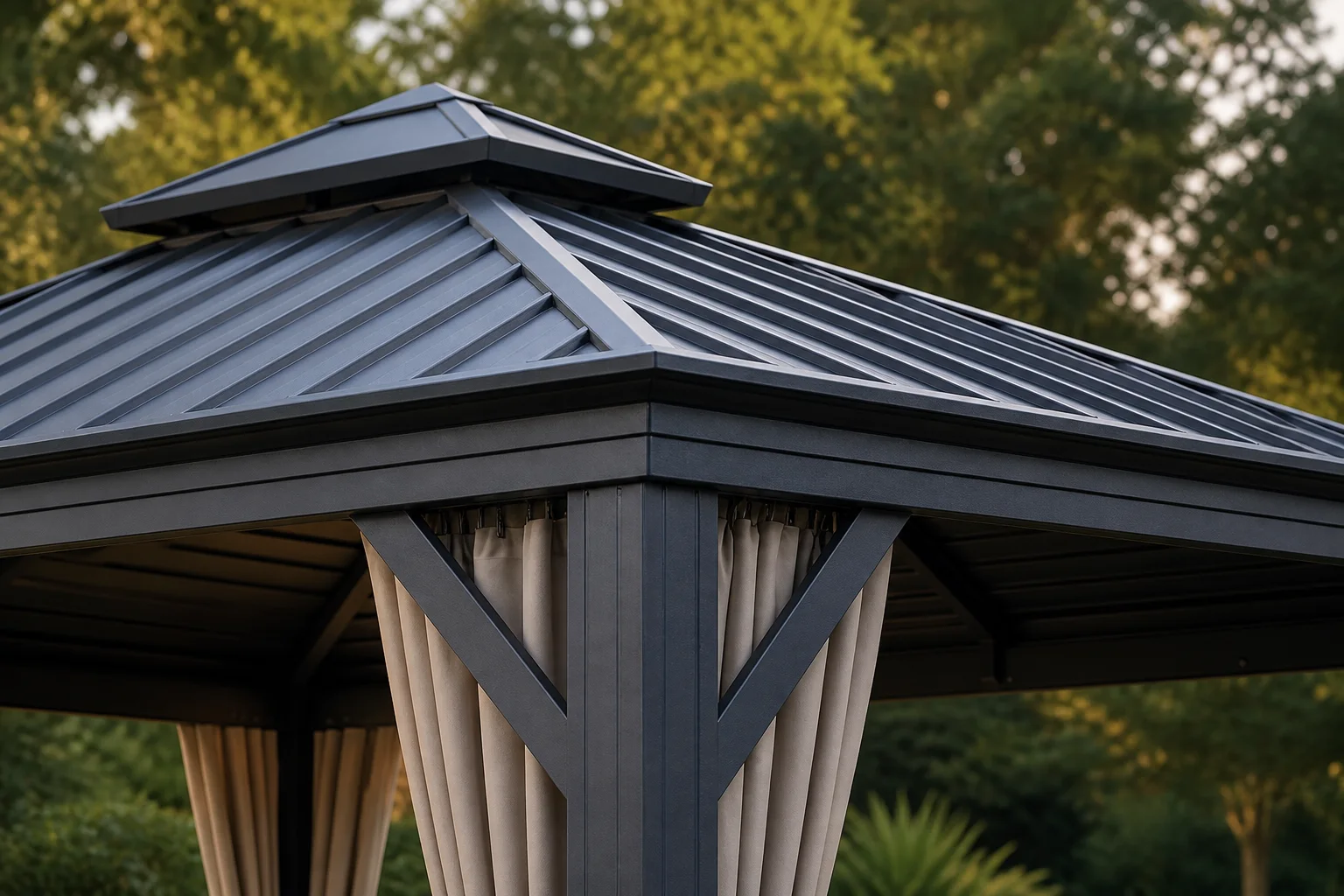
Locate the opening and its protective overlap
For a vented or double-tier gazebo roof in slanting rain, begin with the relationship between the actual opening and the covering above it. A cap does not automatically establish exclusion from every direction; an opening does not by itself prove a leak. Request a section or close views identifying the opening, overlap and intended water path for the actual model. Do not substitute another roof design. Locating identifiable paths turns a broad question about rainy-day use into a more precise discussion that can be supported by relevant information.
Record where water appears rather than only saying it leaks
If an installed pavilion shows water, record the weather, rain direction, curtain positions and first visible water location from a safe position. Water near an upper opening, panel joint, beam or outer floor edge may call for different checks. A recording should show both the overall location and the local trace without climbing onto the roof or disturbing components. Let the technical team review the matching drawings before sealing gaps. Improvised covering can change the assembly and hide useful evidence. Keep the observed conditions with the record rather than treating one event as a complete diagnosis.

Clarify the requirement around a table below the vent
Suppose a buyer wants a central dining table usable during brief light rain. Project the table position onto the roof plan and ask what information exists for the actual model and relevant conditions. A simple vertical spray demonstration may not answer a directional slanting-rain question. Without applicable evidence, retain that uncertainty instead of adding a complete-waterproof promise. The scenario defines a location and use condition, allowing the purchasing decision to consider furniture movement or temporary suspension of use where appropriate.
Confirm evidence requests and maintenance responsibilities together
Before ordering, confirm whether mesh, baffles and related pieces belong to the selected configuration, and obtain care and inspection instructions. Assign access and responsibility for checks. Retain model, drawings and observation records for service requests. Do not replace a vent with an improvised solid cover or transfer another manufacturer rain description to this roof. The result should be clear construction information, applicable evidence and an operating arrangement.
For events or business use, separately identify items requiring dry conditions. Their placement should reflect what has actually been confirmed rather than assuming every point beneath the roof projection remains dry in all weather.
- Identify openings, overlaps and intended water paths on the matching section.
- Record rain direction, curtain state and the first water location.
- Retain unverified conditions and follow the approved service response.
Can I seal the gap in a double-tier gazebo roof to stop slanting rain?
Do not seal it independently. Give the supplier the opening location, water evidence and conditions, then establish whether it is intentional or abnormal. Obtain the appropriate response and require applicable evidence when slanting-rain performance drives the purchase.
More questions, practical answers →