Hardtop pavilion planning
Before sealing every roof gap: gazebo ventilation and insect-screen alterations
Identify intentional roof openings before considering insect-related alterations.
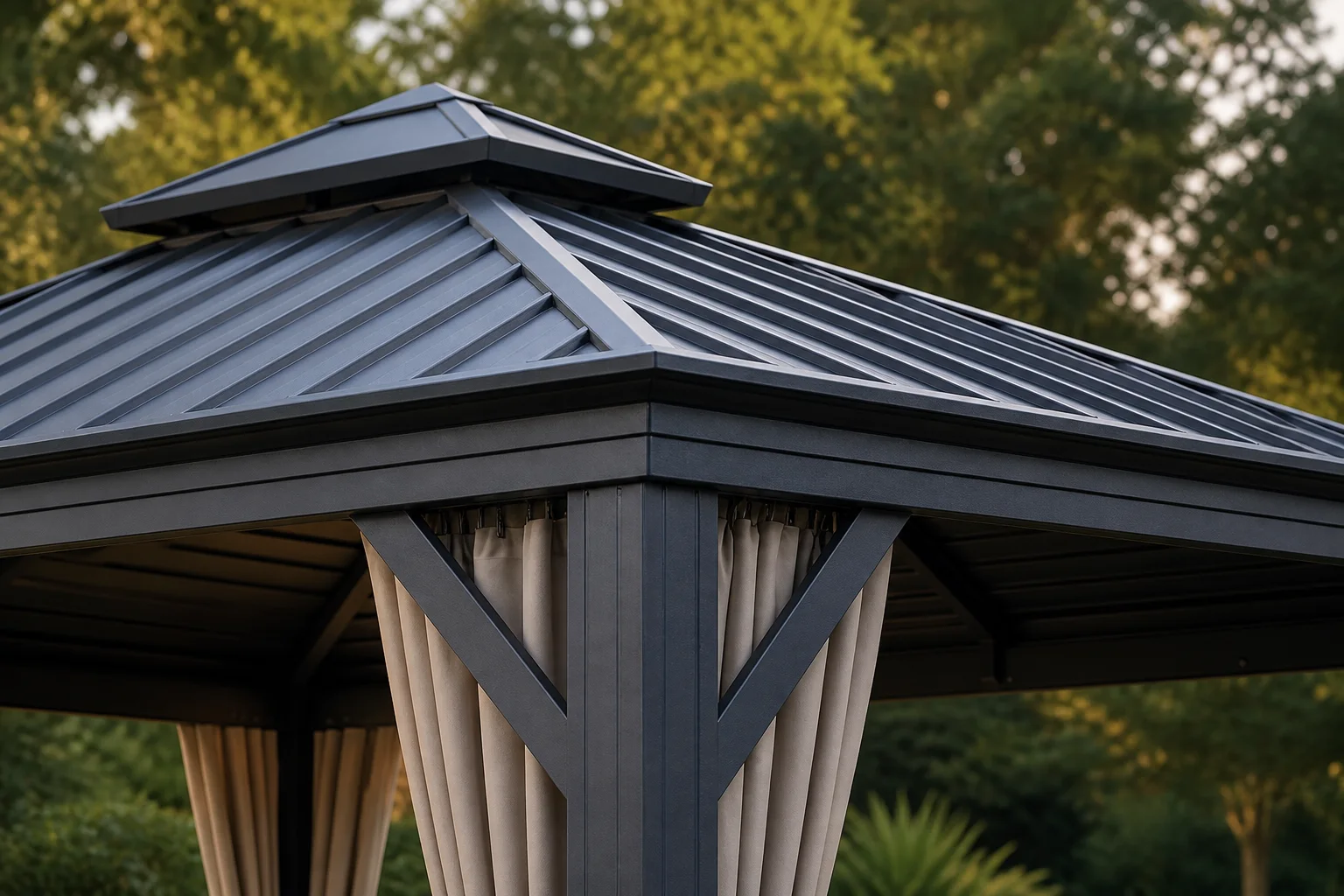
Identify the kind of opening before changing it
To reduce insects, first identify whether the observed space is an intended vent, panel junction, accessory edge or a condition needing review. Photograph and locate it against the actual drawing. Visible light does not automatically establish a missing component, and filling every space with foam or sealant can change the assembly. Ask the supplier about supported mesh or other accessories and their coverage and care. The requirement should not become an improvised attempt to turn an open pavilion into a sealed box.
Separate accessory coverage from site management
Netting still requires an understanding of entrances, upper openings and other boundaries; it does not establish total exclusion. CDC household information treats screens and standing-water management as distinct measures, which is general context rather than a pavilion disease-prevention claim. Review accessory completeness and entrance use separately from surrounding-site management. Product questions belong with the supplier while routine site actions need an owner. This division provides a more workable arrangement than repeatedly filling unidentified roof gaps.
Compare an intentional opening with damaged mesh
Imagine a visible ring-shaped roof opening and a separate torn mesh panel. Report them as different matters: one asks about design and supported accessories, the other about replacement. The same temporary tape response should not be assumed appropriate. Include frequent open-door use in the discussion so one roof change is not expected to solve every issue. Identified locations let the supplier answer component questions and the owner address daily practices without treating all concerns as one unexplained gap problem.
Record supported changes with the accessory information
If the supplier offers a matching accessory, confirm its identity, attachment, care and replacement path before installation. Record openings that must remain unchanged so later staff do not seal them again. Observations can guide checks without turning one insect-free visit into a permanent performance promise.
Public venues may include proper entrance use and accessory checks in daily preparation. That is an operating routine, not a claim that the pavilion or venue has medical or sanitation certification.
- Locate intentional openings, joints and damaged accessories.
- Manage product mesh and surrounding conditions separately.
- Implement supported changes and retain their care boundaries.
Will sealing every roof gap solve insects in a gazebo?
No guarantee follows, and openings should not be sealed independently. Identify the design, supported mesh, entrance use and site management separately. Keep the confirmed configuration and care instructions rather than relying on repeated improvised alterations.
More questions, practical answers →