Compact pergola living
Irrigation overspray on pergola furniture: observe the active pattern
Observe active irrigation before changing pergola furniture or adding sides to address overspray.
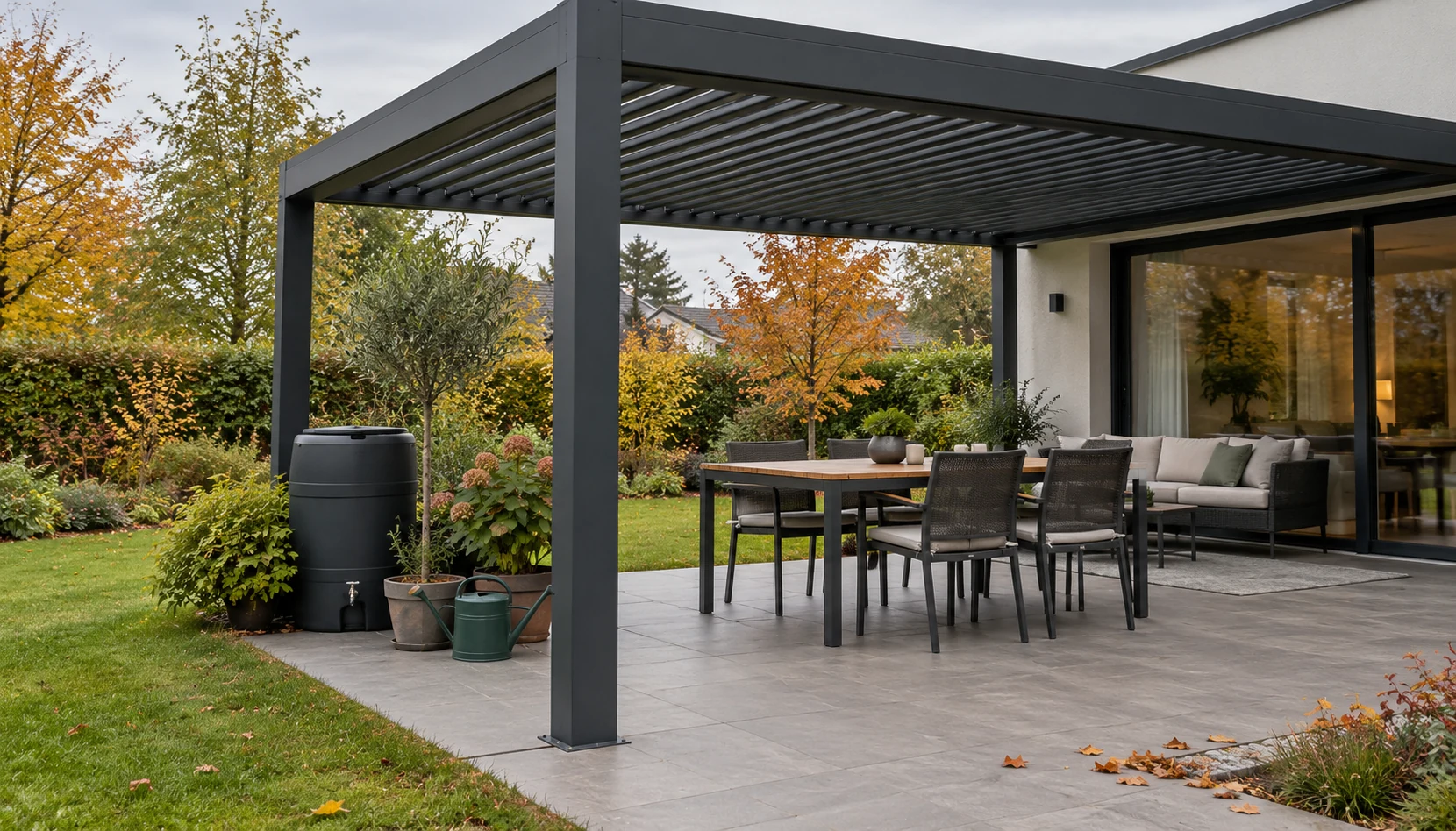
Identify the source before changing the pergola
Wet seating does not immediately prove a roof leak or a need for side panels. Where automatic irrigation exists, compare operating times with the appearance of water and observe active spray. Record furniture, head direction and conditions instead of mixing unrelated wet marks. This is information gathering, not a diagnostic rule from stains. If the source remains uncertain, ask irrigation and pergola specialists to examine their respective systems. Identifying the responsible part prevents spending on changes that leave the actual cause untouched.
Review planting and hard surfaces together
EPA WaterSense guidance calls attention to irrigation landing on hard surfaces and the need to review spray direction. Apply that by showing new seats, rugs and routes to the irrigation professional rather than simply turning a head and declaring success. A change may affect water reaching other plants, so recheck overall coverage. Product and professional design govern heads, pressure and controls; this article supplies no fixed settings. Furniture environmental and care requirements remain relevant too, even after irrigation is corrected.
Record the conflict during normal operation
Imagine an existing lawn sprinkler now reaching the back of a new sofa. Observe a normal cycle from an appropriate position, mark entry points into seating and share the record with the irrigation specialist. This hypothetical example asks for no risky intervention in an operating system and promises no timing-only fix. Running while unoccupied may still wet furniture, while simply blocking spray can affect plants. Compare coverage, maintenance and household timing together, then verify the actual change against the identified problem.
Recheck from the same positions
Keep before-and-after coverage, schedules and furniture positions, checking the professional's revised arrangement. One dry photograph is no year-round guarantee; seasonal, plant and furniture changes may warrant review. Work involving pipes, wires or nearby ground needs boundaries checked against existing foundations and drainage. Share operating times with household members and route abnormal observations appropriately. The outcome should be suitable plant care and verified resolution of the furniture or passage conflict, not merely tighter enclosure or moving wet objects out of sight.
- Compare wet marks with actual irrigation times.
- Review planting and furniture with the irrigation specialist.
- Recheck the original problem and overall coverage.
Will a side screen solve sprinkler water reaching the sofa?
First identify the sprinkler and timing, then review coverage and adjustment with the responsible person. Blocking water may affect planting without resolving furniture exposure. Recheck the original location and retain separate furniture and screen use requirements.
More questions, practical answers →