Large pergola projects
A spa-rest pergola: robes, footwear and return baskets shape the layout
Plan spa-rest handovers for robes, footwear, bags and returned venue items.
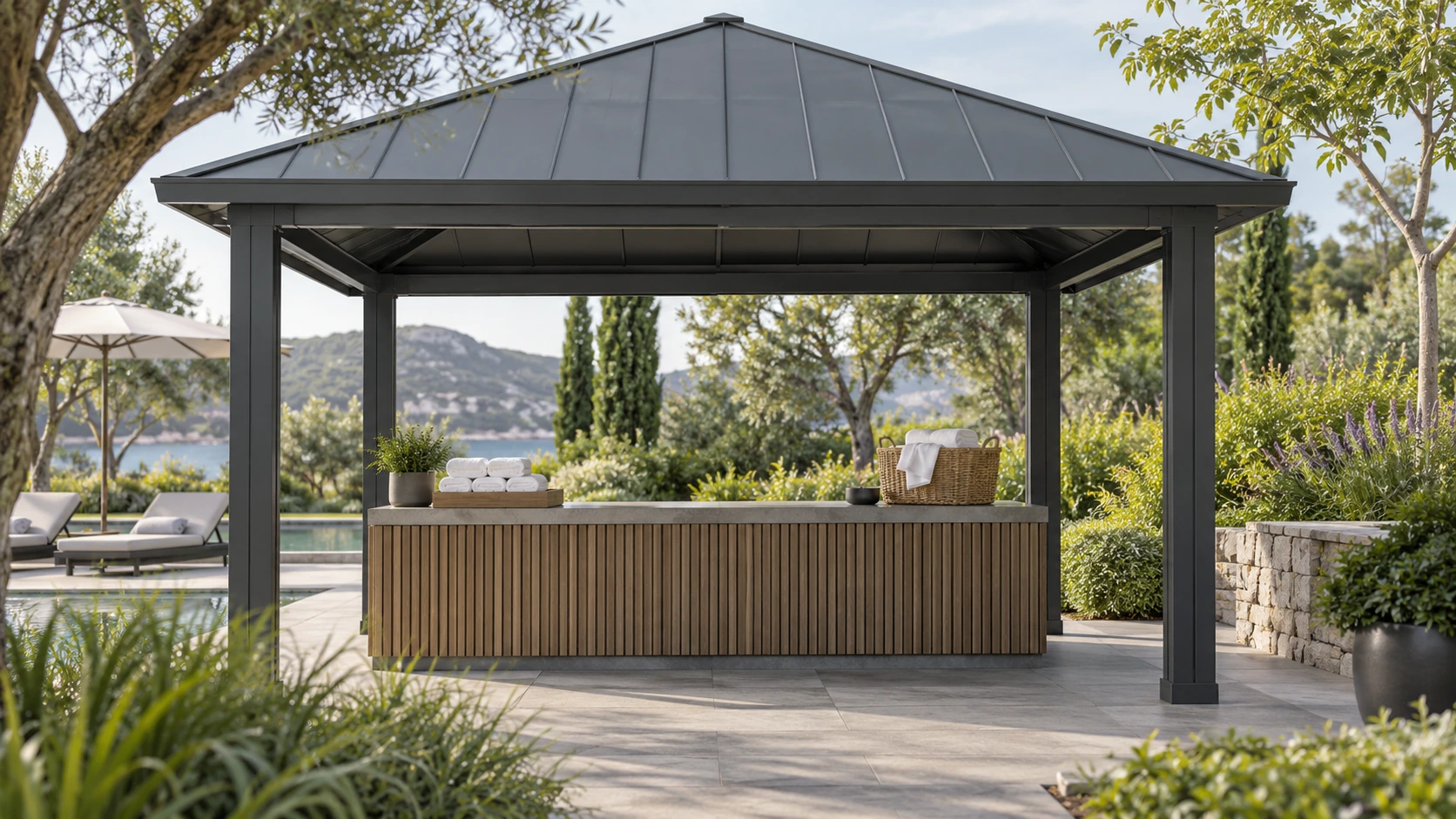
Start before and after the guest sits down
Observe what guests set down before sitting and collect afterward instead of beginning with lounger selection. Robes, footwear, towels and personal bags have different custody and use states. Confirm actual shelter without promising temperature control, a privacy rating or medical effects. The pergola supports a service arrangement but does not replace spa-facility requirements. Mapping item destinations reduces ad hoc piles and tells staff what belongs to a guest, what has entered the venue return process and what needs clarification before it is moved.
Separate venue returns from personal belongings
Make return baskets, clean-supply cupboards and personal-item positions distinguishable instead of relying on similar containers in different corners. Check real doors and baskets against replenishment and resting guests. Floors, cleaning and item handling follow site requirements; no universal hygiene procedure is provided here. Any custody service needs identification and collection arrangements, not an assumption that an open rack is secure storage. Shared facilities require states the next shift can understand, including what is available to issue and what is awaiting removal or processing.
Test overlapping item exchanges
Suppose one guest returns a venue towel, another retrieves personal footwear and staff bring fresh supplies. Rehearse with empty baskets and representative items to see whether all tasks compete for one surface or make pending items ambiguous. Review signs, locations or sequence with the service lead. The exercise sets no seat capacity and a tidy appearance is not hygiene certification. It makes the supporting item transfers understandable so staff retain a clear distinction between issued supplies, returns and personal belongings while guests rest.
Hand over item and area status
Shift records should identify returns, clean supplies and necessary guest follow-up without excess personal detail. Align signs and staff guidance when facilities pause. Recheck loungers, screens or cabinets that change handovers, and separate pavilion maintenance from item service. Describe actual facilities without inferring temperature, privacy or health performance from a spa photograph.
Follow the service rule when guests leave belongings temporarily. An empty seat alone does not establish that objects may be cleared; explicit responsibility makes the response repeatable.
- Separate personal belongings, clean supplies and returns.
- Check doors, retrieval and replenishment.
- Preserve pending states and align shift guidance.
Do loungers and baskets complete a spa-rest pergola setup?
Define custody and destinations for robes, footwear and returns, and check facility and replenishment conditions. Open baskets do not establish storage custody or climate and privacy performance. Rehearse handovers and record readiness through the service lead.
More questions, practical answers →