Hardtop pavilion planning
A golf rest pavilion: golf bags and trolleys shape the layout
Plan a golf rest pavilion around temporary golf-bag and trolley positions.
Account for equipment before counting seats
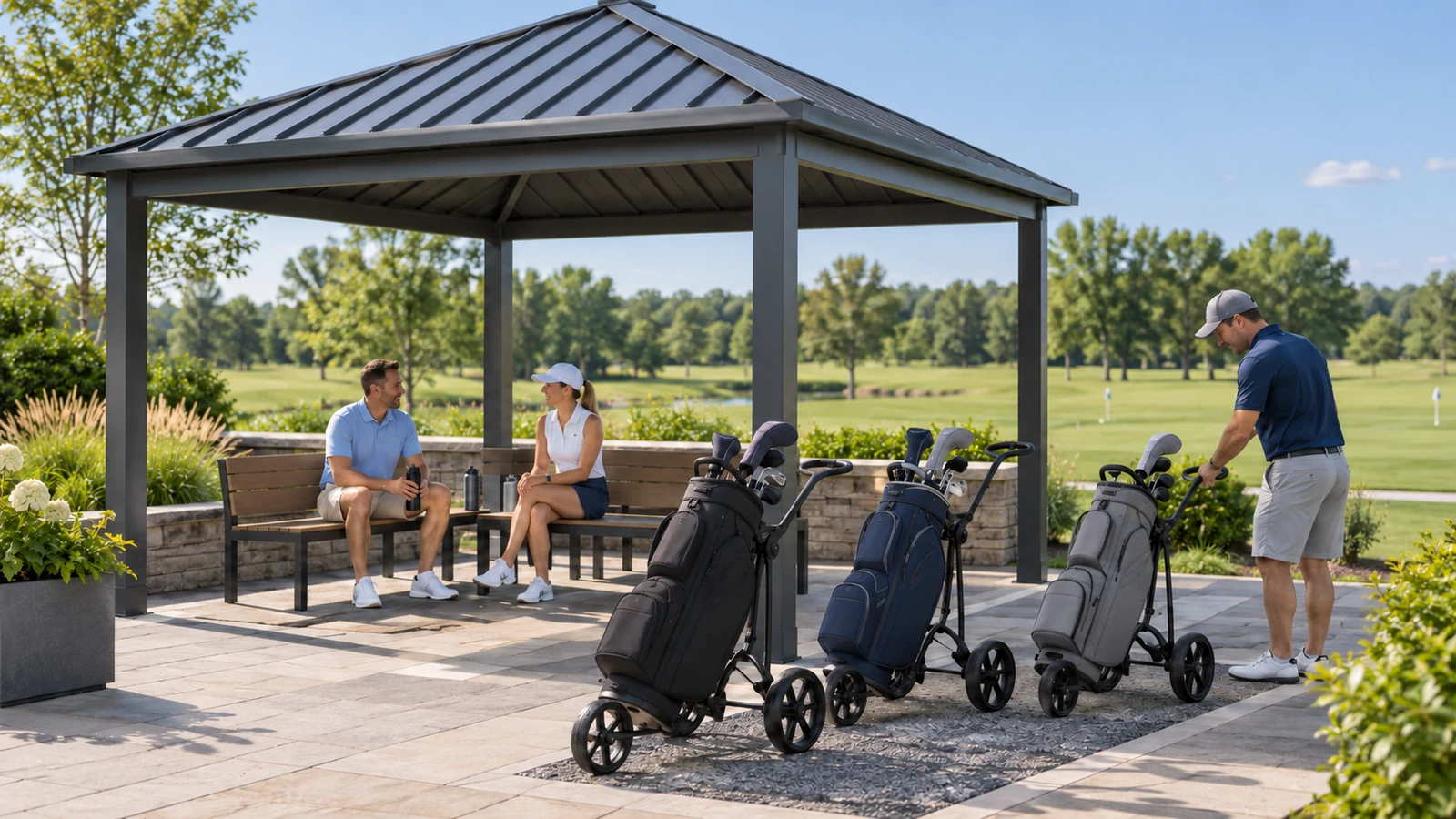
Seat count alone cannot define a golf rest pavilion. Bags, push trolleys and personal items require temporary space, particularly during retrieval and departure. Map equipment positions, seated guests and collection movements separately. This article concerns storage and retrieval rather than cart-return circulation. An open pavilion is not a safe lightning shelter; follow the venue plan for reaching suitable buildings or vehicles. Keep that distinction clear in signage so a rest point is not represented as a place suitable for remaining in every weather condition.
Check what happens when a bag is retrieved
Use actual bag and trolley outlines to check handles, stands and side accessories. Storage fittings follow their own requirements; do not assume bags can hang from pavilion members. Arrange retrieval so guests need not relocate another complete set simply to collect theirs. Coordinate drinks tables, bins and umbrellas with the equipment area rather than adding them to leftover corners after opening. Assess the fully furnished operating state. A display containing one bag in an otherwise empty pavilion does not establish the practical arrangement.
Test overlapping arrivals and departures
Imagine one group leaves as another arrives before all equipment has been collected. Rehearse with representative bags and empty trolleys to see whether newcomers must move existing items to find a position. Adjust placement sequence, signs or staff guidance where needed instead of turning every corner into storage. The test should make placement, retrieval and assistance understandable. It does not establish a universal equipment capacity, since actual bag types, trolley forms and site conditions differ and require a project-specific check.
Make restoring availability part of service
Record available positions, uncollected items and the process for unclaimed equipment. Do not infer ownership from duration or turn lingering bags into permanent storage. Reassess after furniture or trolley changes. Separate pavilion and equipment-storage facilities in procurement and maintenance. Describe confirmed arrangements without expanding ordinary shelter into custody or severe-weather protection promises.
Seasonal handovers should distinguish weather guidance from equipment management. Directing guests to a suitable refuge does not remove the need for a clear later collection process.
- Map bags, trolleys and retrieval directions.
- Test overlapping groups in the complete layout.
- Distinguish the rest point from safe lightning refuge.
Can every extra seat simply be matched with another golf bag?
Check equipment footprints and retrieval, especially during group changes. Confirm storage facilities separately from the structure. Also keep weather guidance clear: an open pavilion is not a safe lightning shelter.
More questions, practical answers →