Compact pergola living
Solar garden lights beneath a pergola: check charging sunlight
Check actual charging sunlight beneath a pergola before relying on solar garden lights.
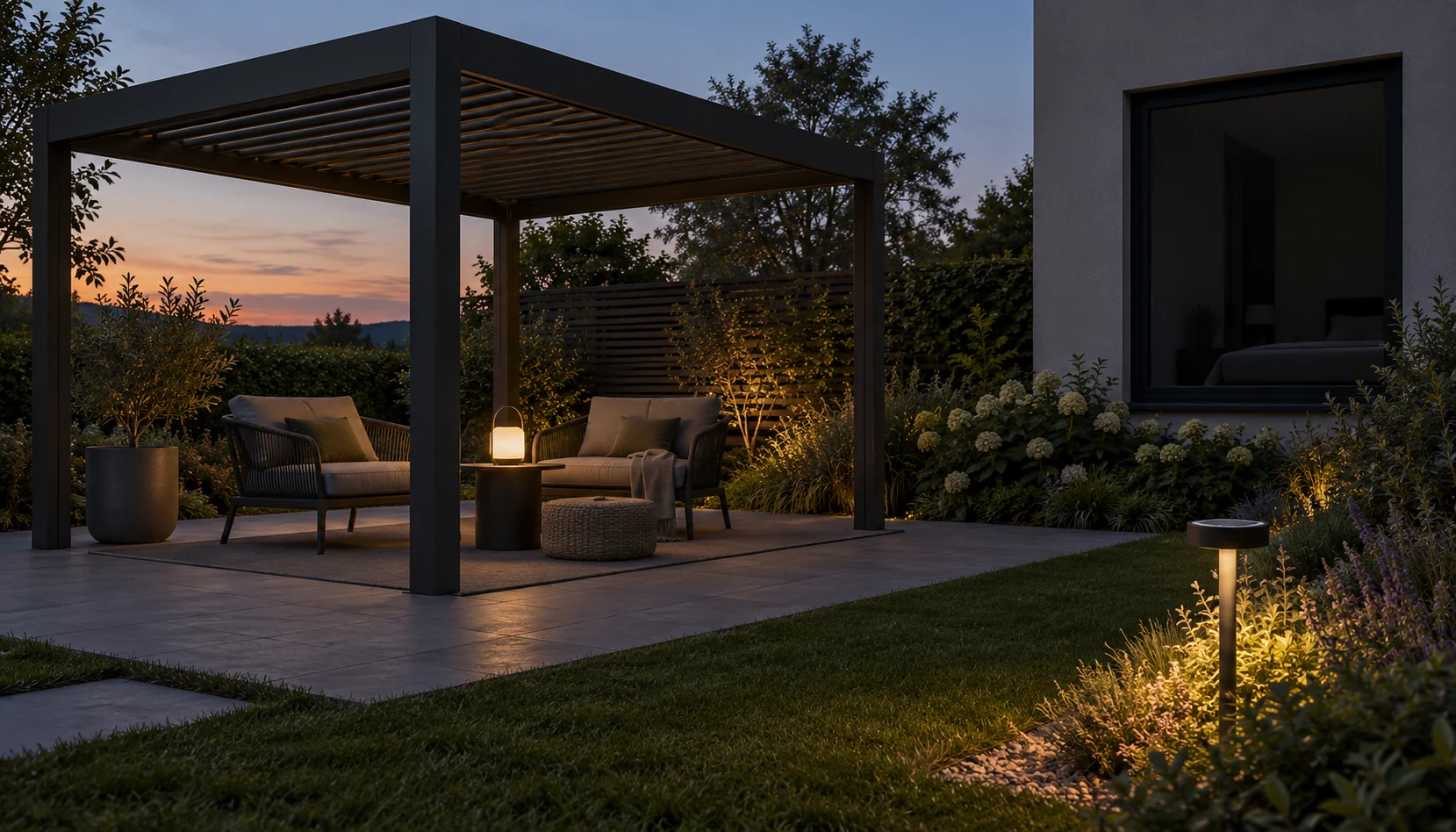
A good lighting position may not suit charging
Where light is needed may not be where a solar panel can charge adequately. Roofs, posts, buildings and trees create changing obstructions, so check the specific light's panel design and requirements. Integrated and manufacturer-approved separate panels need different assessments; do not improvise extensions or wiring. Ring's solar-light guidance highlights building and tree shade as a placement issue. That identifies a useful question, but its specifications are not universal values for other brands and establish no generating capability for the pergola itself.
Observe sunlight rather than general brightness
A bright-looking pergola may still fail a particular panel's exposure requirements. Observe the actual panel position as instructed and record obstruction through relevant periods instead of taking only a midday photograph. Season, roof settings and later side features can change the situation. One successful sunny-day operation supports no seasonal runtime promise. Assess settings, usage and battery conditions through manufacturer information and observations. If requirements cannot be met, compare another suitable lighting approach rather than repeatedly attributing every problem to the pergola's material.
Include day and night in the trial
Imagine a solar lamp on the dining table beneath a roof normally kept closed. Compare a different charging location only as the product permits, then observe whether it performs the intended task at night. This hypothetical case promises no solution from edge placement and specifies no universal sunlight duration. If panel and lamp cannot separate and a suitable position blocks passage, another model or approach may be needed. Record daytime exposure, nighttime use and handling together instead of judging the proposal from the moment the light first turns on.
Confirm care before permanent installation
Retain installation, charging and care instructions and show the supplier obstruction photographs and intended hours. Confirm permitted positions and operation, plus approved attachment if mounting to the pergola; low weight does not authorize drilling. Follow equipment guidance for panel cleaning, batteries and seasonal storage rather than transferring assumptions between products. Observe actual use before fixing the arrangement or buying more units. Judge the light through its task, available exposure and maintenance, not solely through the attraction of avoiding a new cable.
- Record actual panel exposure and obstruction periods.
- Check whether panel and light may be separated.
- Assess nighttime tasks alongside care requirements.
Is daylight brightness enough for a solar lamp beneath a pergola?
Not necessarily. Check the panel's requirements and actual obstruction. One sunny-day result establishes no year-round runtime; settings, use and battery conditions matter. Where charging and lighting positions conflict, compare approved separate-panel products or another suitable approach.
More questions, practical answers →