Compact pergola living
Pergola lighting facing a neighbor bedroom: check the view first
Evaluate direct views, light spill and operating times before choosing pergola lighting near a neighbor's bedroom.
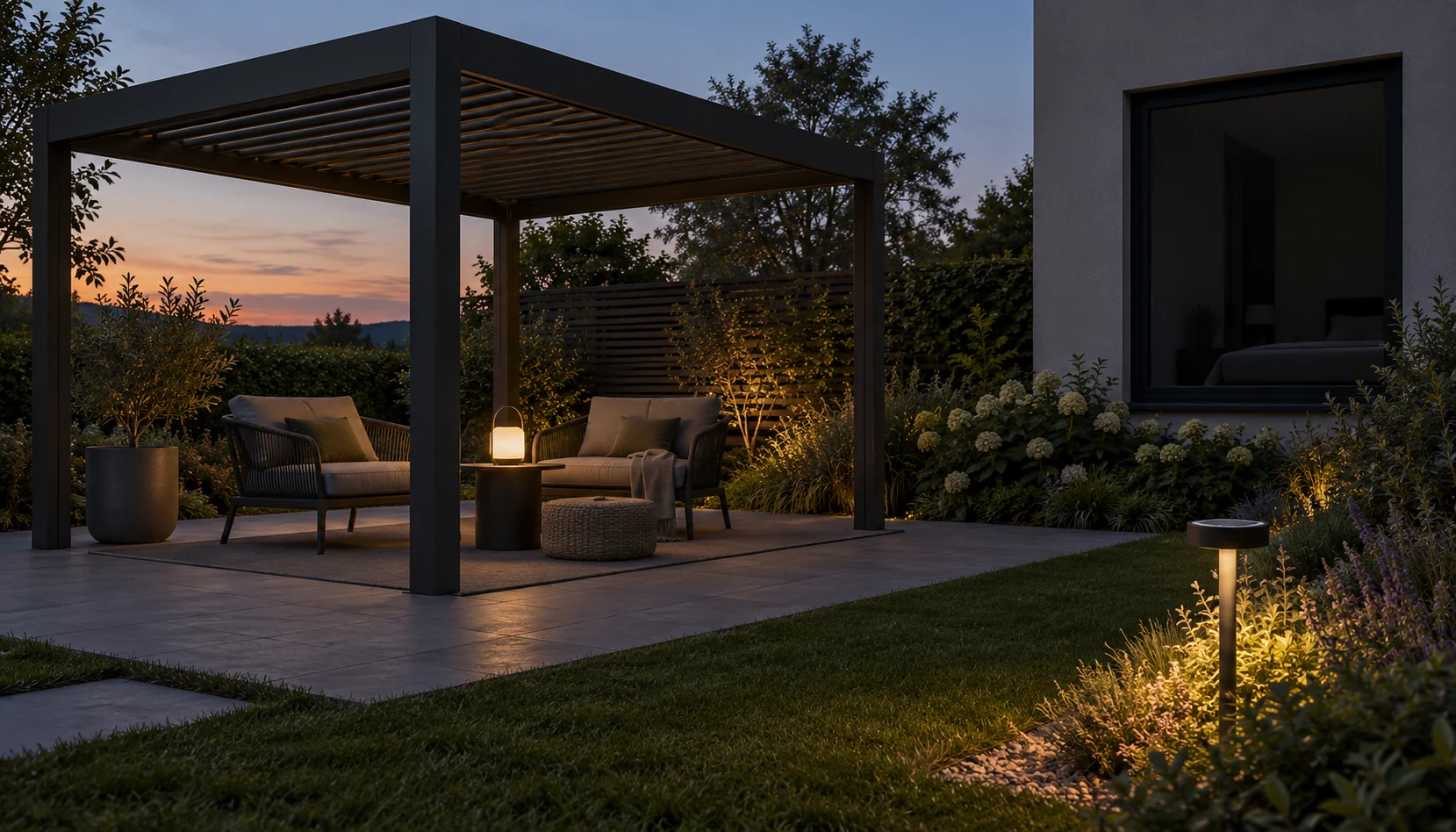
Define the task the light serves
Pergola lighting often starts with appearance, but a nearby bedroom makes each light's purpose important. Is it for seeing the entrance, eating at the table or displaying the frame? These tasks need different directions. DarkSky's principles provide a framework of purposeful, targeted, limited and controlled outdoor light. Mark the areas actually needing illumination rather than treating the garden as one surface. Assess direct views of the fitting separately from light on the ground; an overall bright photograph does not establish a considerate or comfortable result.
Include the direction of neighboring windows
A comfortable view from your own chair does not establish the outward effect. Observe boundary-facing directions from places you are entitled to access and consider any feedback neighbors choose to provide. Height, direction and shielding change sightlines, with adjustments following product and installation requirements. Lower brightness alone may leave direct source visibility. Do not improvise wrapping or incompatible shielding materials around a fixture. Ask the installer for suitable options and verify their use conditions, keeping physical adjustment and electrical suitability within the responsible scope.
Check the state after dinner ends
Imagine a household leaving pergola lights on after returning indoors, with a neighboring bedroom facing one side. Compare retaining only necessary entrance lighting, switching off parts at the end of use or an appropriate directional adjustment. This hypothetical case sets no legal brightness limit or universal compliance claim. It treats occupied and unoccupied periods as different design states. Record time, fixture combinations and viewpoints during trials so later discussion has something more precise than impressions that the garden was too bright or seemed acceptable.
Make switching off equally convenient
Give task areas, positions and hours to the supplier or installer, checking controls, adjustment range and environmental suitability. Confirm applicable local requirements with the relevant authority rather than treating general lighting principles as regulations. Have the regular user turn lights on, adjust them and finish the session without navigating clutter or inaccessible controls. Retain outward-view checks and revisit reflections or shielding after furniture and side features change. Useful lighting supports an activity and is also straightforward to end when that activity has finished.
Keep final control instructions available so visitors can switch off in the same way.
- Assign each light a specific task.
- Inspect outward source visibility from accessible permitted positions.
- Test occupied and unoccupied settings separately.
Does dimming pergola lights guarantee no effect on neighbors?
No. Direction, direct source views, reflections and timing also matter. Define task areas, inspect outward views from permitted locations and adjust according to instructions. Verify local requirements; improvised wrapping or checking only your own chair is insufficient.
More questions, practical answers →