Solar canopy decisions
Solar Carport Lighting and Camera Sight Lines After Installation
Review solar carport lighting and camera views through real nighttime routes and images, including obstructions from the canopy and equipment.
Record where the existing site depends on visibility
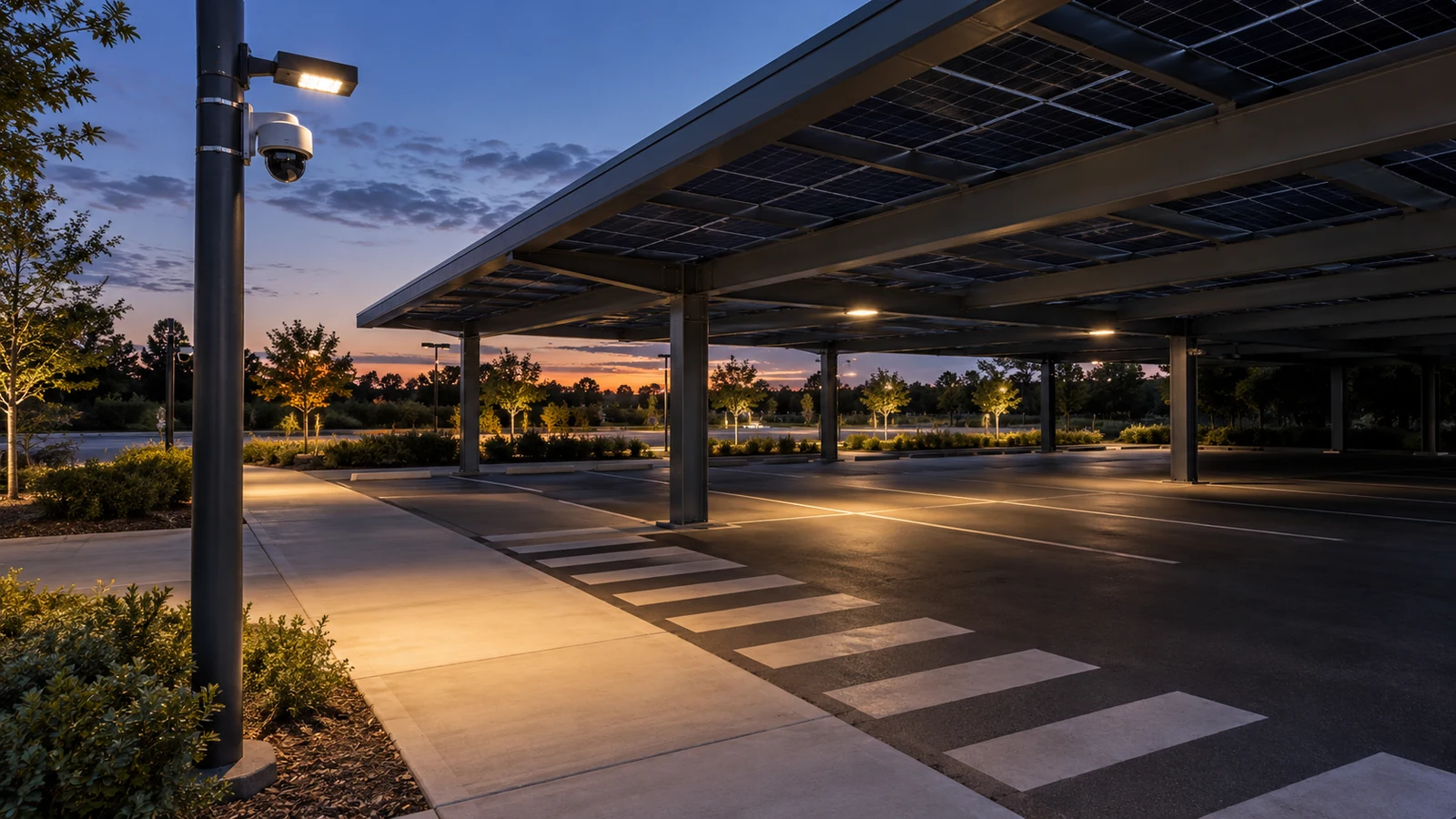
Decide whether a solar carport needs lighting or camera changes from the tasks involved. Users must see paths, crossings, entrances and equipment controls; operators may need views of arrivals, faults or parked vehicles. An existing camera feed does not establish visibility beneath the new roof, and a working light pole may become obstructed by columns or panels. Record important viewpoints, nighttime use and current equipment positions for review by the relevant designers. This concerns usable visibility, not a claim that camera coverage prevents theft or guarantees identification.
Define acceptance through specific viewing tasks
State what must be visible: visitors finding an exit, drivers noticing pedestrians or staff checking whether an equipment area is obstructed. Lighting design should address glare, shadows and environmental suitability, while cameras need actual field-of-view checks. Increasing brightness is not a substitute for appropriate placement. Coordinate supports, wiring and equipment with the canopy structure and electrical design rather than drilling or hanging equipment without approval. The site should also manage image collection and retention under its applicable rules and policies.
- Mark critical views and lighting tasks on the plan.
- Check roof-edge, column and cabinet obstructions.
- Review daytime, nighttime and equipment-fault conditions.
Test a pedestrian crossing a vehicle lane
Imagine a light pole beside a vehicle lane, with the new roof blocking light on part of the walk from bays to the entrance. Daytime acceptance appears satisfactory, but at night pedestrians emerge from the darker canopy into the brighter lane. Observe mutual visibility during actual use and ask the lighting designer whether changes are needed. Check real camera images instead of relying on lens symbols on a site plan. Before-and-after records from the same viewpoints can show whether the intervention resolves the original problem rather than merely increasing the number of luminaires.
Record whether each viewing task was achieved and retain unresolved locations. Powered equipment or an online feed does not establish the visibility the site needs.
Repeat operational checks when the site changes
Retain final lighting and camera locations, controls, service access and unresolved blind spots at handover. Growing vegetation, temporary advertising, additional charging cabinets or changed markings can alter views, so include visibility in the site's change process. Assign lens cleaning, lighting service and fault reporting rather than directing every issue to the structural supplier. DOE and HSE guidance support coordination, while project professionals determine lighting levels, equipment and installation requirements. Where an area cannot yet support its intended use, make the limitation part of the opening arrangements.
Will adding a few lights solve visibility problems after carport installation?
First examine viewing tasks, obstructions, glare and nighttime routes, then obtain a professional design response. More lights do not necessarily correct placement, and camera images need verification. Coordinate supports, power and service access and test the completed arrangement against its actual tasks.
More questions, practical answers →