Solar canopy decisions
Siting a Battery Cabinet Beside a Solar Carport
Coordinate traffic protection, fire review, drainage, public access and servicing when siting batteries beside a solar carport.
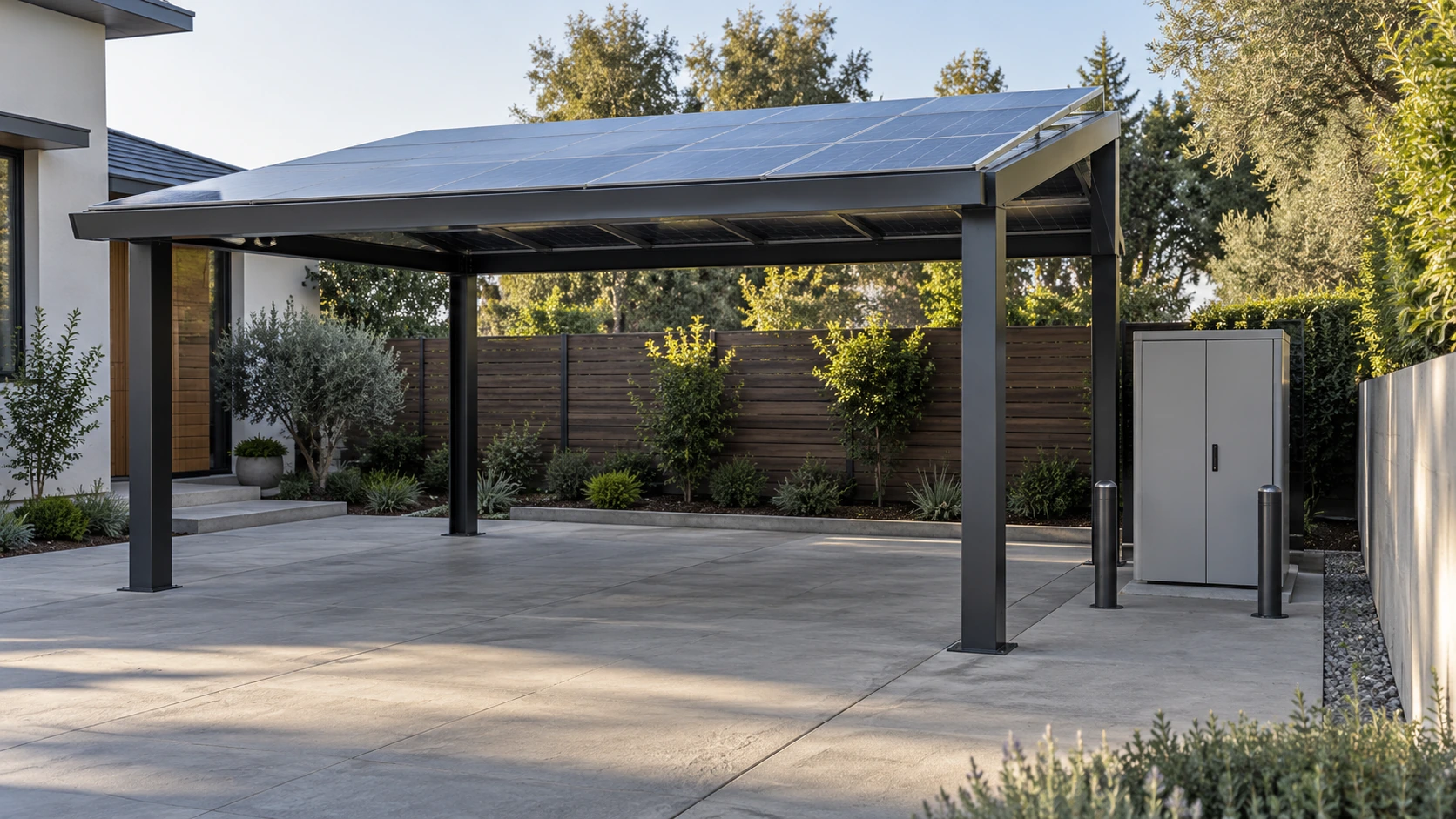
Start with the actual storage system requirements
Available ground does not automatically make a suitable battery-cabinet location. Environmental, ventilation, maintenance and fire-related conditions depend on the actual system, scale and jurisdiction. Obtain complete equipment information and have responsible professionals define the review before comparing positions on the site plan. One generic clearance or another project's photograph is insufficient evidence. Clarify whether storage belongs within the canopy contract so installation does not precede discovery of incompatible requirements. Select the location while the relevant disciplines can coordinate interfaces.
Review vehicle, water and pedestrian approaches
Review vehicle approach and protection, surface and underground water paths, public movement and professional service space. An enclosure label does not replace flood or drainage design, and added protection must not block operation or maintenance. Authorized specialists and local requirements determine fire arrangements; this guide specifies neither universal separations nor suppression methods. Record assumptions on a shared plan and assign approvals. A location depending on an area remaining free of parking or storage also needs an operational arrangement that preserves it.
- Obtain actual equipment and local review information.
- Check intersections of traffic, water, paths and servicing.
- Assign protected areas, incident contacts and maintenance.
Test a vacant area beside an entrance
Imagine vacant ground beside the entrance that also carries storm runoff and serves brief visitor stops. Review those conditions before treating footprint fit as approval. Moving to the opposite side requires a fresh comparison of cables, servicing and protection. This does not declare one site impossible; it requires compatibility between use and professional requirements before vacant land becomes an equipment area. Later advertising, bins or temporary parking can change the conditions, so operators must know the boundaries to preserve.
Where servicing requires adjacent bays to close, define requests and notices in operating rules so required access does not become permanently allocated parking.
Hand over the approved location and operating arrangements
Retain installed equipment, approved position, inspections and professional support channels, and explain staff responsibilities. Ordinary staff should not open battery cabinets to diagnose or handle suspected damage. DOE fire, flood and microgrid resources frame the questions; they do not establish TTH storage certification or a safety rating. Replacement models, additional cabinets or surrounding-use changes require renewed professional review. The original siting assumptions remain useful only when actual equipment and ongoing site management continue to match them.
Does an outdoor enclosure rating permit a battery cabinet directly beside a carport column?
A rating alone is insufficient. Confirm the location through equipment instructions, fire and electrical review, vehicle exposure, drainage and servicing. Obtain an approved layout and operating limits rather than copying another site's spacing. Recheck replacement equipment or changed surrounding use.
More questions, practical answers →