Solar canopy decisions
Solar Carport Cable Routing: Clearance and Maintenance Access
Review carport PV cable routes against vehicle, pedestrian and servicing areas before construction.
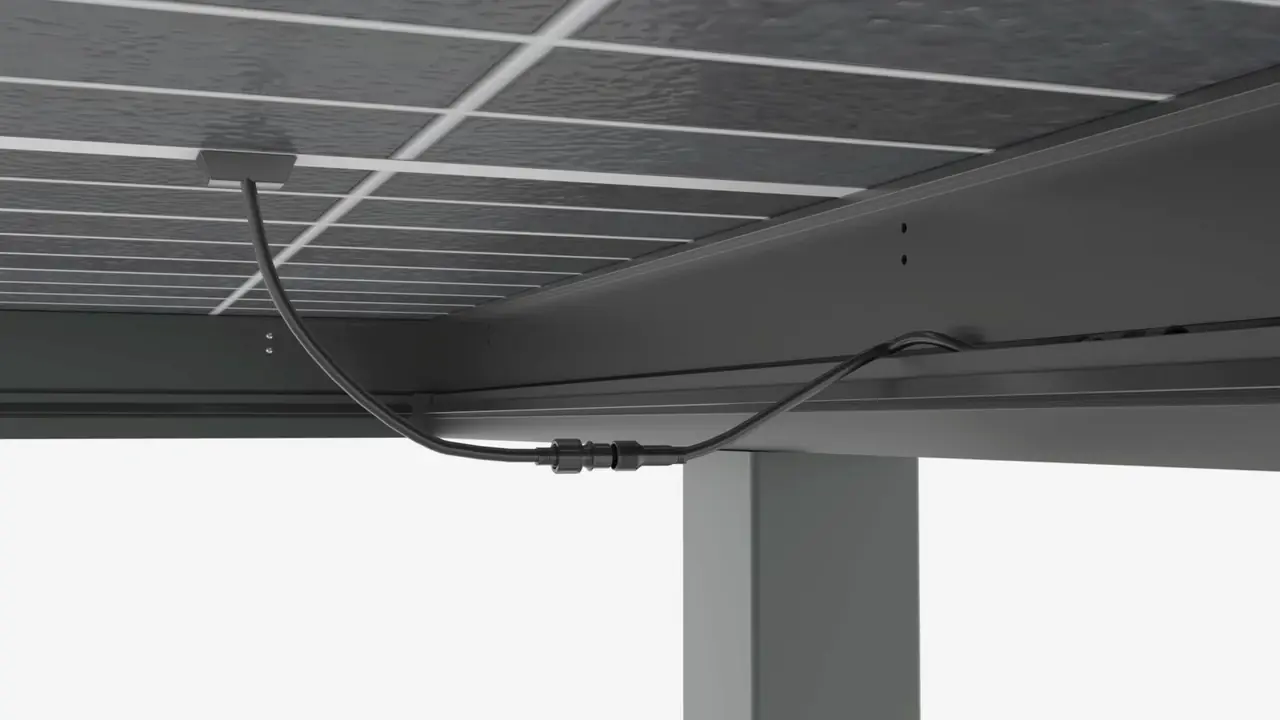
Review cable routes through the site's occupied spaces
Qualified electrical designers and installers should determine cable routing for the actual equipment. Owners can review conflicts with vehicles, pedestrians and servicing, rather than selecting conductor sizes or wiring methods themselves. Define the complete path from modules to equipment, not only the visible section. Low-hanging, reachable or traffic-crossing routes require professional assessment. Concealing cables inside a component does not automatically resolve support, environmental suitability, identification or future access; those aspects still need a documented design.
Coordinate structural and electrical interfaces
Align electrical routing and canopy drawings, showing components crossed, route transitions and inspection locations. The responsible teams should approve supports, openings, covers and protection; installers should not alter the structure informally for convenience. Preserve service paths so replacing a cable does not unnecessarily require dismantling unrelated roofing. Materials and fixing methods depend on product instructions and local requirements, not a detail copied from one display unit into every environment and installation location.
- Check routes against doors, vehicle clearance and paths.
- Assign structural interfaces, equipment entries and servicing.
- Retain final routing and identification for future maintenance.
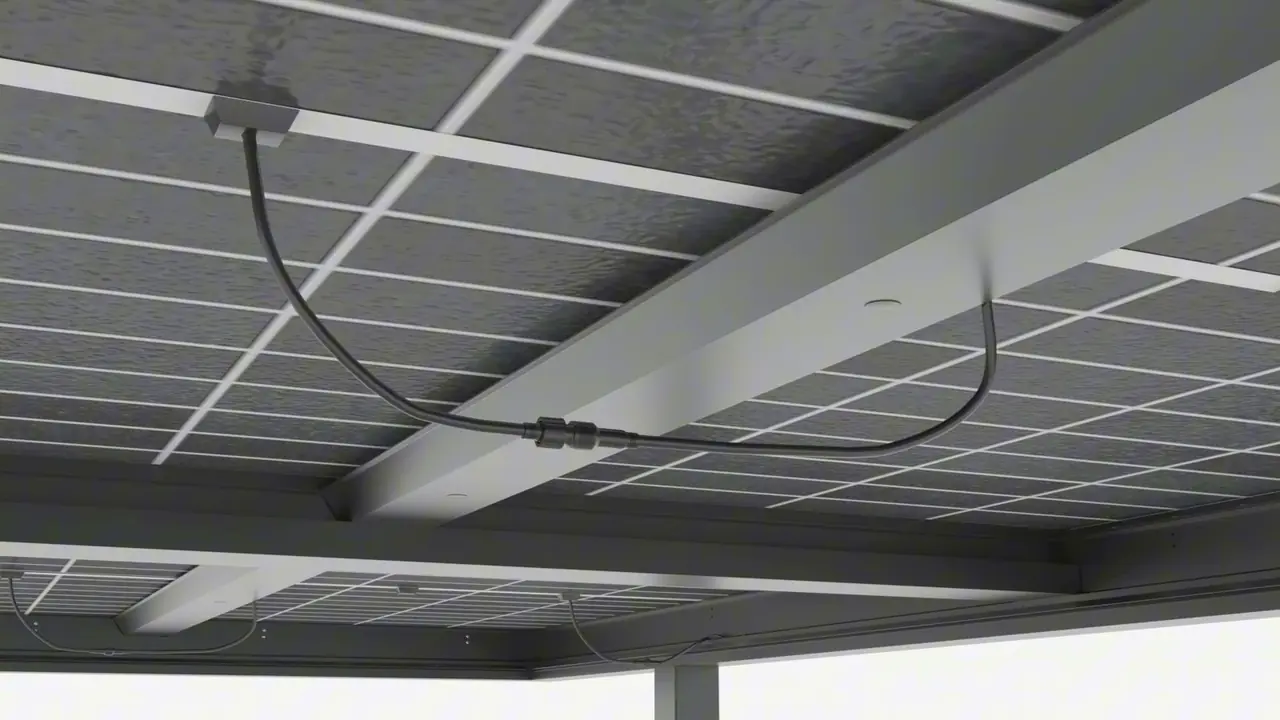
Test access through a hypothetical replacement
Imagine cables neatly concealed beneath a decorative cover beside an inverter, with a later advertising panel blocking that cover. The appearance is tidy but service access is compromised. During review, ask the maintenance provider to demonstrate the access route and coordinate covers with later installations. If work requires a parking closure, inform operations in advance. This is not a dismantling procedure; it shows why maintainability must be established before installation rather than improvised after a fault.
Observe only from permitted positions within training; do not approach electrical connections for a better photograph. Images support location reporting, not professional testing or diagnosis.
Separate operational observation from electrical work
After handover, trained site staff can record visible abnormalities or new obstructions within their agreed role, but should not touch, pull or repair electrical wiring. Define the professional inspection and repair scope in maintenance arrangements. DOE installation and fire guidance emphasizes system design and qualified personnel; a cable photograph does not prove compliance. Assign contacts at the interface between TTH structure and separate PV work, and review routes and space when chargers, lights or communication cables are added.
Does hiding all cables inside the columns establish acceptable wiring?
Appearance alone is insufficient. Qualified personnel must review support, protection, environment, entries, servicing and approved structural interfaces. Owners can identify access conflicts but should not wire or alter the system themselves. Record final routes and responsibilities and recheck additions.
More questions, practical answers →