Hardtop pavilion planning
A floral workshop pavilion: plan stems, water buckets and finished arrangements
Test a floral workshop layout using actual stem lengths, water buckets and finished arrangements.
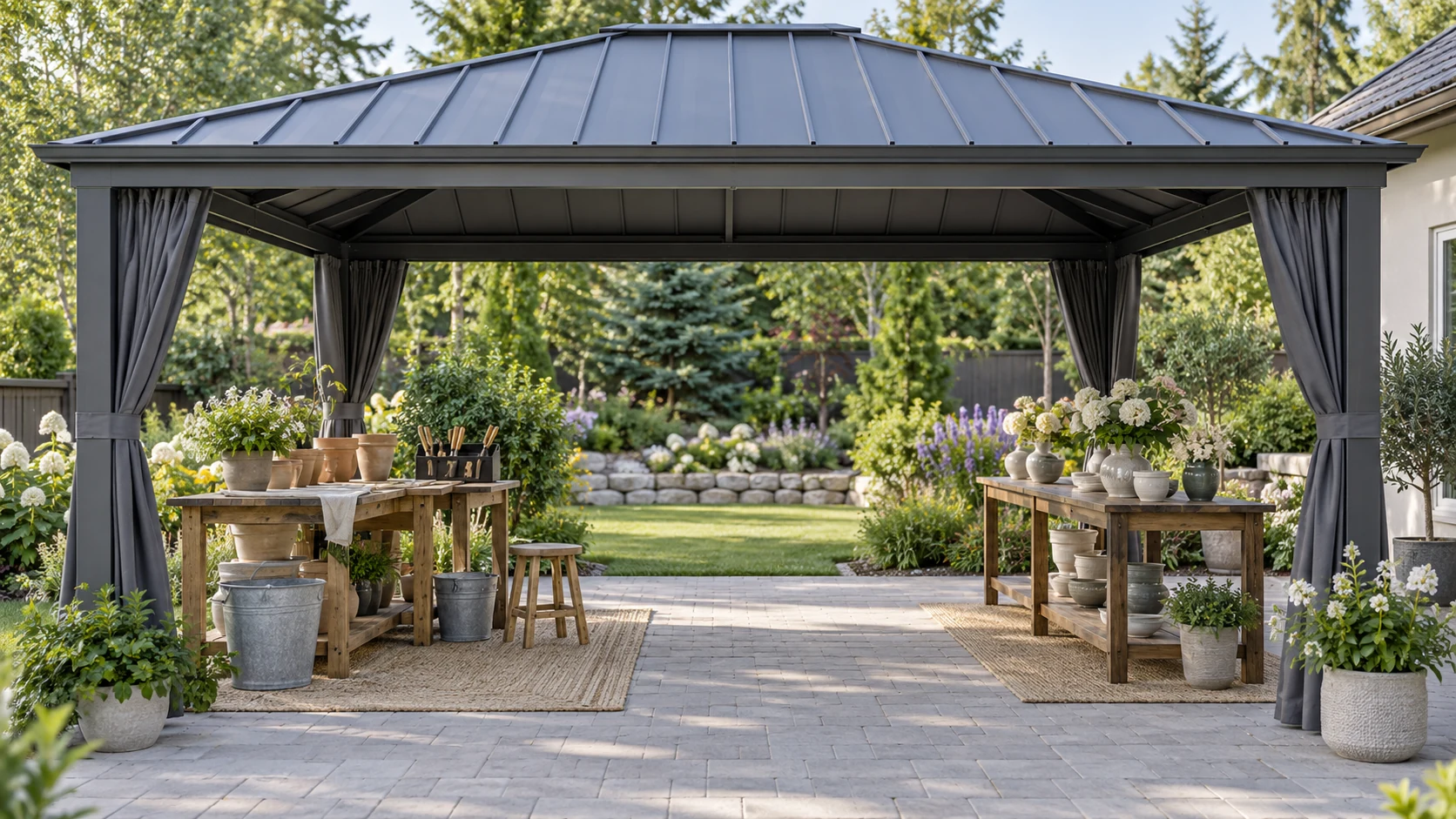
Map material length and movement
Plan how stems, vessels and completed arrangements enter and leave before counting tables. Long foliage, floor buckets and turning with finished work occupy space absent from a chair plan. Distinguish reserve materials, making stations and display, identifying instructor tasks and participant tasks. Confirm actual shelter conditions separately from material-preservation needs. Define session length and material management first. This gives the purchasing and layout decisions a practical basis in the activity rather than an assumption that every covered table is an equivalent workshop station.
Give buckets and tool return defined positions
Use real containers to check bucket placement, filling and movement rather than leaving participants to find spaces between chairs. Assign water supply, cleanup and waste destinations without assuming any nearby drain is appropriate. Define visible tool issue and return positions under the relevant activity requirements. Finished work needs height, collection and packaging space; the display table should not silently become a raw-material store. Recheck any curtains or backdrop in their intended state so demonstration views and material movement remain consistent with the plan.
Rehearse simultaneous closing tasks
Near the end, participants may wrap arrangements and return tools while staff clear leftover stems and buckets. Rehearse with empty containers and representative material lengths to see whether collection crosses water handling. Adjust the closing sequence or temporary handover position when needed rather than immediately enlarging every area. The exercise identifies simultaneous-task conflicts, not a universal participant count. Repeat it when changing the materials or arrangement form: a low table piece and a tall branch composition move through space differently.
Hand over the actual activity state
Record material positions before class, replenishment during it and return destinations afterward. Identify uncollected work so it is not mistaken for spare decoration. Agree what the instructor and venue each supply, including tables, tools, water and cleanup. Adjust unsuitable conditions through the event plan rather than assuming closed curtains solve them.
A closing-state record with outstanding items is more useful for successive classes than an opening display photograph alone. It shows what the next team actually receives.
- Check entrances and turns with representative stems.
- Assign buckets, tools and finished work separately.
- Test concurrent handovers at the end of class.
Can a floral class fill every seat that fits beneath the pavilion?
Also assess stems, buckets, demonstration views and collection. Rehearse replenishment and closing with representative materials. Determine participation through the venue and activity plan, and reassess when the work changes.
More questions, practical answers →