Large pergola projects
Tennis club spectator pergola sightlines
Review seated views, player access and spectator movement in a tennis-club pergola without assuming ball protection.
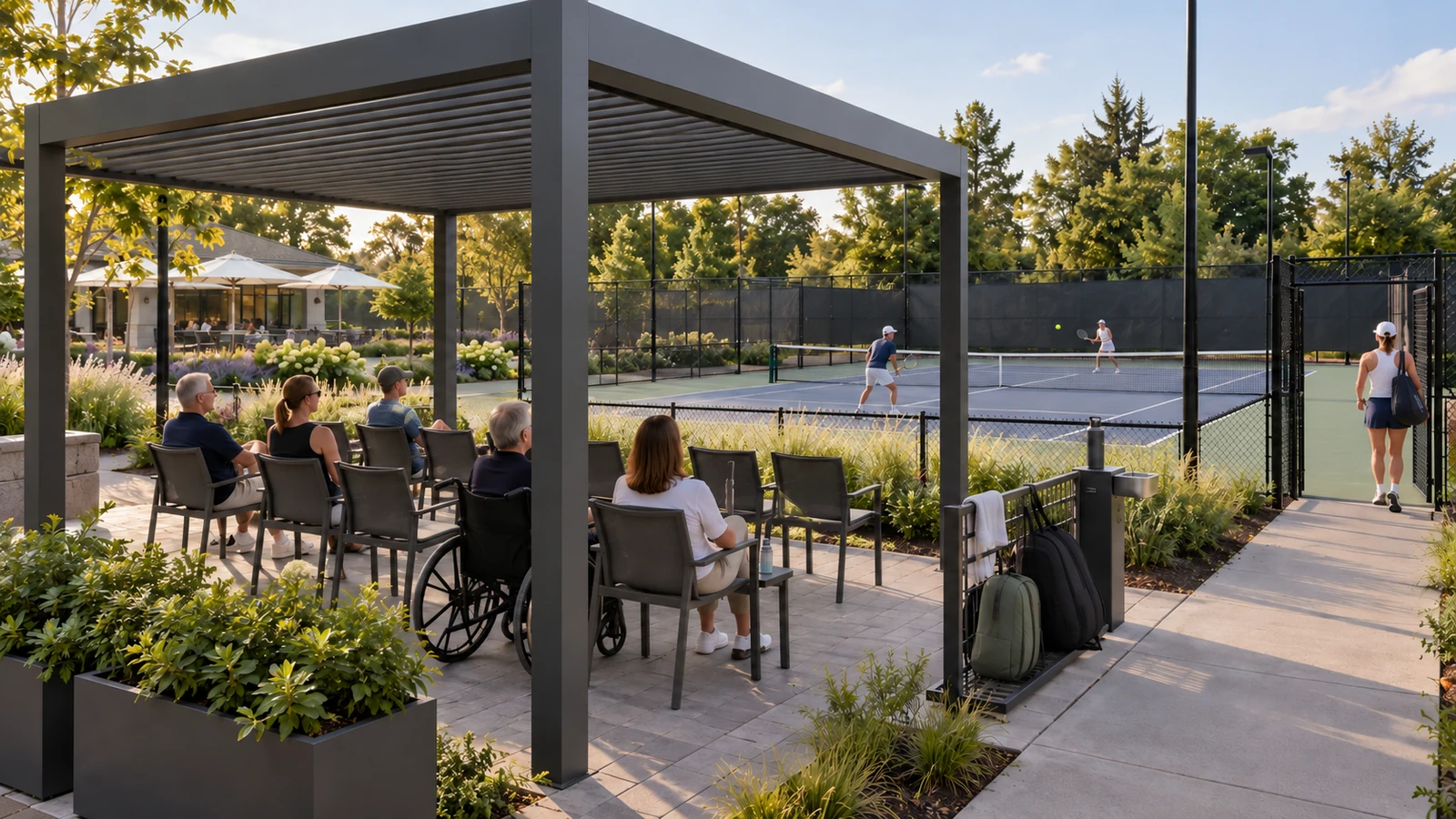
Review the court from actual seats
Review a tennis spectator pergola from the positions where people actually sit rather than a standing-view rendering. Posts, screens, front-row seating and signs can affect views, with different seats experiencing different conditions. TTH200/220 may be considered, but dimensions do not establish a spectator count or unobstructed visibility from every position. Define the court area and typical activities being watched before comparing seating directions. Include player access, staff routes and spectator arrival together so watching does not interfere with matches or routine facility operations.
Trial seated viewing and circulation together
Trial occupied front rows, wheelchair users, companions and spectators leaving partway through, checking both viewing and movement. US Access Board route guidance applies only to relevant American access requirements; sightlines and other sports conditions need separate review. Moving seats toward the court may improve some views while affecting player access or activity boundaries, so do not optimize one measure alone. An ordinary pergola is not a net or verified ball-protection system; assess any required protection separately. Give equipment, bags and refreshment tables positions that do not gradually obstruct routes during play.
- Check different seats from realistic seated positions.
- Trial player passage and spectators standing together.
- Review ball protection and accessories independently.
Test movement during a changeover
Imagine players moving through the court gate between sessions while front-row spectators stand for drinks. If the pergola entrance faces the gate, temporary movement can block rear-row views and delay people passing. Trial seat orientation, drink locations or an operator-confirmed circulation arrangement, checking effects on other spectators. This example gives no universal court clearance or seating capacity and claims no ball-impact resistance. It treats viewing and movement as one operating scenario instead of judging the layout only when empty chairs are neatly arranged before play begins.
Confirm equipment and management for actual events
Provide court boundaries, entrances, seating and equipment for professional review of foundations, drainage and local requirements. UK HSE amateur-sports guidance offers management context without establishing product suitability for every sports environment. Added displays, speakers or lights need separate support, electrical and operating review rather than informal attachment to the structure. Define opening, cleaning, reporting and weather arrangements, revisiting them when seating or activities change. Verifiable improvements come from actual seated-view trials and clear circulation, not unsupported promises of panoramic sightlines or unrestricted all-weather spectating.
Does facing the court guarantee a clear view from every pergola seat?
No. Posts, screens, people and equipment affect seated views, while player and spectator movement changes conditions. Trial occupied seating and routes together. Review ball protection separately; a shade structure is not evidence of either clear sightlines or protective performance.
More questions, practical answers →