Large pergola projects
A resort craft-activity pergola: separate supply pickup and finished work
Separate material pickup, making and finished-work collection for resort craft activities.
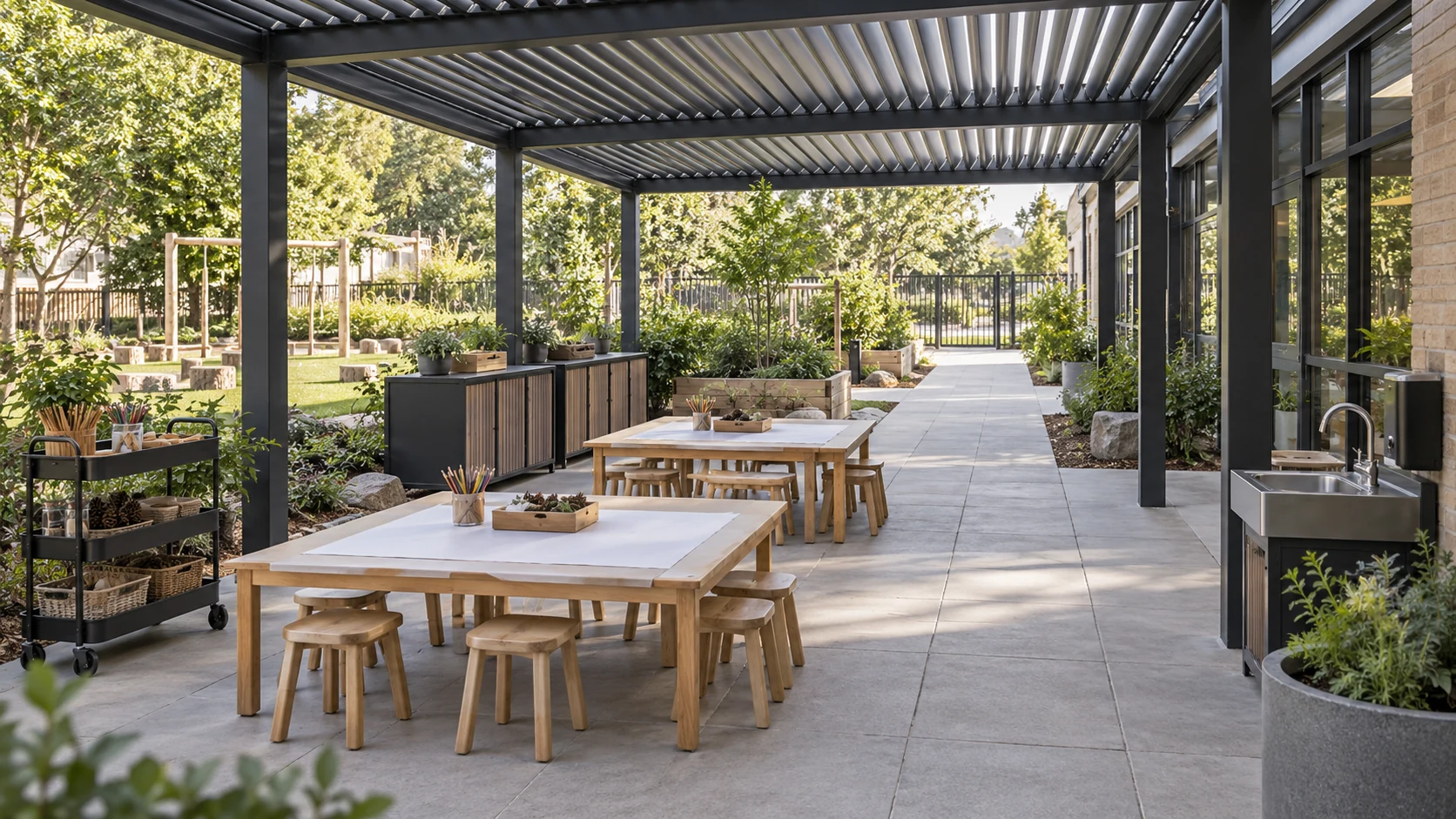
Define how supplies reach participants
Decide whether craft materials arrive pre-packed, are selected on site or are issued individually before arranging workstations. Each method creates different waiting, so an indoor classroom seating chart does not automatically fit an outdoor resort activity. Include drying, wrapping and collection, plus the position of any assisting companion. This guide concerns handovers, not craft-equipment operation or child-management rules. The pavilion supplies spatial conditions while the activity lead confirms actual material and session requirements. Purchasing should follow that task rather than the number of chairs in a reference image.
Distinguish supplies from finished work
Mark unused supplies, shared tools, work in progress and completed pieces separately so collection items are not mistaken for samples or materials. Identify temporary storage and its collection process using only necessary information. Equipment environment, cleanup and waste follow the activity plan; a roof does not establish long-term suitability for every material. Staff need a replenishment receiving position and companions need a place to assist. Mapping these together reveals spaces that appear empty between seats but are repeatedly needed for transfers during the session.
Test closing alongside preparation for the next session
Suppose some participants have not collected finished work when supplies for the next session arrive and shared tools still need resetting. Rehearse with representative containers and empty project boxes. Check whether collectors enter preparation areas or new supplies hide existing labels. Adjust collection timing, holding or sequence with the activity lead. The exercise sets no universal attendance and does not make one layout suitable for every craft. Different sizes, conditions and collection methods require review when a new course replaces the previous programme.
Close the session through item status
Keep uncollected work, pending materials and equipment-reset status for the next shift. Separate pavilion care from class cleanup and assign custody of outside instructor supplies. Give guests concise collection guidance while internal records show owners and unfinished work. Update signs after changes.
Longer storage needs an actual receiving place and person, not an indefinite later instruction. Opening a station requires the supporting conditions as well as materials on the table, and leisure furniture should not become unowned storage between courses.
- Plan stations around actual supply pickup.
- Separate materials, work in progress and collection.
- Retain pending-item status between sessions.
Can a craft session add participants whenever more chairs fit?
Also assess supplies, assisting companions, tools and collection, especially between sessions. Rehearse with representative containers and confirm the actual activity requirements. Seat count or an earlier course layout does not establish readiness.
More questions, practical answers →