Retractable awning choices
An art or craft table under an awning: review color at the work surface
Compare actual paints, paper and materials at the work surface, considering storage and operating conditions without treating ordinary shade as professional color lighting.
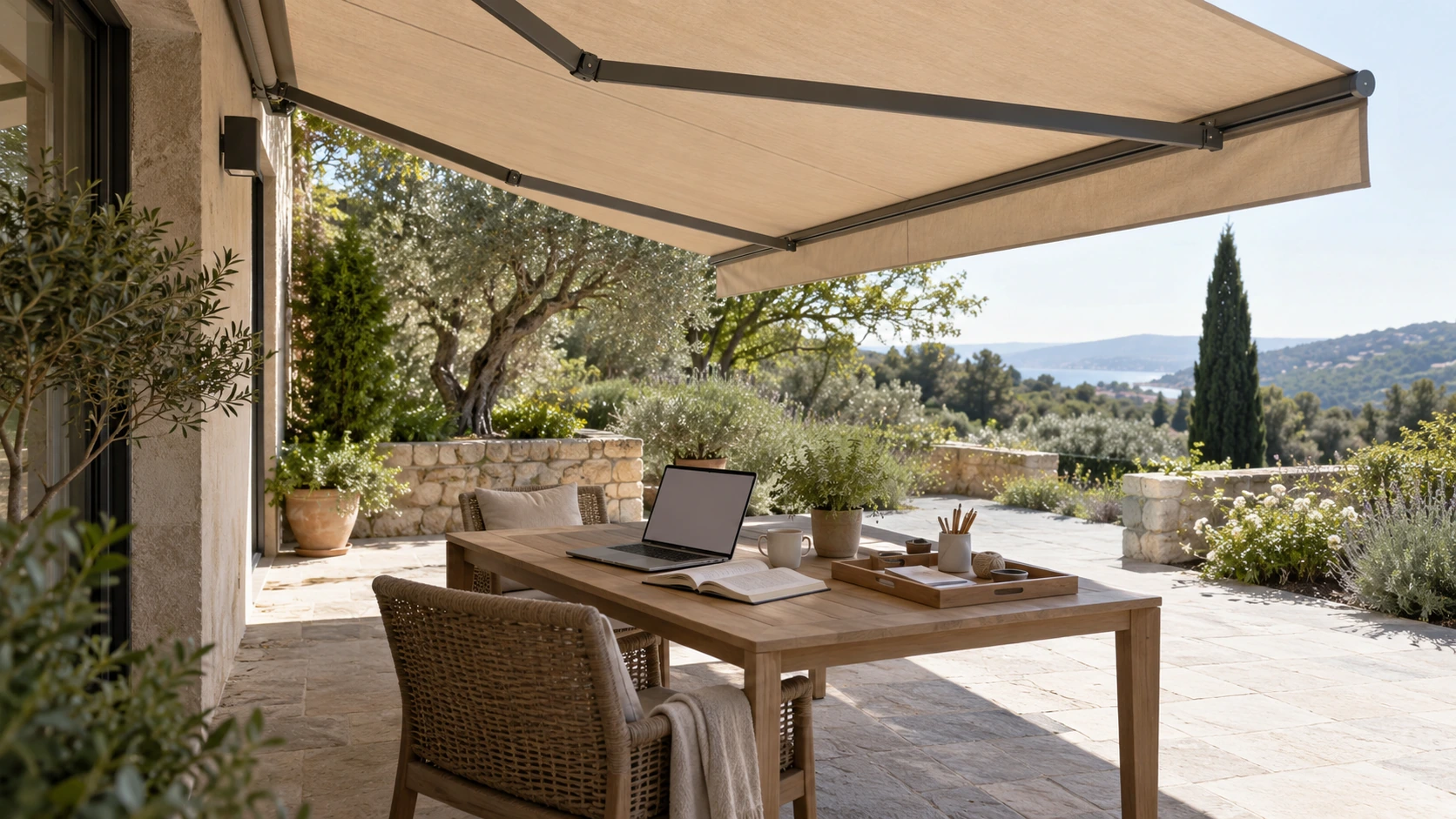
Distinguish informal making from controlled color decisions
Drawing for enjoyment and accurately matching paint or client samples impose different lighting needs. Bring normal paper, colors and tools to the proposed table and observe brightness, reflections and tone during use hours rather than judging only the fabric’s attractiveness. No professional color-rendering or photography rating is assigned here, and color differences are not ruled out. Define the level of judgment the task requires before deciding which parts belong outdoors. That makes the terrace a purposeful workspace instead of assuming every creative activity has the same environmental requirements.
Review candidate fabric with the real materials
If pale textiles are commonly used, compare the same samples under the candidate shade and a suitable indoor reference condition, noting practical judgment differences. Keep viewpoints and timing comparable without treating screen photographs as precise color measurement. Walls, the table and changing daylight also contribute. Tasks requiring repeatable professional color matching need an appropriate environment and process, not an expectation that the awning alone supplies it. Fabric color can be chosen for atmosphere and ordinary preferences without turning its name into a technical quality guarantee.
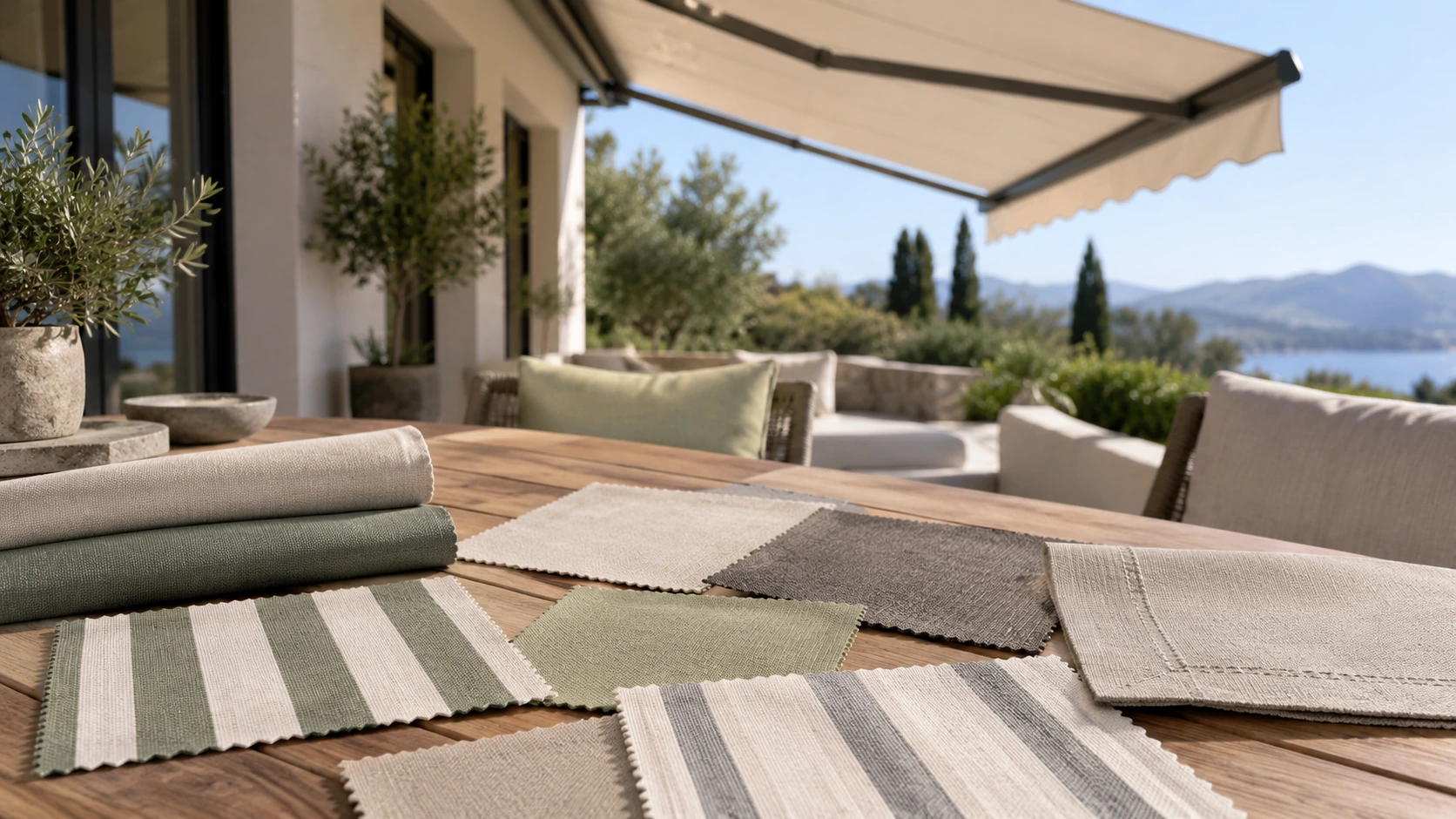
Separate lightweight materials from equipment movement
Paper, thin sheets and empty packaging can move as conditions change, so provide usable storage rather than attaching materials to the front bar or arms. Equipment deployment follows its own weather instructions, while the activity also needs a suitability decision. If closing becomes necessary, clear people and objects through the agreed sequence before the responsible person operates the unit. Follow the separate requirements for paints, adhesives and other materials instead of treating the awning fabric as a disposable protective work layer. Clear boundaries reduce interference between the craft activity and the moving equipment.
Assess convenience through the end-of-session routine
Test retrieving materials, setup, making, cleanup and the instructed final equipment state as one session. Consider how wet work and tools return indoors and whether storage is available instead of judging a staged photograph of neatly arranged brushes. Share real work hours and desk positions with the supplier, comparing shadow, controls and service access. Do not claim improved creative quality without evidence. A suitable arrangement supports the chosen activity under appropriate conditions and provides a clear way to pack away when those conditions change.
- Define informal making versus professional color-matching tasks.
- Compare work-surface light using actual paper, paints and materials.
- Plan clearing and storage for lightweight items and wet work.
Can colors mixed under an awning automatically serve as final client samples?
Not automatically. Ordinary shade does not establish controlled, repeatable color-viewing conditions. Use an appropriate sample-approval process for the task, comparing real materials under relevant outdoor and indoor conditions. Fabric preference cannot replace professional requirements, and one apparent match does not establish consistency at every hour.
More questions, practical answers →