Large pergola projects
School Art Pergolas: Wash-Up, Materials and Clear Routes
Arrange school art pergolas around materials, making, wash-up and drying without blocked routes.
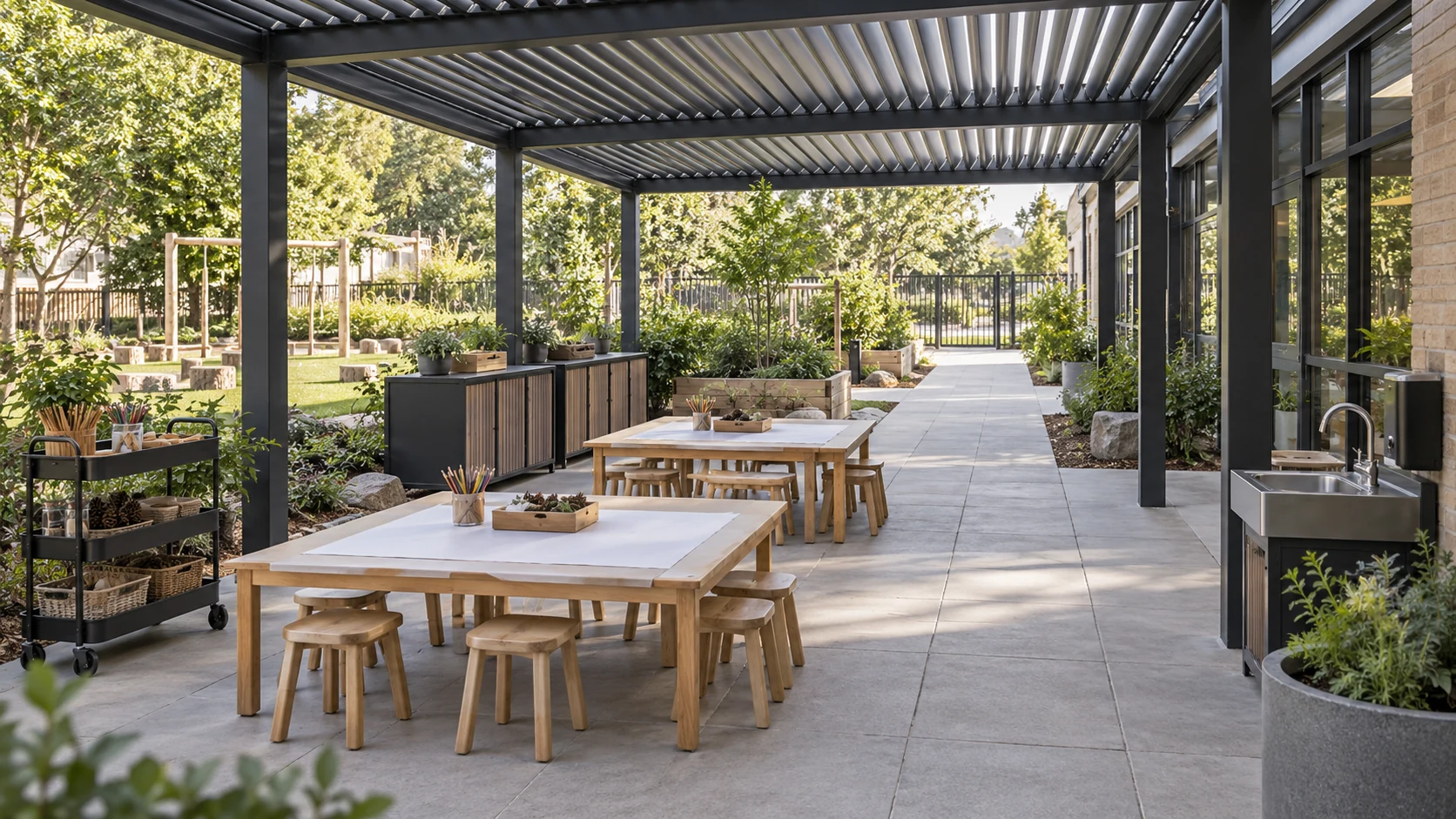
Arrange workstations in activity order
Plan a school art pergola around collecting materials, making work, washing up and drying finished pieces. Moving classroom tables beneath a roof can make students repeatedly cross one another's workspaces while buckets and wet artwork obstruct routes. Teachers should list typical activities and materials, then agree suitable outdoor stages with facilities staff. TTH200/220 may be considered, but size alone cannot determine a class count or suitability for every lesson. CDC school shade planning supports activity-based shade assessment; it does not certify a model's UV performance or educational outcomes.
Review wet work and cleaning routes
For sinks or fixed wash-up facilities, the school and qualified specialists should confirm water, drainage and material handling; do not assume wash water can simply discharge onto the ground. Temporary buckets need stable positions and management without blocking entrances. Trial work surfaces, storage and participation positions together so collecting supplies and washing do not cut through the main work area. Drying and storage racks need confirmed support rather than improvised attachment to unreviewed beams. Tools or other equipment introduced by a lesson require separate suitability and operational review beyond the general pergola arrangement.
- Trial materials, making, wash-up and drying in sequence.
- Assign places for wet work and cleaning equipment.
- Obtain professional review of water, power and drainage.
Test the end-of-lesson changeover
Imagine an outdoor painting lesson ending just before the next group arrives. Students must wash tools, collect artwork and return materials, creating congestion if all three tasks occur at the entrance. Compare storage points and clean-up sequences, with teachers assessing supervision and practicality. Decide where unfinished drying work goes without leaving racks in the route back to classrooms. This scenario sets no standard lesson duration or pupil count. It demonstrates why end-of-session tasks belong in the design rather than testing only whether everyone fits while seated and working.
Review the arrangement when activities change
Provide lesson types, furniture, storage and use periods for foundation, surface and drainage review, with teachers involved in trials. UK HSE venue principles assist circulation checks but do not replace school or local requirements. Larger artwork, display boards or new materials can change routes and cleaning conditions, requiring another review of operating arrangements. Teachers need a workable indoor or rescheduling option when weather is unsuitable. Avoid treating a roof as permission for any art process at any time. Confirm activities against their equipment, materials and supervision requirements individually.
Does a roof mean artwork and storage racks can be hung anywhere?
No. Review weight, attachment and wind effects for the actual structure before adding suspended items. Consider confirmed independent drying facilities while keeping routes clear. Water, power, drainage and materials require separate review; a roof does not replace a complete use assessment.
More questions, practical answers →