Hardtop pavilion planning
A pet-washing pavilion: separate washing, waiting and equipment storage
Plan washing, waiting on leads and tool storage, with floor and drainage facilities confirmed separately.
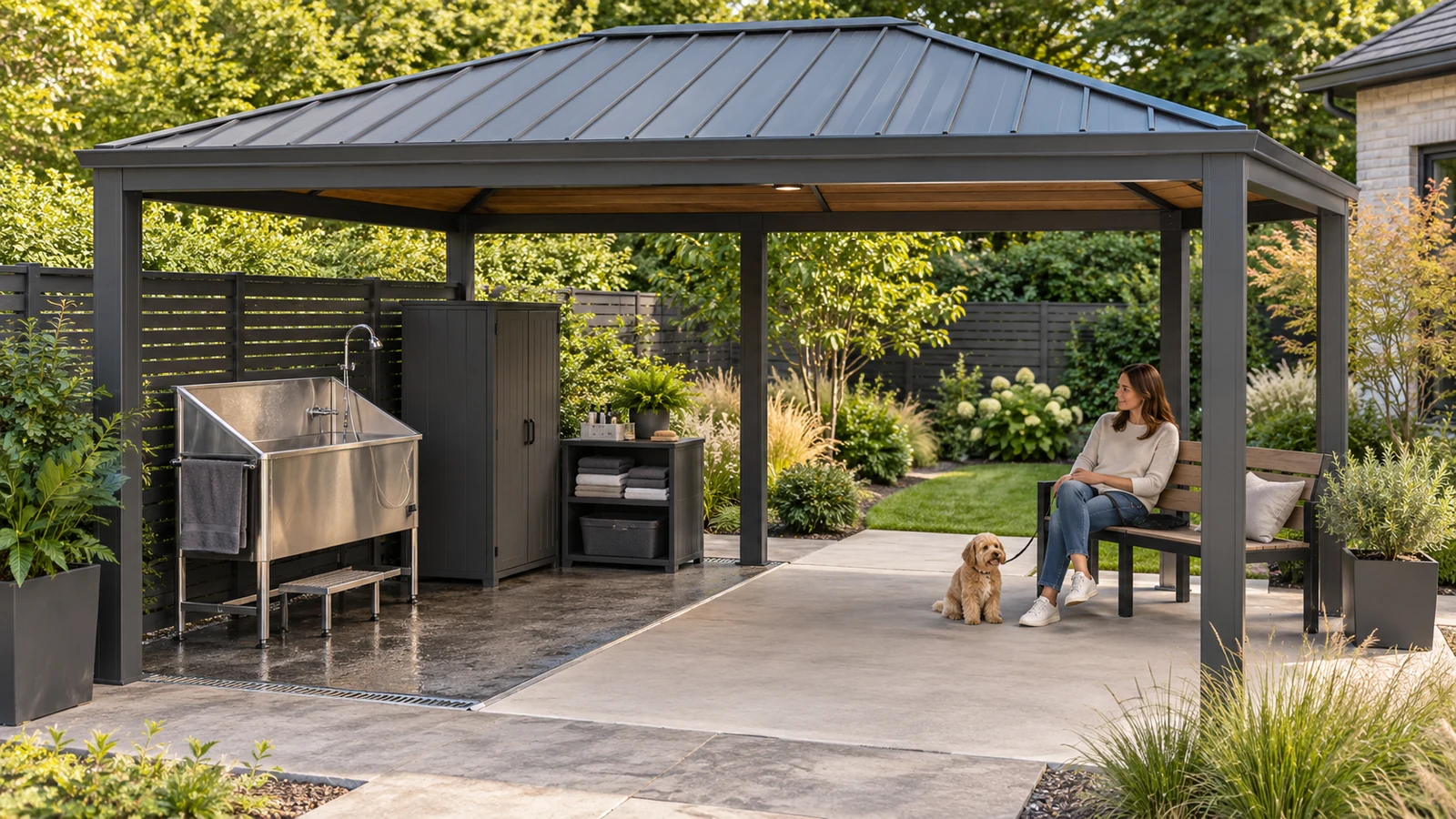
Start with the actual service scope
Define whether the service offers rinsing, simple grooming or another activity, and whether owners or staff perform it. Work surfaces, tools, animal waiting and people positions depend on that choice. A basin beneath a roof does not establish readiness. Specify the pavilion, washing equipment, floor and drainage separately; roof drainage is not a washing-wastewater design. This guide addresses layout and purchasing responsibilities rather than animal-care or facility requirements. A specific service scope makes missing interfaces and supporting work visible before procurement.
Separate wet equipment and waiting on leads
Map hoses, tool containers, towels and leads in use, checking owner waiting and staff turning positions. Obtain a project-appropriate floor and drainage design rather than applying a generic slope or disposal method. Assign clean supplies, used items and personal belongings, including the effect of open cupboards. Animal size and behaviour belong in the service plan, so roof area does not determine simultaneous attendance. Any separate restraint or work equipment needs its own defined use and installation requirements, not an assumed attachment to pavilion members.
Test the transition between appointments
Imagine one owner dries a pet as the next arrives and staff still need to reset wet tools. Rehearse with empty equipment and defined waiting positions to see whether newcomers must cross an unfinished work area. Adjust booking transitions, waiting or cleanup order and obtain operator confirmation. The exercise assesses workflow, not a guarantee of animal behaviour. Define how service pauses or redirects when conditions are unsuitable rather than assuming that closing curtains resolves every environmental or facility requirement.
Make reset status visible
List the tools, supplies and floor conditions that must be reset and assign readiness confirmation. Keep equipment maintenance, activity cleanup and pavilion care distinct. Confirm what can remain overnight under its actual product requirements. Reassess changes to services, equipment or staffing. Describe verified facilities without implying specialist hygiene or animal-care certification for an ordinary pavilion.
For shifts, a visible pending-reset status is more informative than a tidy-looking counter and prevents a new appointment starting before the prior handover is complete.
- Specify washing, floor and drainage facilities separately.
- Check waiting leads and wet equipment in use.
- Assign readiness confirmation after each service.
Can pavilion roof drainage be used directly for pet-washing water?
Do not assume so. Roof rainwater and washing water require separate facility assessment. Confirm collection and treatment, equipment requirements and the layout of wet tools, supplies and waiting before declaring readiness.
More questions, practical answers →