Compact pergola living
Planning a movie night under a pergola: screen, light and routes
Plan a pergola movie night around equipment conditions, projection, light, movement and packing away.
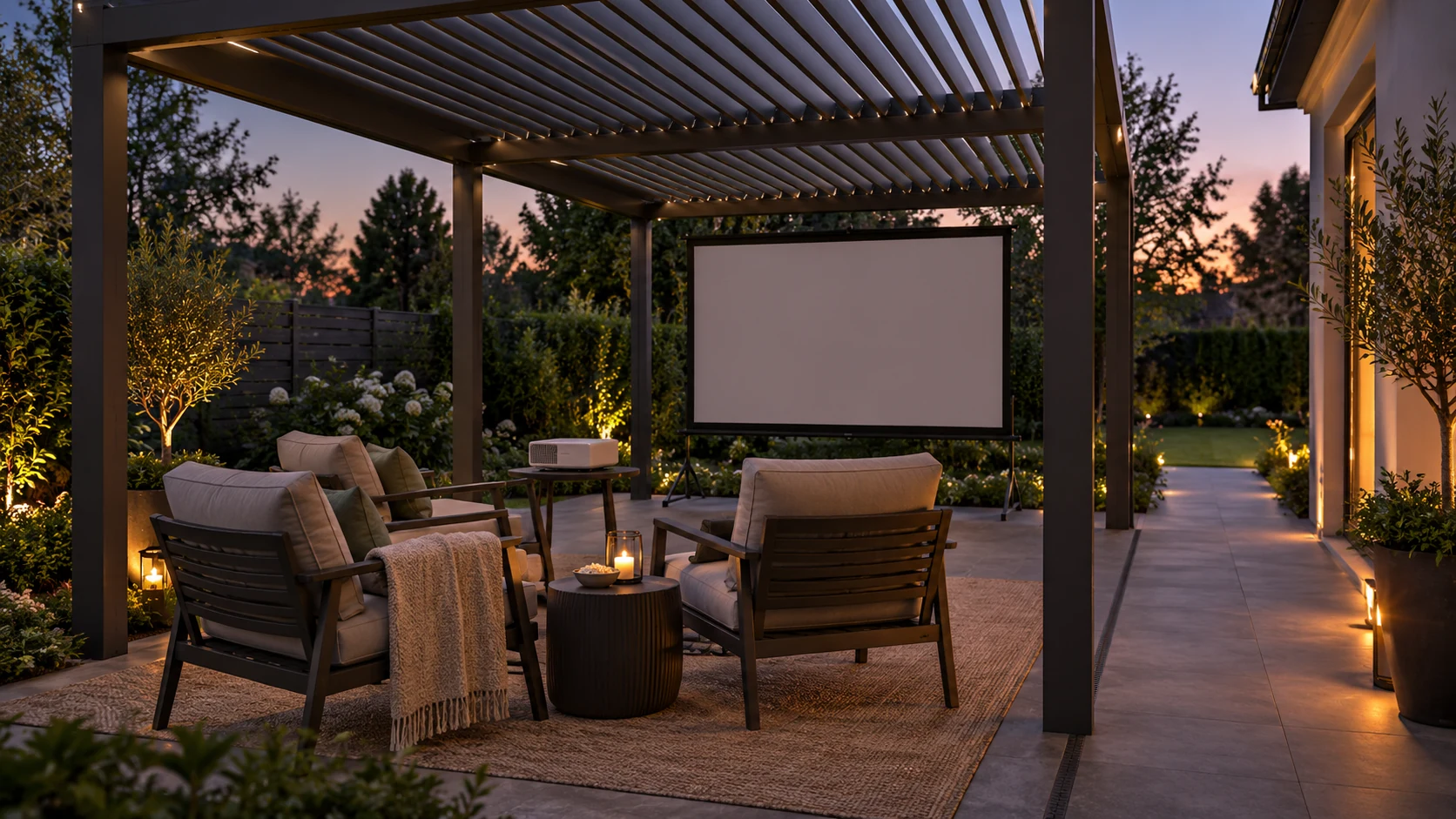
Begin with equipment conditions
Before planning the largest picture, verify the permitted environment for the projector, screen and audio equipment. Some official projector manuals restrict rain, water or excessive humidity; the actual model's requirements govern. A pergola roof does not automatically create an indoor environment compliant with those instructions. List equipment, establish whether intended conditions are allowed and plan return to storage before positioning it. Do not test unsuitable exposure to see what happens or treat another projector's specifications as permission for the one on hand.
A deployed screen changes the space
A stored screen may be a narrow object but, deployed, can occupy views, entrances and routes. Check the projection path and whether someone standing crosses the image. Follow device-specific placement and distance guidance rather than one distance for all lenses and screens. Hanging a screen from the pergola requires confirmed attachment and loading; lightweight fabric does not authorize tying it to a beam. Freestanding supports also need environmental and stability checks. Temporary setup is still a setup with instructions, not an exemption from them.
Test at the intended viewing time
Imagine a family planning films after dinner. A daytime layout seems fine, but ordinary lights affect the picture while switching them off complicates movement. Under permitted equipment conditions, compare lighting, seats and routes at the intended time. This hypothetical case promises no brightness solution or daytime performance. Rehearse a short complete sequence, including one person fetching water, another remaining seated and equipment removal afterward. Record conflicts before deciding whether any positions deserve a more permanent arrangement, rather than optimizing the image while ignoring the rest of the evening.
Plan restoration after the film
Create a setup-and-return checklist from verified instructions, showing cables, devices, controls and storage. Have power and wiring arranged appropriately, keeping temporary leads out of routes and moving parts. Consider sound and light in relation to the household and surroundings, checking applicable local requirements. Shut down, handle and store equipment as directed, restoring everyday use afterward. A practical movie night is not merely an image appearing; the family must be able to repeat preparation, viewing and ending with a workable arrangement for every stage.
- Verify environments and storage for each device.
- Test projection and movement with the screen deployed.
- Check lighting at the intended viewing time.
Can a screen simply be tied to a pergola beam?
Verify screen and support conditions, approved attachment and loading, plus projector environment and ventilation. Then test viewing, projection and movement with the complete setup, including power and packing away. Cover does not establish equipment suitability.
More questions, practical answers →