Compact pergola living
Board games beneath a pergola: test seats, cards and wind
Test actual games under a pergola for visibility, reach, pieces and packing away instead of measuring the table alone.
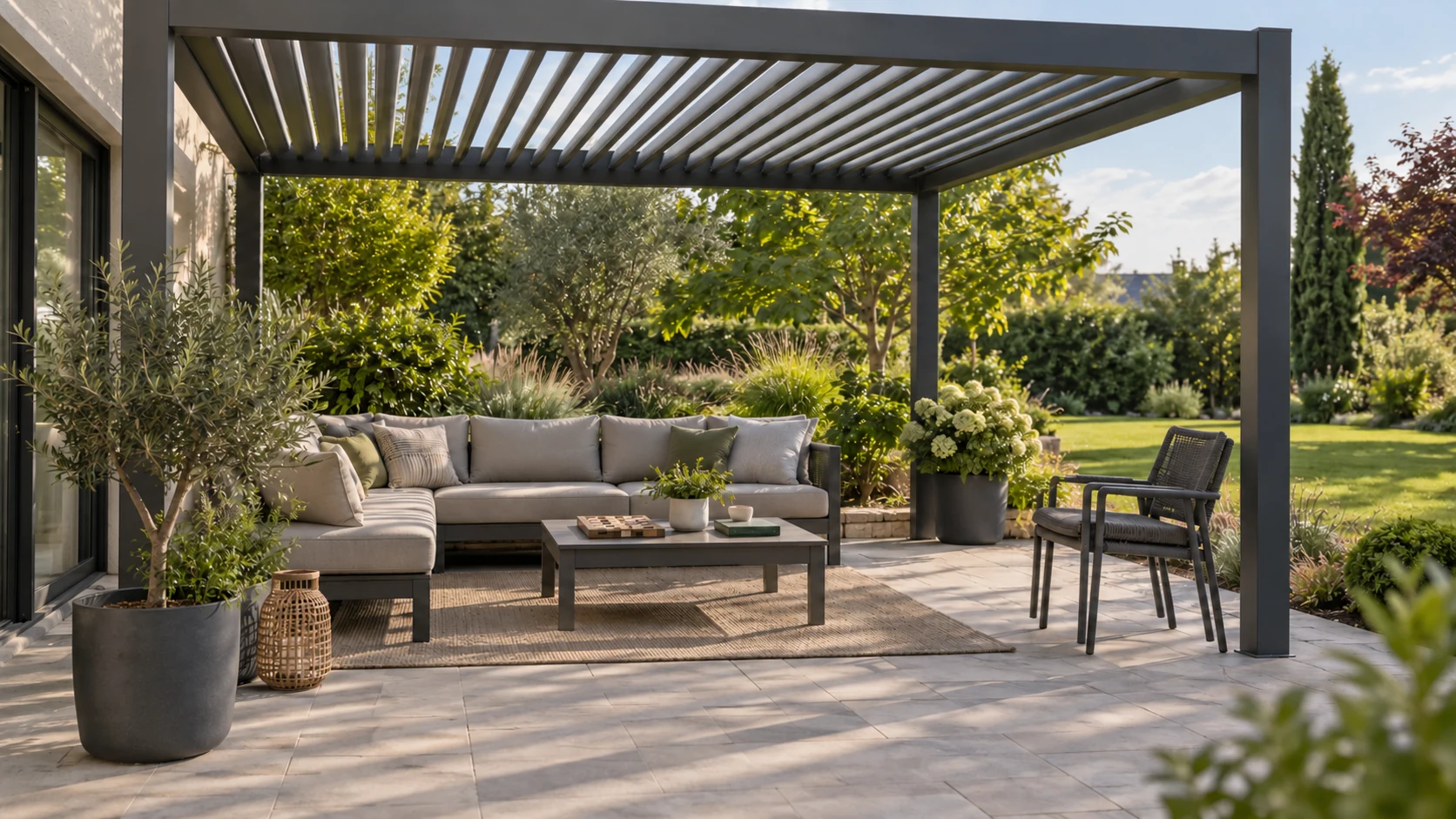
Players must both see and reach
Fitting a board is only the first step. Each player must read text, reach shared areas and place cards and drinks. A long table may make central pieces difficult for end players, while a small one crowds components at the edges. Do not choose dimensions solely by headcount. Set up the games actually played and involve regular users through a round. There is no universal table size here; keeping game-specific needs visible avoids furniture that photographs well but frustrates the household's usual play.
Observe air and light at component level
Observe lightweight cards, paper money and small pieces under suitable real conditions. A roof or side accessory should not be described as guaranteeing no wind; product limits still apply. Reflections may differ by seat and light direction, so one clear view does not establish clear views for everyone. Compare permitted furniture and lighting adjustments without hanging objects from moving parts or improvising unsuitable restraints. Separate drink positions from game components to reduce clashes during reaching. These issues arise from the arrangement, not merely from any single object's appearance.
Test interruption and resumption
Imagine four players with many small components and one leaving briefly. Rehearse that person's passage and check whether others must move or the table gets struck. Then simulate a pause and appropriate preservation or packing away of the game. This hypothetical example guarantees no all-weather storage box and does not recommend keeping games outdoors. It tests interruption and resumption. If household passage requires clearing the entire table, compare orientation, fewer simultaneous objects or another game better matched to the available shared space.
Define the experience from box out to box away
Record table needs, easily lost parts and feedback from each seat before choosing furniture and necessary lighting. Store boxes according to their material requirements and establish a post-game floor and seat check. With children, follow age and small-part instructions for supervision and storage. Temporary surfaces and lamps retain their use requirements, and routes should be restored afterward. A complete experience includes finding components and putting them away as well as enjoying the round, allowing the next household activity to begin without inheriting an unfinished game across its path.
- Test reading and shared-area reach from every seat.
- Rehearse a departure and a temporary pause.
- Plan component checks and box storage.
Do pergola side screens remove wind concerns for board games?
No guarantee follows. Check the actual product and conditions and observe components where they will be used. Verify visibility, reach and leaving from every seat, then play and pack away a familiar game before judging the arrangement.
More questions, practical answers →