Compact pergola living
Round or rectangular dining table under a small pergola?
Compare round and rectangular tables using seating relationships, table legs and real chair movements.
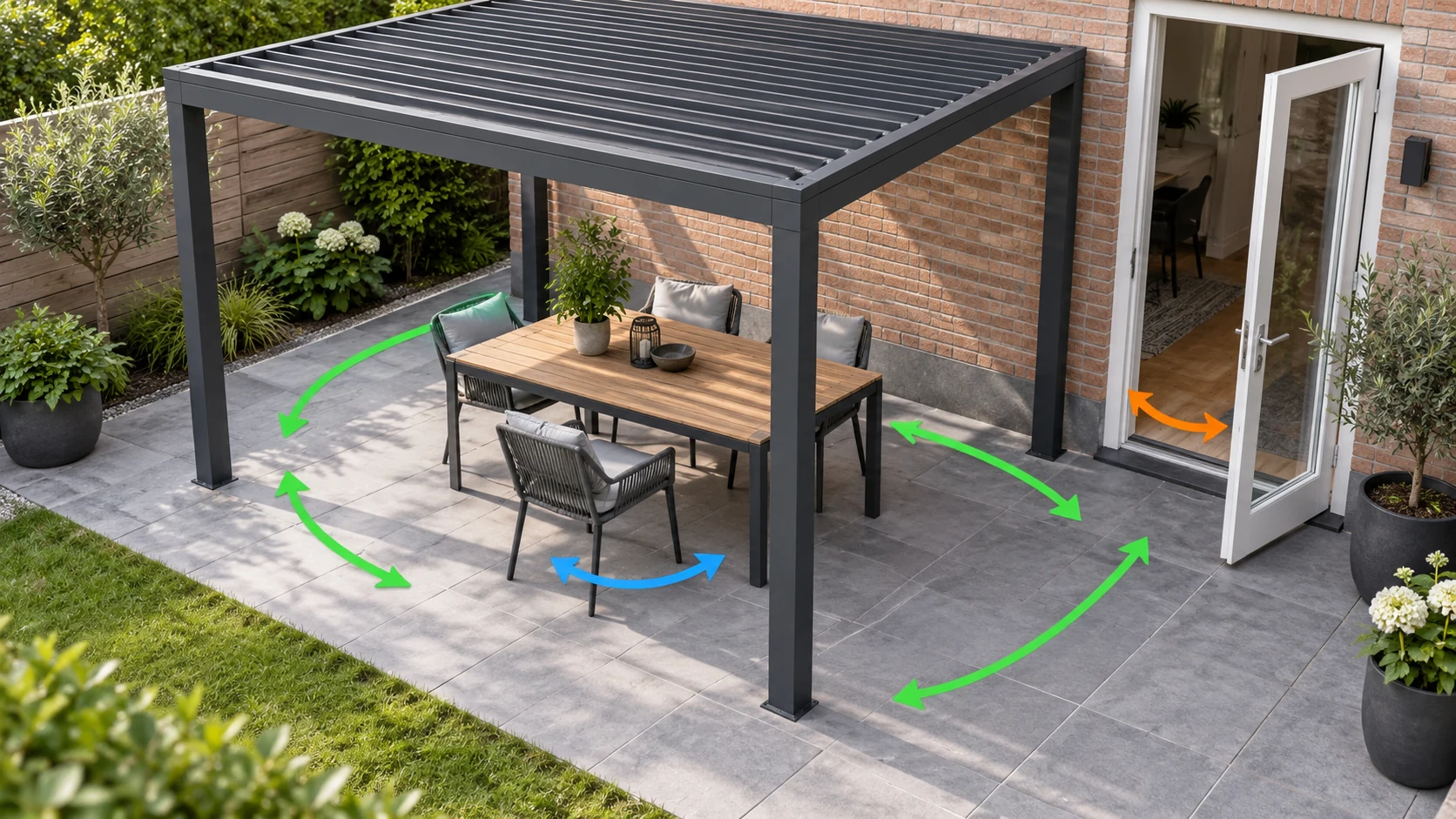
Start with how people face each other
Table shape should reflect how the household eats and talks. Round tables arrange people around a center, although legs can affect knee space. Rectangles establish a direction, but end seats may fall beside posts or entrances. Width and advertised capacity do not prove comfort. Set out everyday dishes and seat the actual users to check elbows, legs and adjacent places. Test ordinary meals and occasional full occupancy separately, rather than letting the largest possible gathering dictate the everyday layout.
Draw chair movement beyond the tabletop
A round top seems free of corners and a rectangle easy to position at an edge, but test both with chair movement. A withdrawn chair striking a planter, side feature or passerby may matter more than a tabletop corner. Someone serving also needs somewhere to set dishes without squeezing behind the most crowded seat. Tape the two tabletop outlines and add actual chairs. Have everyone sit, leave and walk around, checking continuous passage instead of judging a tidy static arrangement.
Compare two layouts for one household
Imagine four diners with the kitchen door on a short side of the pergola. A round table might support conversation while placing one chair's withdrawal in the doorway route. A rectangle might preserve side passage but leave an end diner farther from serving. Rehearse both completely rather than declaring either universally space-saving. This hypothetical method provides no minimum area. Try rotating the rectangle or moving the round table's center, and record what works with the household's real chairs, dishes and habits.
Include legs and cleaning in the choice
Inspect leg interference, moving the table for cleaning and outdoor suitability once a shape works. Later changes to armchairs require another dimensional check; usable capacity may change. Bring the post and doorway plan to a showroom, photograph full seating and withdrawn chairs and compare users' feedback. Choose around the main dining routine rather than insisting every edge align with the frame. The suitable shape emerges from practical trade-offs, not a universal advantage of circles or rectangles in every small garden.
Include children and older relatives in the trial, recording who needs help moving a chair instead of relying on the buyer's impressions alone.
- Use the same chairs and dishes for both shapes.
- Check serving while someone leaves a seat.
- Include legs, armrests and cleaning in the trial.
Is a round table always better in a small pergola?
Not necessarily. Round seating can obstruct entrances and rectangular end seats may conflict with posts. Test actual occupancy through sitting, serving and leaving, including legs and armrests instead of relying on tabletop area or advertised capacity.
More questions, practical answers →