Commercial projects
What pergola renderings, product photographs and completed projects can show
Distinguish design intent, physical product details and project context when reviewing pergola images.
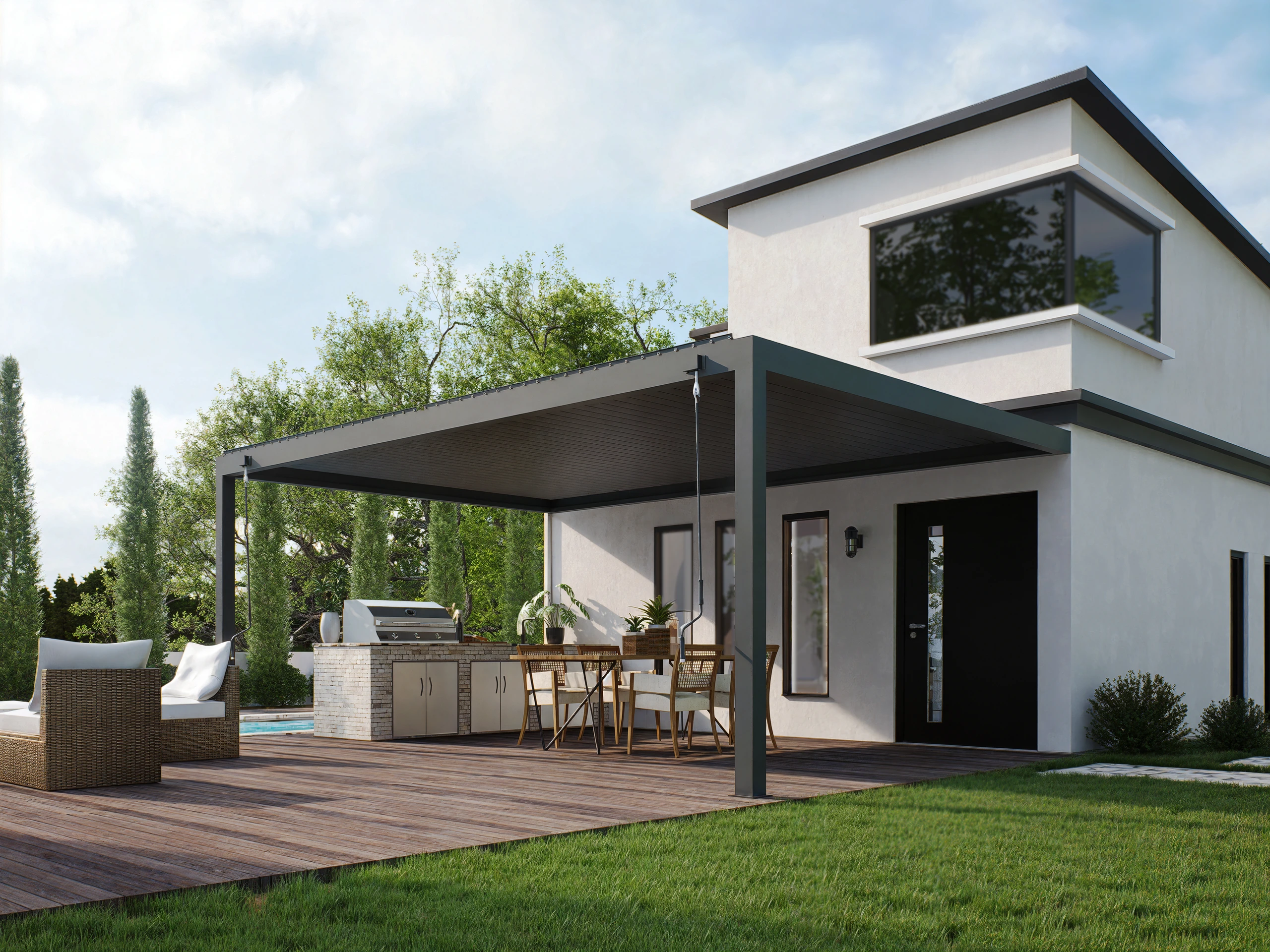
Renderings communicate design intent
Renderings help discuss colour, furniture, atmosphere and broad layout, especially with buyers unfamiliar with construction. Spans, connections, light and surroundings may be idealised, so the image does not establish that a product has been made or installed. Label it as a design illustration and connect important positions to project drawings. Unusual cantilevers, column-free openings or complex accessories need separate confirmation of availability and assessment; visual presence does not make them orderable.
Product photographs reveal visible construction
Physical photographs can show finishes, interfaces, louver ends, bases and accessory positions, but the model and revision still matter. A close-up without scale or context may not establish dimensions and cannot prove load or coating performance. Pair overall and detail views with drawing callouts to reduce misidentification. Preserve real branding and provenance rather than removing another maker’s marks to present a reference as an owned project. Hidden materials and internal construction still need matching documentation.
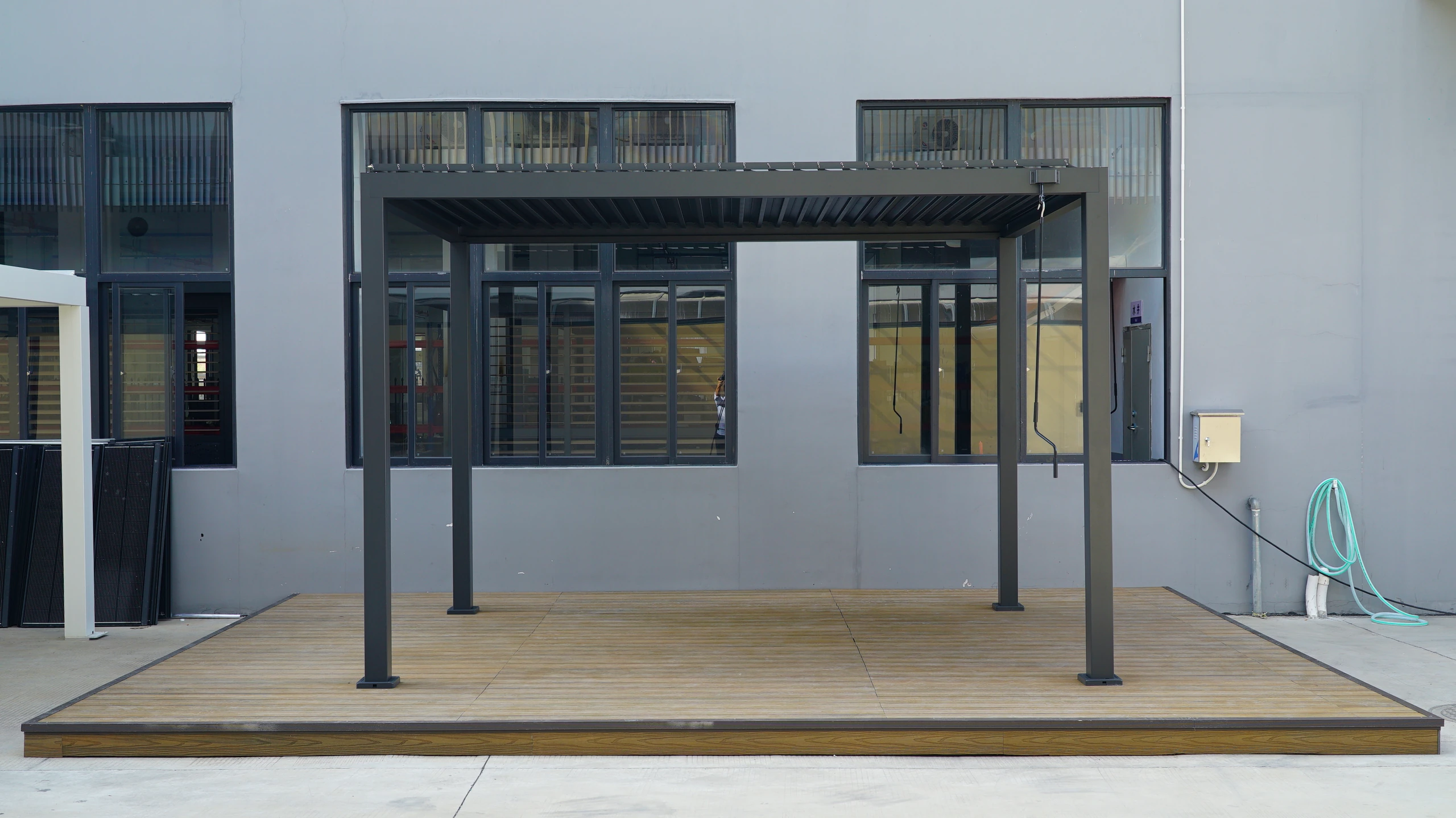
Completed projects need context
Completed photographs are more informative with a supported location context, use, timing, configuration and participating parties. Privacy and contracts may limit disclosure, but they do not justify inventing places, customers or quantities. Describe verified circumstances anonymously where needed and state the information available. Check whether before, installation and completion records correspond rather than combining unrelated images into one story. A case documents that project; it does not establish identical performance or services for every project.
Choose evidence for the question
For colour, request appropriate samples and photographs. For installation support, review versioned instructions and process records. For site suitability, provide site inputs and obtain relevant design evidence. A completed coastal image may show an environment but does not establish that the model meets your corrosion or wind conditions. State the procurement question first and ask for evidence that addresses it instead of simply requesting more pictures.
Preserve the connection after delivery
After completion, archive the actual configuration, drawing revision and site images together for future service or expansion. Distinguish concept imagery from photographs in public presentations while retaining fuller internal records. This helps future buyers understand the evidence and gives service staff the actual construction instead of leaving them to infer it from one distant view.
- Identify image type, source and matching model or project.
- Give context for details and do not substitute images for performance evidence.
- Obtain appropriate permission for case material and do not invent missing facts.
Can a completed-project photograph establish wind performance or service life?
Not by itself. A photograph shows a setting and visible construction, while performance requires design or test evidence matching the model, configuration and conditions. Long-term behaviour needs appropriate records. Distinguish renderings, product photographs and project documentation, and connect each to a specific buying question.
More questions, practical answers →