Hardtop pavilion planning
Inspecting a hardtop gazebo after hail: appearance and connections
Record roof appearance and connection areas after hail, distinguishing observations from technical conclusions.
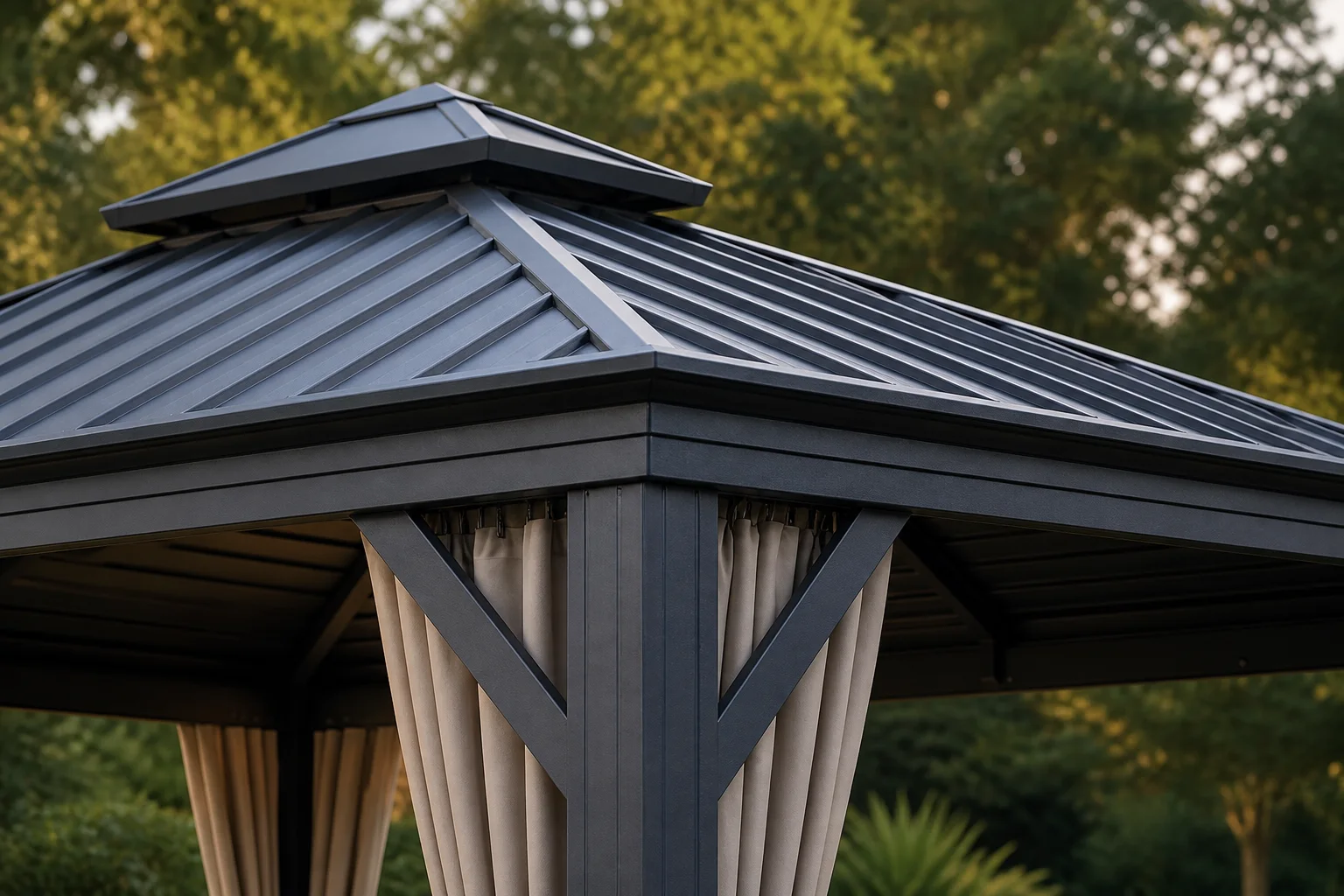
Begin with an appropriate observation method
After hail, begin with safe observation rather than climbing onto the roof to inspect one mark. Describe visible panel, eave, trim and connection concerns separately, retaining event timing and overall views. No visible dent is not a complete technical clearance, while a dent does not let the owner conclude that the whole pavilion needs replacement. Further assessment belongs with the supplier or appropriate professionals. This article states no TTH hail rating and offers no method for calculating remaining performance from dent size.
Organize observations by location, not just count
Map each observation to a roof diagram or photograph with post references. Distinguish a dent, crease, apparent movement or unidentified condition, using paired overall and detail views. Record later water or sound separately with timing instead of automatically attributing everything to hail. Do not pull trim or strike panels to test them. The evidence should help service personnel identify the next questions and inspection locations, not require the owner to classify every observation technically.
Consider a mix of surface marks and an edge concern
Imagine several shallow-looking panel marks and one trim area appearing different from the handover photograph. Submit them as separate observations rather than overlooking the edge because most surfaces look ordinary. Earlier images help, provided differences in angle are stated. Combining event observations, original condition and drawings is more useful than an isolated close-up. If a site visit is needed, responsible personnel should define access and any use restrictions while the owner coordinates people and furniture accordingly.
Separate assessment findings from repair scope
Record which locations were assessed, the basis and any repair, replacement or observation requirements. Cosmetic treatment is not re-certification of the whole structure, and another product hail claim is not evidence for this site. Provide factual records for any service or insurance process without assuming coverage. Update replaced parts and retain unresolved items.
At a venue, keep technical findings and guest-area arrangements distinct. Resume affected use according to the actual confirmation rather than simply because the weather clears or an event is approaching.
- Record panels, edges and connections from appropriate positions.
- Compare handover images while noting viewing differences.
- Base repair and affected-area use on actual assessment findings.
Can small dents after hail be assumed harmless?
Size alone is insufficient. Record locations, components and related observations for appropriate review. Do not climb, flatten dents or pull trim to test it. Appearance records support rather than replace technical assessment.
More questions, practical answers →