Home planning
Adding a pergola outside a window while preserving indoor daylight
Review beams, roof states, screens and furniture from inside the home to understand the daylight trade-offs of a pergola beside a window.
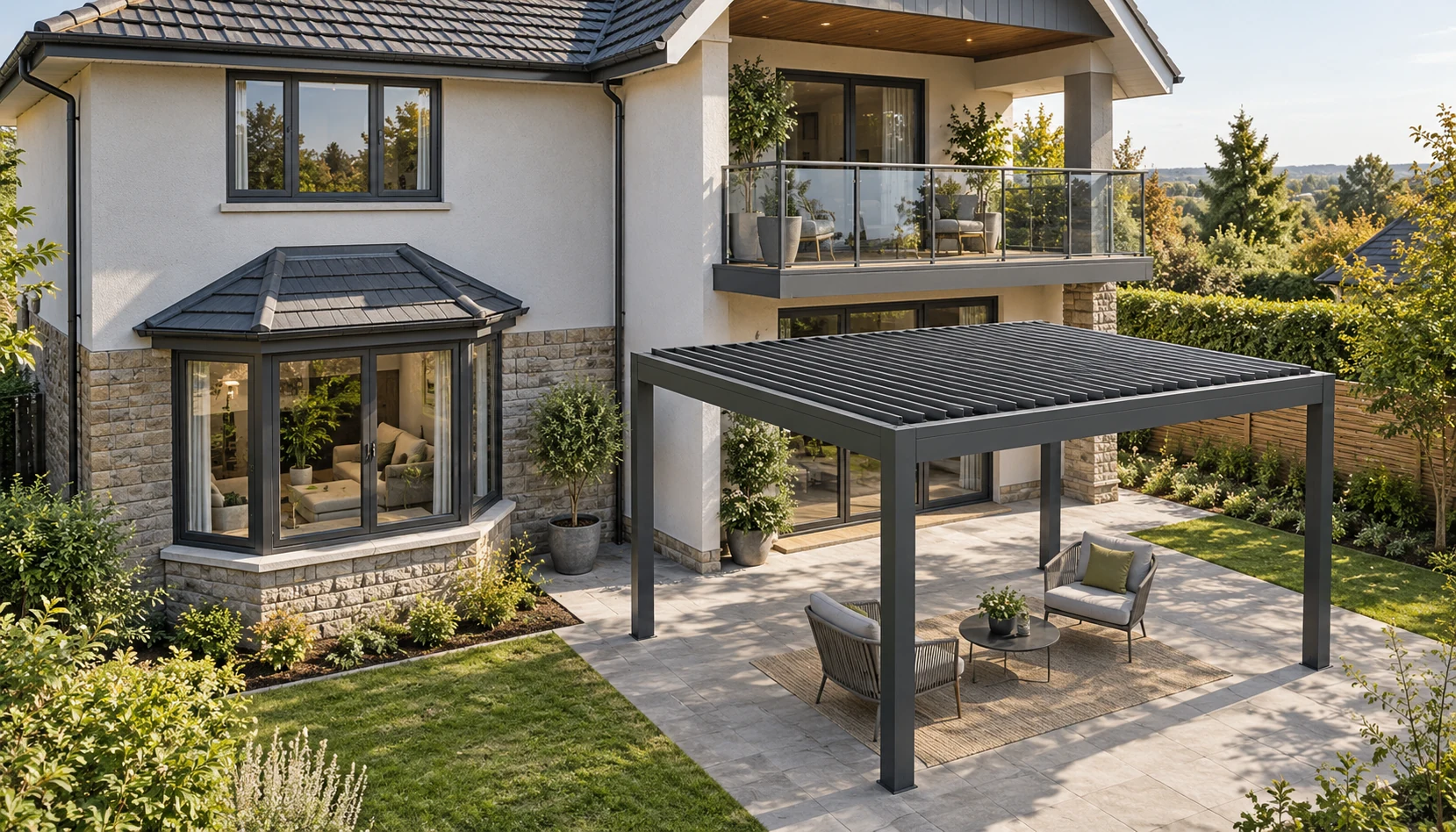
Start at the places you occupy indoors
Planning often stays in the garden, even though the household may spend more time looking out from the living room. Photograph the window from the sofa, dining table and work surface. Mark the sky, tree canopy and distant views you want to retain. Record how the room feels on cloudy and sunny days, distinguishing excessive direct light from a generally dim interior. The same obstruction affects rooms differently, so an exterior rendering cannot guarantee daylight performance. Keep these observations and return to the same indoor viewpoints whenever beams, roof arrangements or side accessories change.
Compare fixed framing and adjustable elements separately
Fixed beams and posts behave differently from adjustable roof components. Even with a roof in an open position, beams, perimeter framing and stored parts may remain in front of the window. Ask for a simple view from indoors showing the window head and frame edges, rather than only the most flattering exterior angle. Include side screens because an obstruction next to the window can change the room's experience. Where daylight is especially important, obtain an appropriate design assessment. These layout checks help prepare the brief but do not replace professional analysis needed for the project.
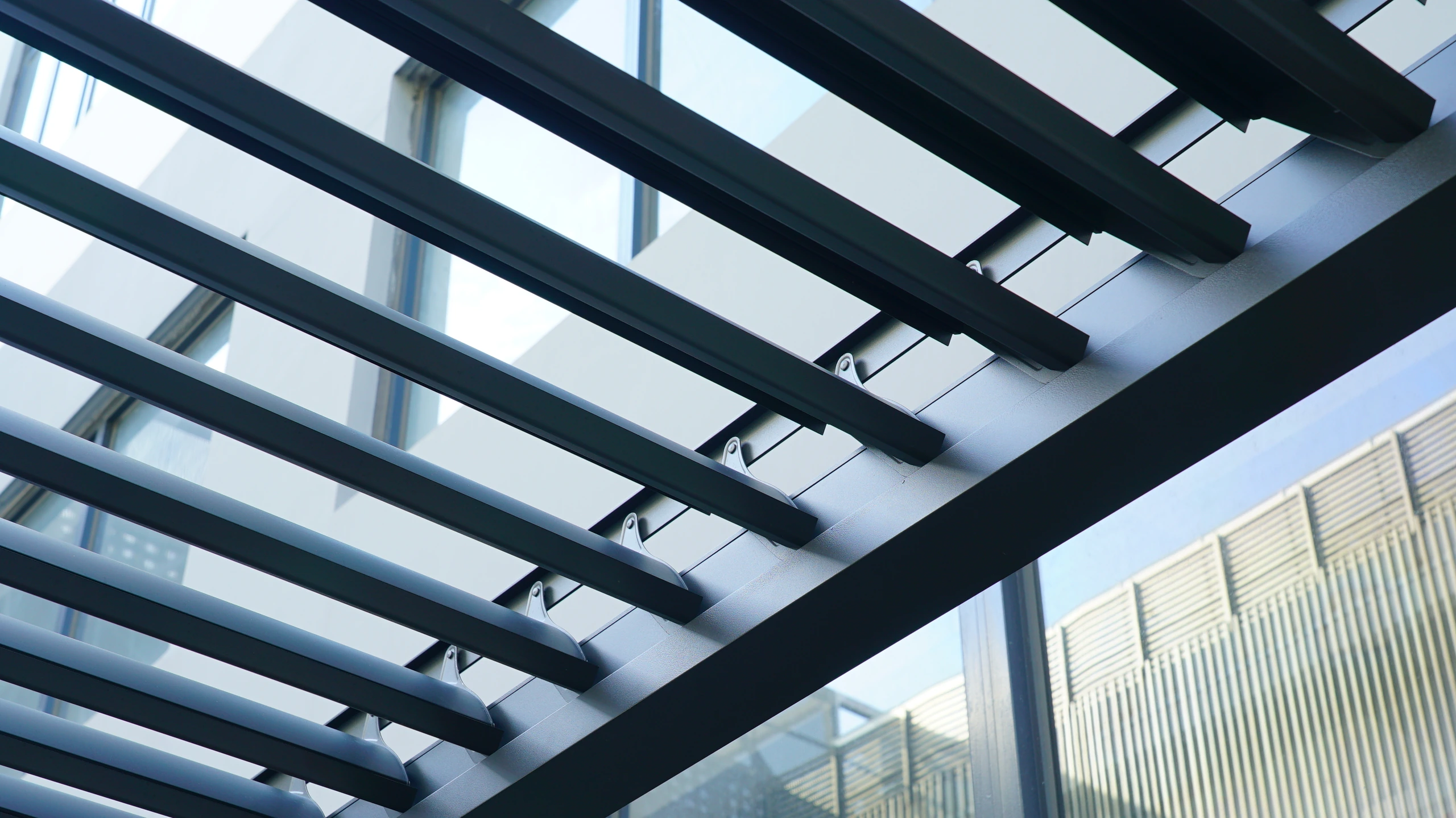
Test a hypothetical reading corner
Imagine a frequently used reading chair beside the living-room window and a proposed terrace table close to the house. Compare moving the frame toward the garden, turning the table and reducing accessories along the window side. View every option from the same indoor position instead of judging by covered area alone. If preserving the reading corner's brightness means accepting less coverage, establish whether the household accepts that trade-off. The example does not promise that any particular movement will solve daylight; it makes an important indoor activity part of the pergola brief.
Include indoor review in final confirmation
At confirmation, review more than a fully closed roof or the most open view. List the states you expect to use and when the household would deploy side shading. Indoor lights do not answer a daylight requirement, while automatic camera exposure can conceal differences, so combine consistent comparisons with direct observation. Record why changes were made so a later accessory does not undo an agreed daylight compromise. Keep window opening and cleaning access in this review as well.
Try moving existing indoor furniture temporarily to see whether avoiding an obstruction is acceptable. This should be a deliberate household choice, not a forced adjustment after construction. A plain requirement, such as retaining a patch of sky from the reading chair, also communicates the spatial experience beyond light levels.
- Photograph outward views from the sofa, reading seat and dining table.
- Compare all fixed framing and accessory states.
- Record daylight trade-offs and window service access on the confirmation plan.
Does opening the louvers eliminate the effect on indoor daylight?
That cannot be guaranteed. Fixed beams, perimeter framing, the actual open state and side shading still affect the window outlook, while the room and window conditions also matter. Compare complete proposals from occupied indoor positions and obtain further assessment where daylight requirements warrant it.
More questions, practical answers →