Retractable awning choices
A barber-shop awning: balance mirror views and the storefront
Assess the seated mirror view, window display and outside waiting area separately so improving entrance shade does not unintentionally obscure the shop.
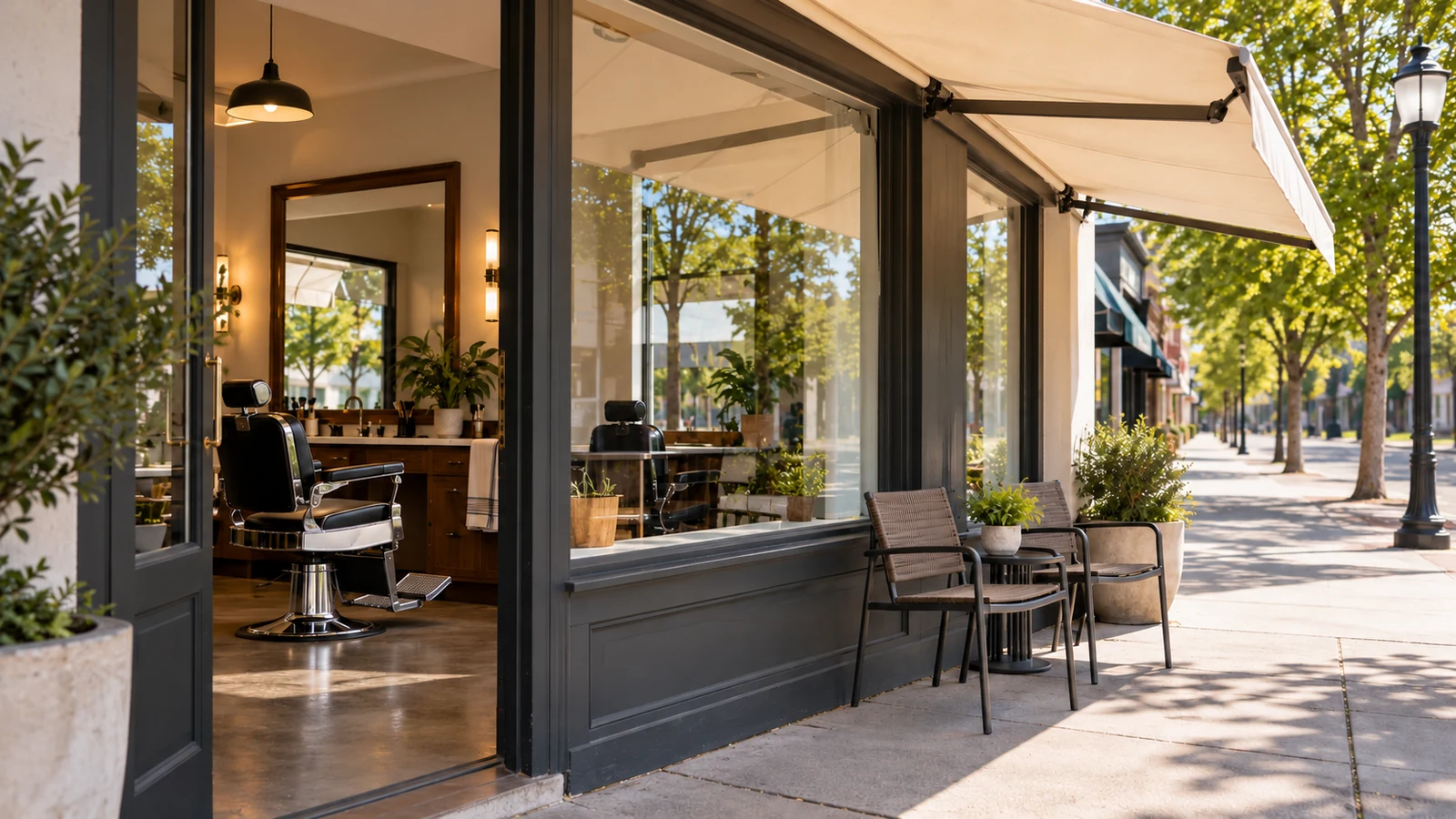
Begin from the seat where the issue occurs
An awning may be proposed because customers face uncomfortable light in mirrors or because waiting outside is exposed. Observe from the barber chair, staff position and street, recording times and directions. Mirror brightness and storefront reflections may have different causes; entrance shade area does not prove both are resolved. This is a site-comparison method, not a fixed cooling claim or treatment for visual discomfort. Appropriate lighting or design input can help coordinate exterior shading with mirrors, existing fixtures and glazing instead of treating the awning as an isolated object.
Review deployed appearance with display visibility
Show the cassette, front edge, shop name and window display on one elevation in retracted and usual deployed states. If the edge hides appointment information or imagery, compare display relocation or equipment layout before installation instead of improvising signs afterward. Review fabric samples in actual light, not only a website palette. Confirm applicable storefront and property requirements for this location. Being outside the shop does not remove all other constraints. Customer recognition from the street and experience inside belong in the same purchasing discussion.
Keep waiting clear of entrances and service movement
Outdoor waiting chairs share space with arriving customers, strollers and staff moving supplies. Test actual seated, standing and door-opening movements, checking whether preferred shade creates a circulation conflict. Do not compress the entrance to fit every chair beneath the fabric outline. Relevant local access requirements need appropriate assessment, while staff can contribute observations from busy periods. Provide an alternative waiting arrangement when conditions or equipment make outdoor use unsuitable; an appointment should not leave customers dependent on a space that cannot currently be used as intended.
Review handover from both inside and outside
At handover, review the agreed mirror viewpoints and street recognition under relevant conditions, then confirm operation, maintenance access and closing responsibility. Effects not observed at the troublesome hour remain unverified; a cloudy-day check does not establish every lighting condition. Reassess after moving mirrors, chairs or displays. Customer and staff feedback may inform improvements, but does not justify guaranteed footfall claims without evidence. A suitable proposal addresses the observed issue while preserving the display, circulation and ordinary operating space the shop still needs.
- Record light issues from the chair, staff position and street.
- Check whether deployment obscures names or display information.
- Test waiting seats, door movement and service routes together.
Will shading a barber-shop entrance necessarily remove mirror glare?
Not necessarily. Observe from the actual chair and staff positions at the relevant time, considering mirrors, glazing and lights. Entrance shade does not establish that every interior light issue is resolved. Review under agreed conditions and preserve storefront visibility and circulation, leaving unobserved effects unverified.
More questions, practical answers →