Retractable awning choices
An awning beside outward-opening windows: measure the moving window
Map the window from closed to fully open, then check each awning operating state and the access needed for servicing.
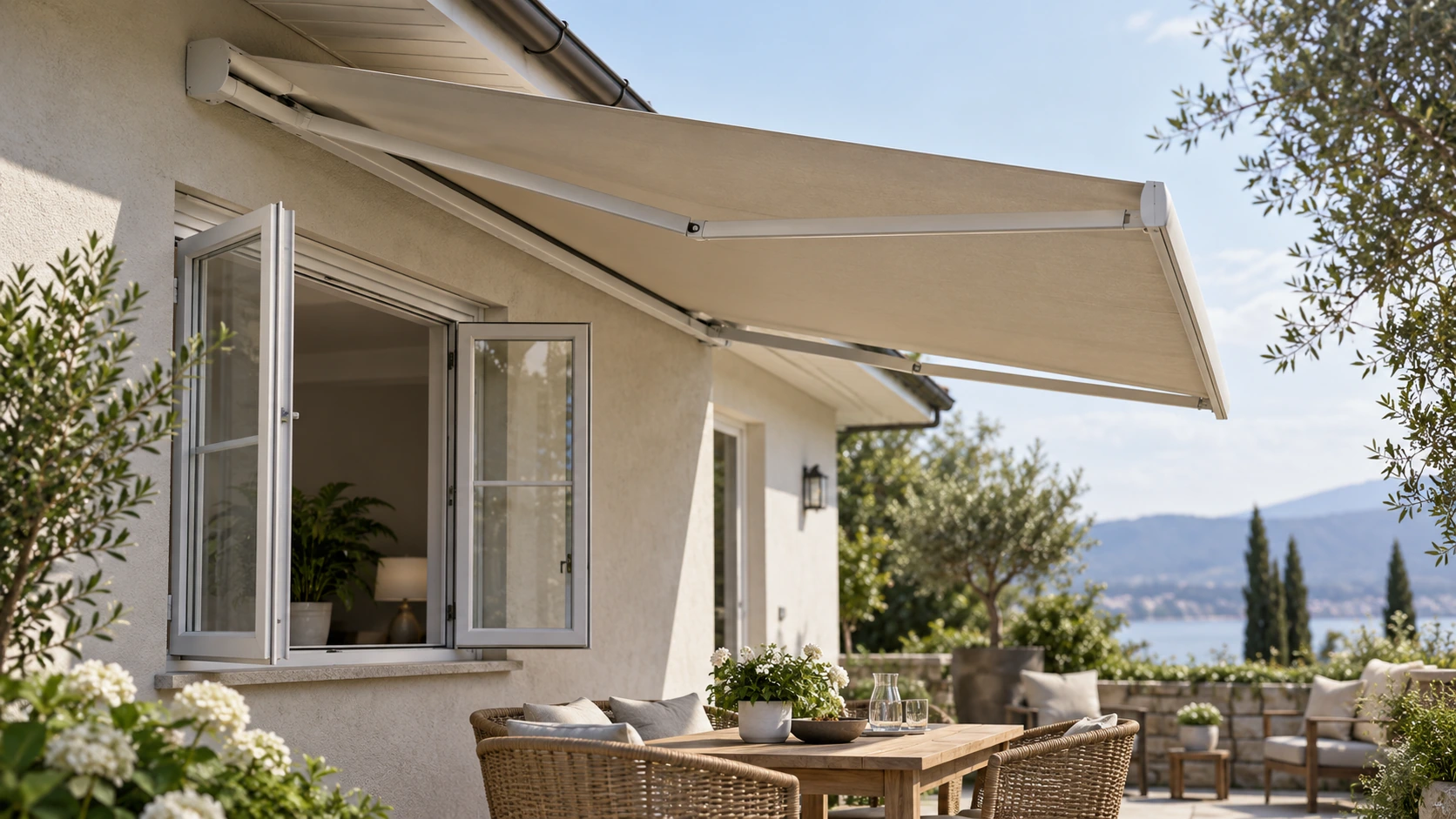
Conflicts hidden by a closed-window photograph
A clear wall beside a closed window does not establish that an awning will fit. The opening sash may enter space below the cassette, near an arm or within the front-edge path; handles and accessories affect the envelope too. Supply photographs of closed, normal-use and permitted fully open positions, identifying the sash used most often. This gives the installer meaningful movement information. Where the window serves an essential access or emergency function, have the relevant professional assess requirements rather than assuming temporary obstruction is acceptable because the awning can retract.
Check the journey, not only the final positions
Two mechanisms may clear each other at their end positions while crossing during movement. Ask the installer to assess the full operating envelopes, including screens, blinds and existing window restrictors. Describe normal sequences, such as opening the window before going outdoors or deploying shade before cleaning the frame. Real users will not always follow an ideal order. “Remember to close the window first” should not become the principal solution without assessment, especially where visitors or several household members operate the equipment and may not know the assumed sequence.
Use everyday actions as acceptance scenarios
Imagine a kitchen window opened daily for ventilation while the awning is controlled from the living room. The operator may not see the sash position. Identify that visibility gap early and discuss equipment placement, control location or another compatible arrangement rather than adding a warning after installation. At handover, have the installer demonstrate the confirmed operating sequence while users observe from their normal positions. Leave an unresolved movement condition open for correction; do not test it by allowing contact. Acceptance should verify an assessed arrangement, not transfer trial-and-error risks to the household.
Keep window maintenance in the plan
Windows will still need cleaning, adjustment and hardware replacement, so the cassette and brackets must be considered alongside future access. Keep a confirmed drawing showing the sash envelope and revisit it when either window or awning changes. Adjust furniture that blocks the necessary observation position. Treat site verification and interface coordination as identifiable work when comparing quotations, rather than asking only why equal-width products differ in price. A smaller arrangement compatible with normal window use deserves comparison with a larger design that depends on keeping a frequently used window closed.
- Photograph closed, normal and permitted fully open sash positions.
- Check movement paths and what the indoor operator can see.
- Retain the interface drawing for future window or equipment changes.
Is clearance at the fully open positions enough?
No. Check the complete travel of both mechanisms, including handles, screens and restrictors, and whether the operator can see the other system. Have the installer confirm clearances and maintenance access. Do not rely solely on an unassessed reminder to close the window first or test the arrangement by allowing contact.
More questions, practical answers →