Retractable awning choices
An awning outside the kitchen: preserve useful daylight at the worktop
Assess outdoor seats and indoor worktops together, comparing deployed and stored states during the hours when you prepare food.
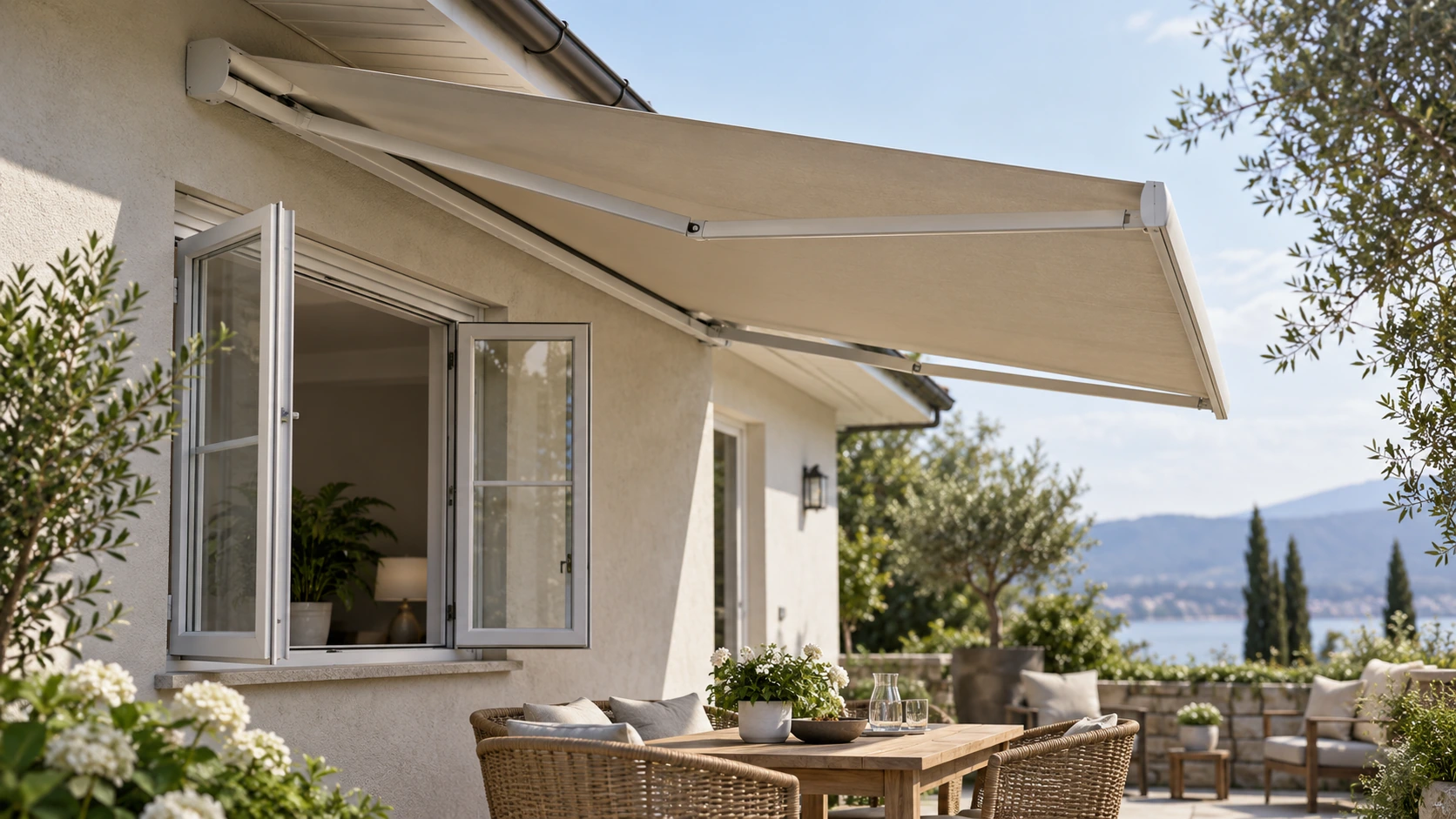
Include the kitchen worktop in the shade brief
An awning outside a kitchen may reduce direct sun and improve patio seating, but the indoor worktop must remain usable. Inspect the sink, preparation area and frequently used appliances rather than viewing the window only from the garden. Light reaching one surface may not reach another, and general brightness does not guarantee a well-lit task area. Record normal food-preparation times and which lights are usually used during the day. This turns a vague concern about darkness into specific observations instead of borrowing the experience of a living room or showroom. Keep frequently used countertop appliances in their normal positions during this observation.
Separate direct sunlight from general brightness
Observe a few relevant hours in comparable weather, recording glare, brightness deeper in the room and any need to shield the eyes. Do not hang improvised loads or fabric from unverified supports for a trial; ask the designer for an appropriate study or sample arrangement. Keep photographic viewpoints consistent, remembering that automatic exposure can make different scenes look equally bright. Include occupants’ observations while performing normal tasks. Fabric color and apparent transparency matter, but a small swatch cannot by itself predict daylight across the whole kitchen.
The same awning can serve different schedules
Imagine a household preparing food in the morning and eating outdoors in the evening. Leaving the canopy fully deployed all day may not suit that routine. Discuss retaining more sky exposure while preparing meals and adjusting the awning according to its instructions when outdoor shade is needed. If low western sun coincides with preparation, assess that time separately instead of copying a neighbor’s routine. The aim is compatible operation, not a promised temperature reduction at a particular setting. Frequent complicated adjustments are also a practical cost that deserves consideration during selection.
Make the daylight discussion comparable
Ask suppliers to distinguish the obstruction from the stored cassette, the deployed canopy position and any essential accessories. Compare proposals against the same kitchen-use requirements rather than fabric size alone. If task lighting needs adjustment, have the appropriate professional address it separately; an awning cannot resolve every lighting issue. Recheck window movement, ventilation and cleaning access with the household and retain the key observation points. A useful proposal balances regularly used indoor surfaces with outdoor seats instead of presenting complete patio coverage without examining what happens inside.
- Choose fixed observation points at the sink, worktop and deeper room.
- Compare similar weather and matching times.
- Discuss operating habits, window movement and task lighting separately.
Will an awning outside a kitchen make the room too dark?
It depends on orientation, room layout, mounting position and operating schedule, not fabric color alone. Compare glare and general brightness at real preparation positions in both stored and deployed states. Consider a different operating schedule or layout where needed, and address any remaining task-lighting requirement separately.
More questions, practical answers →