Project planning
Pergola delivery access: check the route before installation day
TTH Pergola pergola installation guide: plan unloading, handling and protected storage as part of the pergola project.
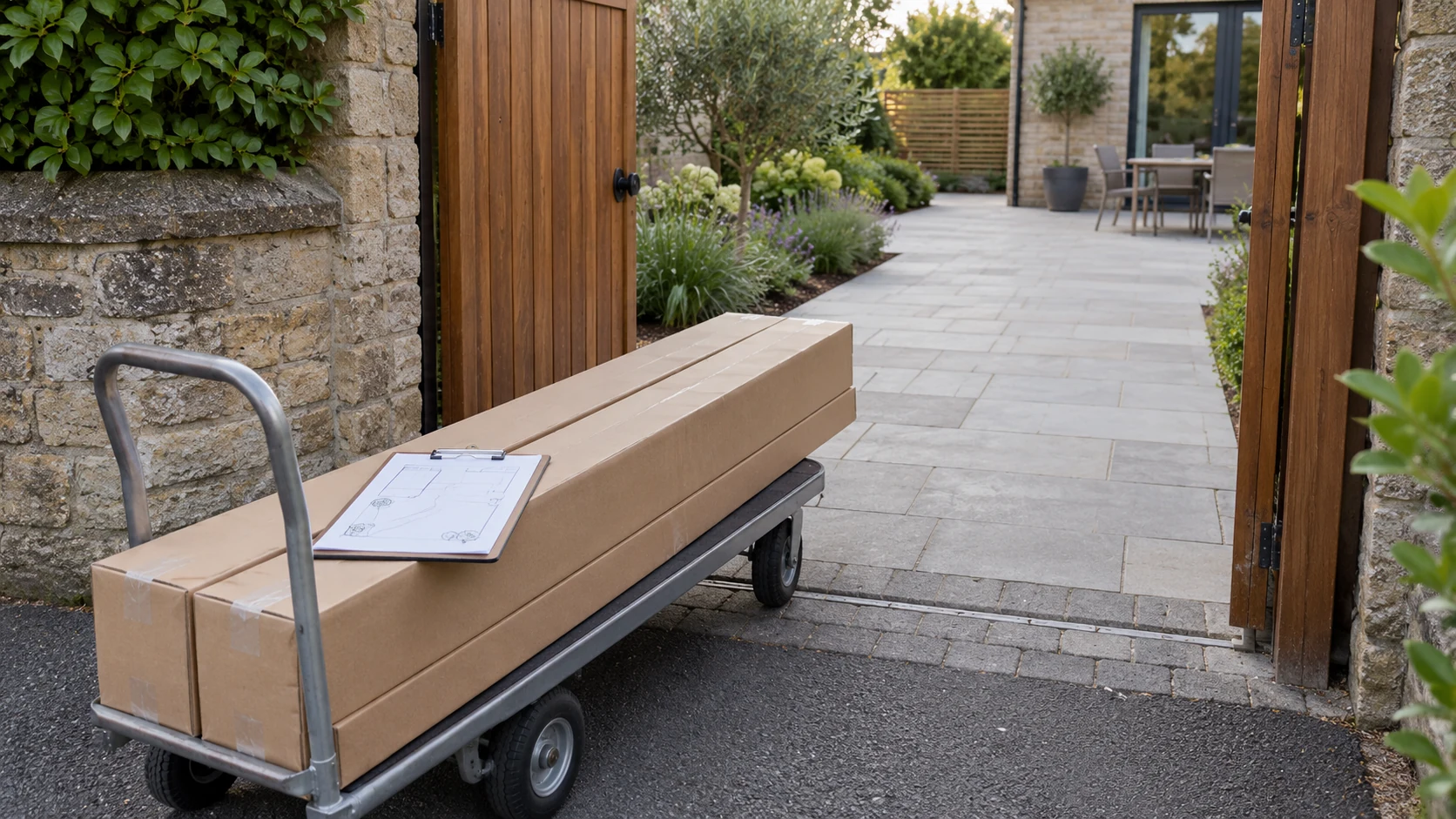
The route to the terrace is part of the installation plan
A large component does not become easy to handle simply because the finished pergola fits the patio. The route may include a gate, a sharp turn, a stair or an area where unloading cannot take place. Identifying those conditions early helps the delivery and installation parties discuss the actual handling plan instead of discovering the obstacle after arrival.
For a TTH Pergola enquiry, map the journey from the expected delivery point to the installation area. Include the narrowest passages and any restrictions that are already known. Product photographs on tthpergola.com show the assembled result, so also request the relevant packing and component information when organising access. Confirm who is responsible for unloading, moving and storing the goods, and where the packaging will be kept away from the work area. These questions do not need a complicated document; a few annotated photographs can explain the route well. The point is to coordinate people, space and equipment before the installation date. A clear access plan protects the programme from avoidable surprises without pretending that every site needs the same handling method.
The site entrance is part of the specification
A pergola may fit its final location while its packed components cannot easily reach that location. Record the delivery approach, gates, passageways, turns and any changes in level. Ask the supplier for package information relevant to handling, rather than assuming every component arrives as a small separate piece. Share access restrictions before the order is finalized so the delivery and installation teams can plan a workable approach.
Agree who handles each stage
Clarify unloading, movement to the installation area and any equipment that may be required. These tasks should not be assumed to be included simply because transport is quoted. Where access requires specialist handling, have the responsible team assess the site and arrange an appropriate method. Keep the route clear and protect existing surfaces as agreed. Do not improvise lifting arrangements from general online advice or from the apparent lightness of aluminium components.
Prepare for inspection and temporary storage
Ask how packages should be checked on arrival and how any visible damage or missing items should be reported. Arrange storage according to the supplier's guidance, with component labels retained until the installation team has verified the contents. Coordinate the delivery date with site readiness rather than allowing unplanned long-term storage. A clear handover record helps distinguish transport issues from later site changes and reduces uncertainty when support is required. Include any agreed delivery time restrictions in the project brief, especially where access passes through a shared entrance or a site managed by another organization.
- Confirm access dimensions and restrictions early.
- Separate transport, unloading and installation responsibilities.
- Keep delivery records and component identification together.
Who should arrange unloading?
That responsibility should be stated in the agreed delivery scope. Confirm it together with the destination access conditions, rather than assuming transport automatically includes movement to the final installation position.