Large pergola projects
Pergola lighting for night tours: arrival, interpretation and departure
Link night-tour pergola lighting to arrival, interpretation and departure, with defined control responsibility.
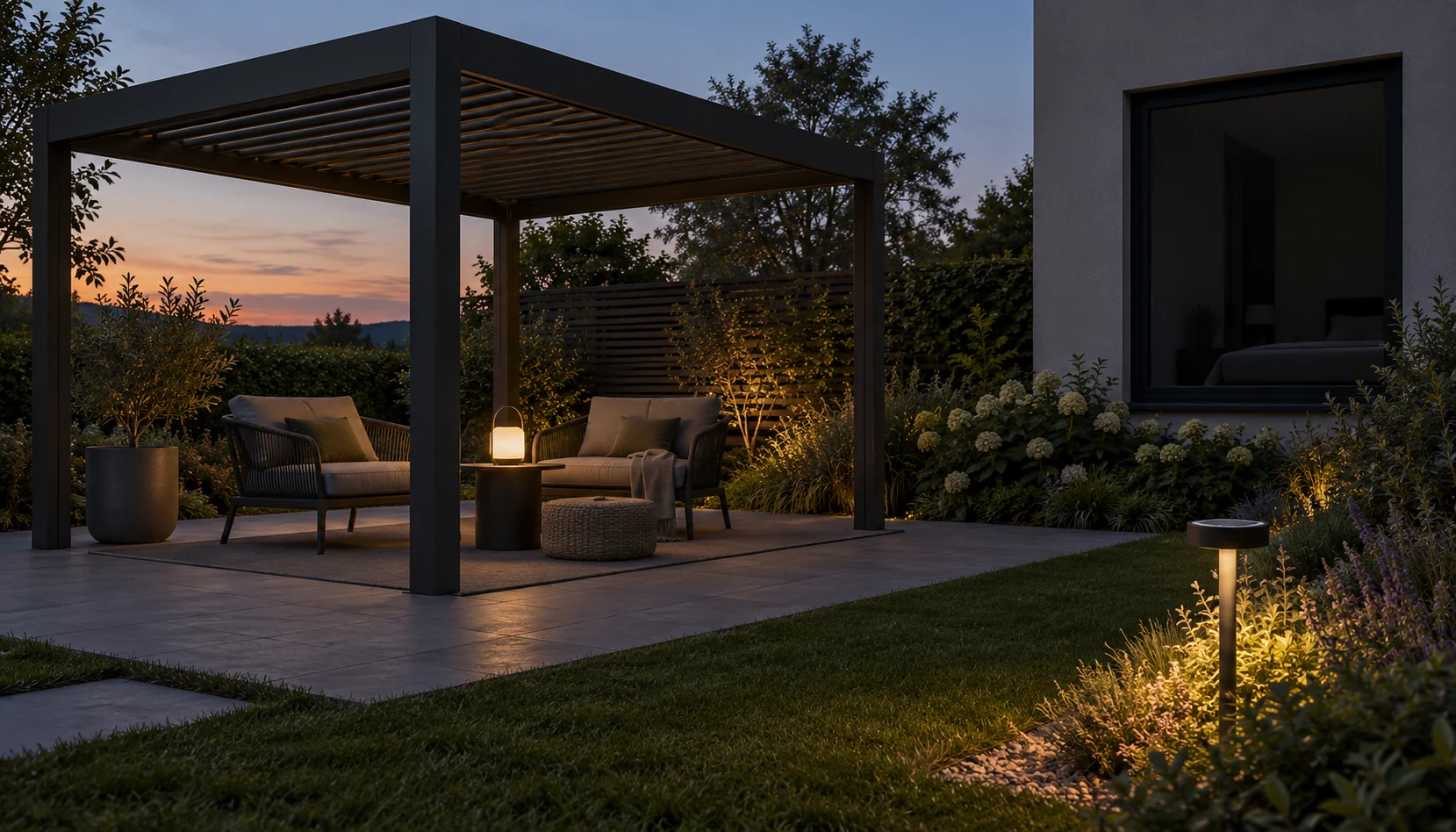
Define lighting through the task
Discuss lighting separately for assembly, interpretation and departure. Arriving guests need to identify reception and companions; interpretation may focus attention on a subject; departure needs understandable directions. One configuration may not support all three tasks. Lighting and operations personnel should assess the actual site. This guide specifies no illuminance value, ecological outcome or standard fixture inclusion. The structure and its real accessories are only part of the design conditions, alongside surrounding paths, signs and staff guidance required for the complete night-tour activity.
Assign lighting controls to a defined role
Record who activates each state, its trigger and surrounding conditions to check. Several staff should not independently change controls by preference. Follow the actual equipment and electrical design, confirming attachments rather than treating a night rendering as an installation drawing. Review task relevance and unwanted direct brightness or spill through appropriate lighting assessment. Include controls, signs and equipment custody in the handover so the next worker understands current and next states instead of receiving an unexplained remote and reconstructing the intended sequence.
Rehearse the complete visitor sequence
Suppose interpretation lighting begins while late guests still need reception, and some people remain after the tour to collect belongings. Rehearse those overlaps instead of photographing only the moment when everyone is positioned. Use actual signs and staff locations, reviewing transitions or guidance as needed. Camera exposure alone does not establish what visitors can see, and the test sets no universal capacity. It connects lighting states with continuing movement so an attractive presentation moment does not leave arrival or departure without a workable transition.
Retain state and exception records
Keep actual fixtures and controls, state purposes, responsibility and exception arrangements. Recheck changes to paths, signs or activities through the full night sequence. Describe verified installation without inferring brightness, energy or ecological outcomes from photographs. Use observed difficulties to adjust relevant tasks rather than increasing all lighting without a basis.
Define the final retained or closed state too, considering other site uses. Departure of one tour group does not by itself establish that the entire area no longer requires lighting.
- Define arrival, interpretation and departure tasks.
- Assign transitions, controls and exceptions.
- Rehearse late arrival, belongings and closing overlap.
Is one attractive lighting mode enough for a night-tour pergola?
Assess assembly, interpretation and departure, including late arrivals and lingering guests. Rehearse actual signs and staff positions, assign controls and confirm equipment conditions. Photographs do not replace on-site viewing, including the final state for other users.
More questions, practical answers →