Compact pergola living
Motion lighting or continuous lighting around a pergola?
Compare motion, manual and timed lighting through both passing and seated use, including unwanted triggers.
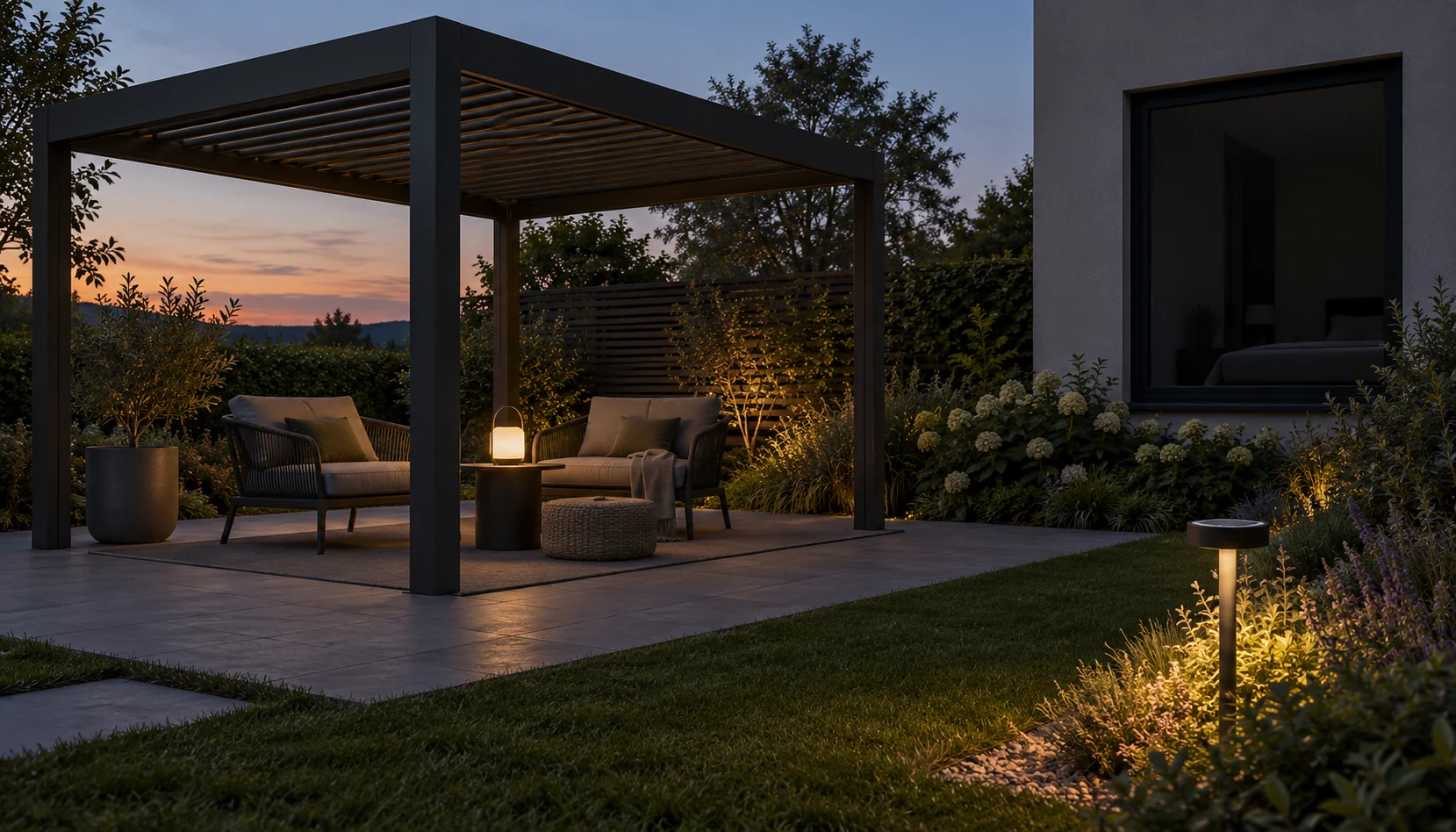
Passing and staying need different behavior
Motion lighting may suit arrivals, while the pergola's main activity could be sitting quietly or reading. Check the actual device and settings for a still occupant; automatic does not necessarily mean convenient. Record when people merely pass and when they remain, then consider separate fixtures or control modes. Lighting a route and a table can be discussed independently rather than forcing one detection behavior to serve everything. Convenience comes from matching the task, not from the greatest number of automatic functions on the product description.
List unwanted triggers as well
Do not test detection only with one person approaching from the front. Pets, moving plants and other garden activity may matter, according to the device's actual method and instructions. Detection conditions cannot be transferred between brands, nor can camera settings automatically describe every light. Mark desired routes and areas where repeated triggers are unwelcome, then ask which parameters can be adjusted. Verify installation and environmental suitability rather than changing electrical connections or obscuring equipment to alter detection. One successful activation begins the assessment; normal household use completes it.
Test a quiet seated activity
Imagine two people drinking tea: entrance detection works for arrivals but does not provide the desired light during quiet sitting. Compare retaining entrance detection with separately controlled table light, or another supported mode. This hypothetical case does not claim a particular device will switch off; it includes still occupancy in acceptance. Rehearse one person leaving while the other stays. Record mode, position and activity rather than writing only that detection works. Clear scenarios make later adjustment more focused and less dependent on repeated guesses about the cause.
Make ending the session straightforward
Describe passing, staying and unoccupied states to the supplier, verifying supported controls and installation conditions. DarkSky's purposeful, controlled-light principles support avoiding unnecessary operation, with actual settings based on household tasks and local requirements. Have users try manual intervention, returning to automatic mode and switching off, retaining brief instructions. Recheck detection and direction after changes to furniture, planting or sides. The aim is that people understand why light appears, how to adjust it and when it ends, rather than simply waiting for an unexplained response.
- Test passing, still seating and one remaining occupant.
- Observe pets and garden activity around detection.
- Verify manual intervention and ending the session.
Is all-motion lighting the most convenient pergola solution?
Not always. Passing and quiet sitting need different behavior. Test still occupants, departures and pets before deciding on separate table lighting or manual control. Verify installation and settings from the actual instructions; one activation is insufficient.
More questions, practical answers →