Trade & procurement
Evaluate custom pergola tooling across the first and future orders
Compare existing-profile adaptation with new tooling across design, validation, minimum orders, stock and lifecycle responsibilities.
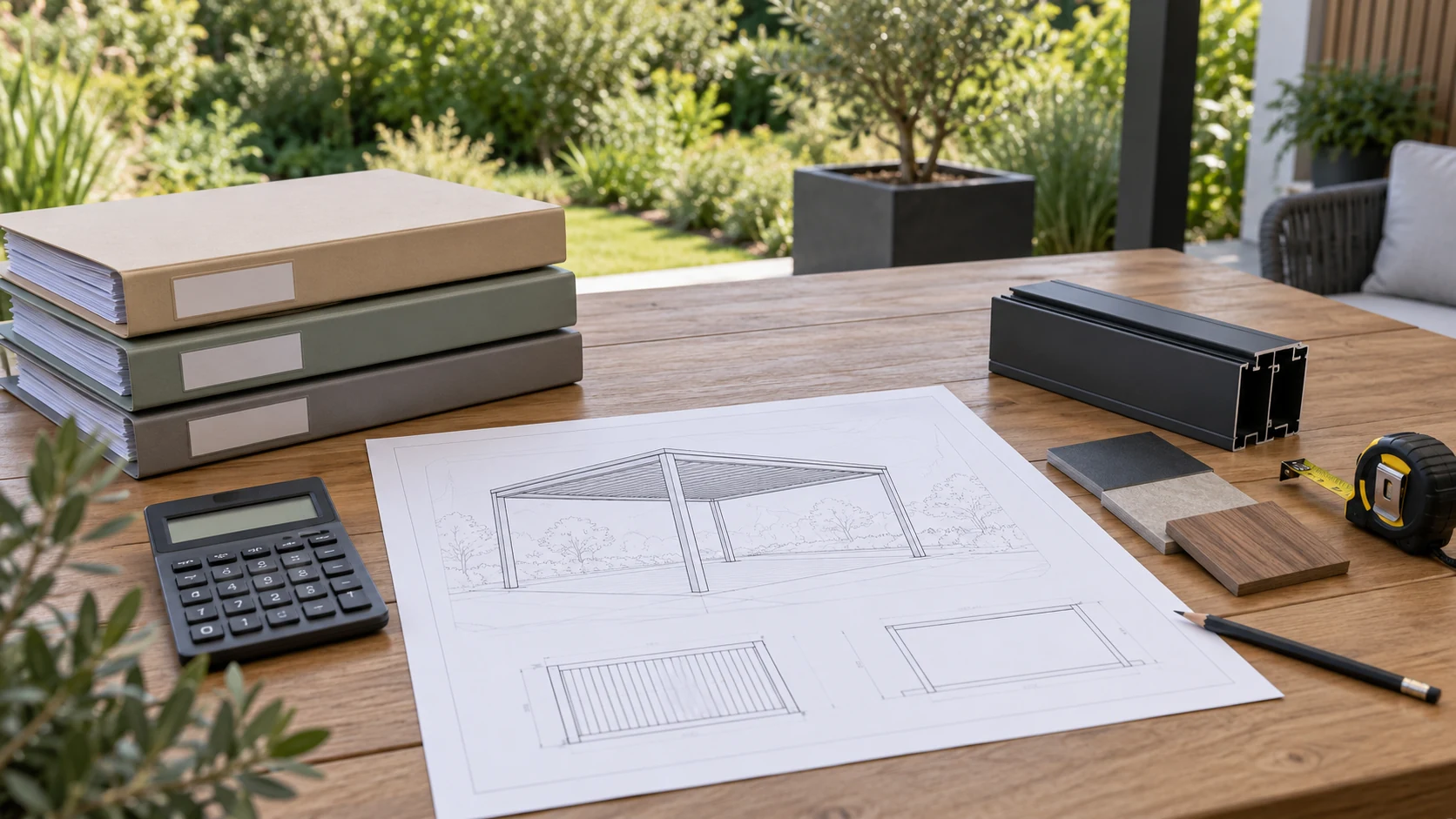
Identify the requirement that existing options cannot meet
A custom pergola does not always require a new aluminum extrusion. Some projects need different lengths, colours or accessories; others need a new section or connection. Define the precise requirement that existing options cannot satisfy, such as interface space or an assembly relationship, before deciding on tooling.
A rendering cannot establish that a new section is suitable. Dimensions, material, manufacturing conditions and the complete structure require appropriate design and validation. Treat technical feasibility as a prerequisite to the commercial decision rather than dividing tooling cost by optimistic sales and assuming the original concept will work.
Separate initial costs from continuing costs
Separate design and validation, tooling and adjustment, trial production, recurring manufacture, finishing, packaging and spares. Some costs belong to development; others vary with quantities, colours or later changes. Asking only for a tooling price misses responsibility for adjustments and renewed approval if trial pieces do not meet expectations.
Minimum-order conditions may arise at different stages. Do not assume one universal quantity governs the entire pergola. Discuss extrusion, machining and finishing arrangements separately, then understand how the supplier combines them. There is no universal minimum or break-even order count; use written quotations and a credible demand plan.
Test the decision against more than one demand scenario
Imagine a dealer developing an appearance for a chain of venues. Separate confirmed initial projects from possible expansion; intentions are not orders. Compare inventory, replenishment and unit allocation under lower demand, planned demand and phased delivery. This reveals whether the proposal depends excessively on unconfirmed quantities.
Consider future service too. A proprietary section can support consistent appearance while tying replacements to particular tooling and production arrangements. Discuss how existing customers receive parts after a design changes. Lifecycle review is not a lifespan prediction; it identifies responsibilities and choices that may arise later.
Define how tooling and design records are managed
Before development, document what tooling charges include, who stores and maintains the tool, how modifications are approved, and how design information and relevant rights are handled if the relationship changes. Payment for tooling alone should not be treated as proof that ownership and permitted use are agreed.
After sample approval, connect tooling, drawings and inspection revisions. Future changes must consider existing components and service compatibility as well as the new drawing. A workable custom programme should explain how later batches can be repeated, revised or concluded. Even when no repeat order is expected, agree how remaining material and components will be handled so responsibilities remain clear after completion.
- Define the requirement existing options cannot satisfy.
- Separate development, trial, production and inventory costs.
- Review demand scenarios, tooling management and future spares.
Does paying for tooling mean the buyer owns the tool and design?
Payment alone does not establish that. A reviewed agreement should describe the charge, storage, permitted use, maintenance, transfer and design-information arrangements, distinguishing the physical tool from design rights. Transactions can differ, so state the control and use you expect before agreeing the terms.
More questions, practical answers →