Large pergola projects
Planning a large pergola before a future house extension
Coordinate a pergola with known future extension plans and verify relocation assumptions before ordering.
State how definite the future extension is
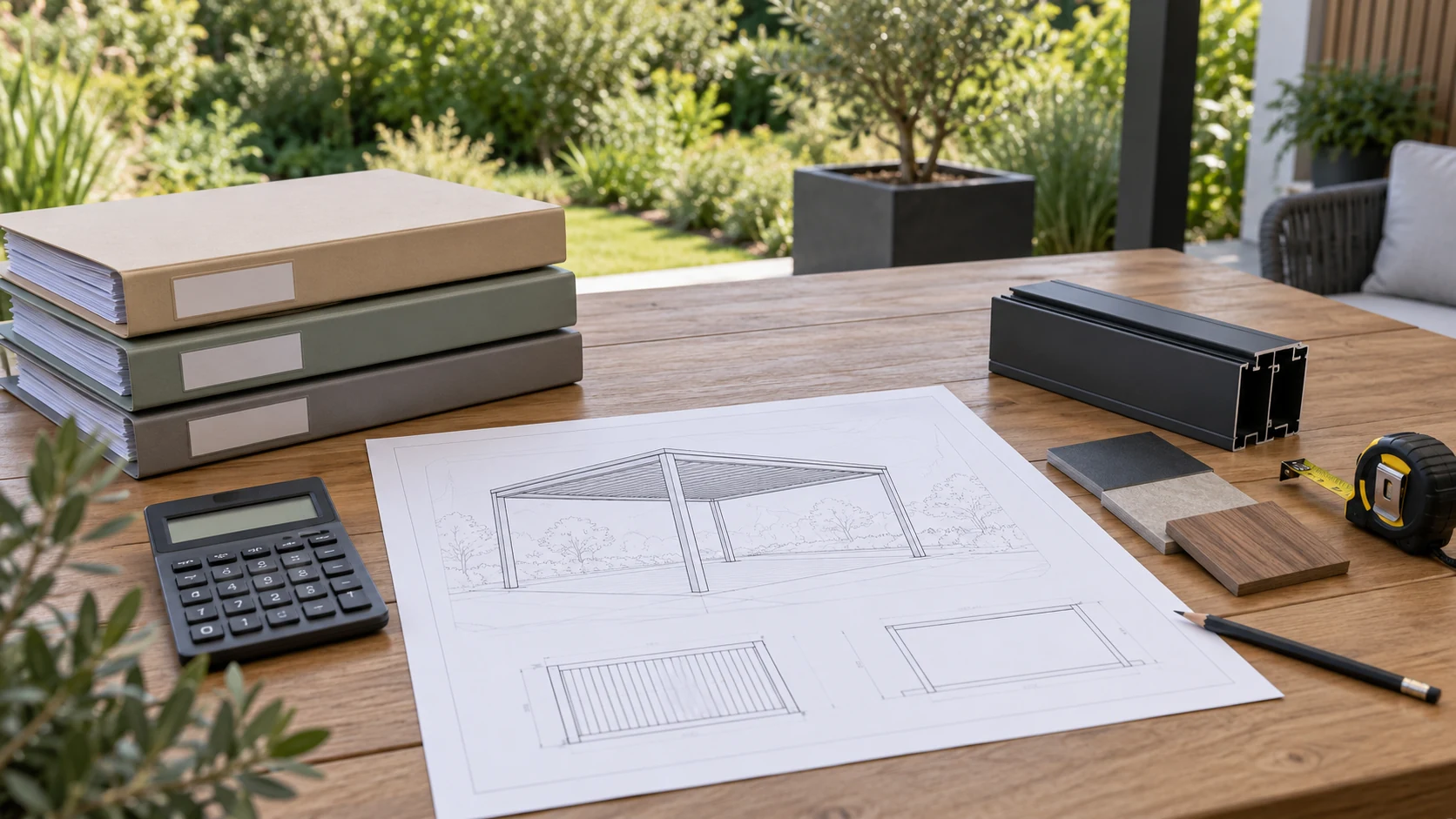
Some households want a large pergola now and a house extension later. Distinguish confirmed plans, possible scope and tentative ideas instead of designing every detail of a distant project immediately. Put the existing house, candidate pergola and known extension direction on one plan and discuss obvious conflicts with relevant professionals. Uncertain timing is not a reason to omit the plan, while an unapproved sketch should not be treated as inevitable construction. Applicable permissions and building requirements need local verification; guidance from another jurisdiction can suggest questions but cannot decide this site’s position.
Ask what relocation would actually involve
If a proposal mentions later relocation, ask which components may be dismantled as specified, which connections or consumables need replacement, and whether new foundations or services would be required. Identify who would reinstall it. Bolted construction does not establish unlimited reuse, and another project’s photograph cannot justify a low-cost promise. Request advice for the exact configuration and retain unresolved items. Future site conditions may change, so preliminary comments today are not approval for work years later. Drawings and component identification make the eventual discussion more useful.
Suppose extension work needs the present seating area
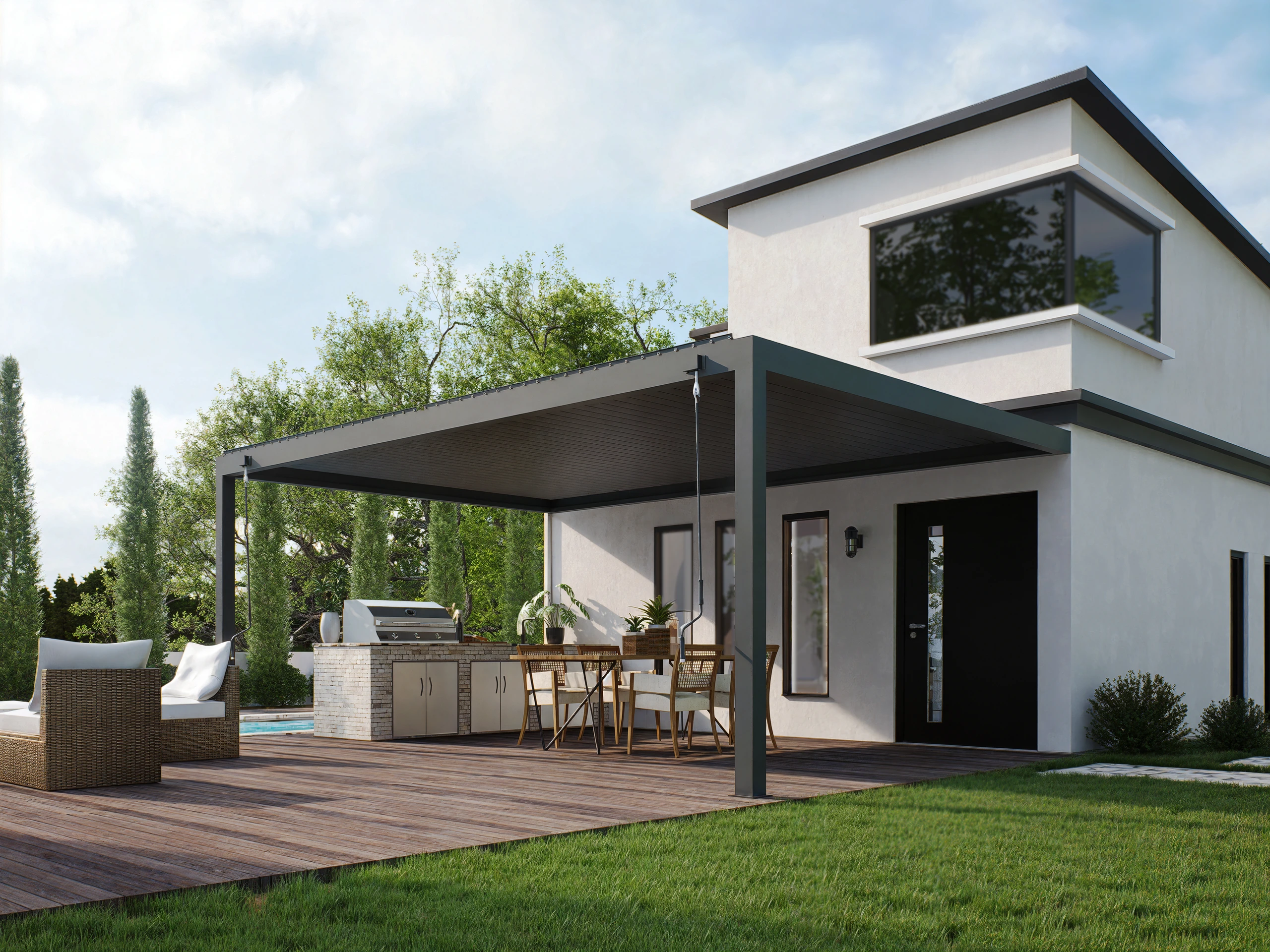
Imagine an extension behind the house with materials and equipment arriving through a side yard beside the proposed pergola. Even outside the finished room footprint, the pergola may affect temporary work and transport. Ask the relevant professionals to compare revised placement, retained access or delayed fixed additions instead of checking only whether the future wall meets the roof. Temporary working space belongs to the actual project assessment, not a generic clearance number. Both the permanent extension and the process of constructing it can influence an otherwise attractive garden arrangement.
Keep useful records instead of vague promises
If proceeding now, retain the final configuration, relevant foundation and service records, photographs, instructions and supplier contacts. Identify which choices considered the future project and which questions remain unresolved, so informal discussions do not become remembered guarantees. When the extension reaches formal design, have the existing pergola reassessed rather than automatically applying the early concept. Compare simple current adjustments that preserve today’s use while reducing known conflicts. The realistic goal is better coordination and evidence for future decisions, not a promise of relocation without rework or additional cost.
- Separate confirmed plans from tentative ideas.
- Ask in writing about dismantling and reinstallation.
- Review the future footprint and construction access.
Does a demountable pergola remove the need to plan for an extension?
Planning still matters. Confirm dismantling, reuse, reinstallation conditions and costs for the actual configuration, along with construction access. Keep records and reassess when the extension becomes definite. Demountability alone does not guarantee inexpensive relocation or no rework.
More questions, practical answers →