Trade & procurement
Match pergola colours across separate orders
Manage colour matching across repeat pergola orders by comparing physical references, gloss, texture, batch records and installed conditions.
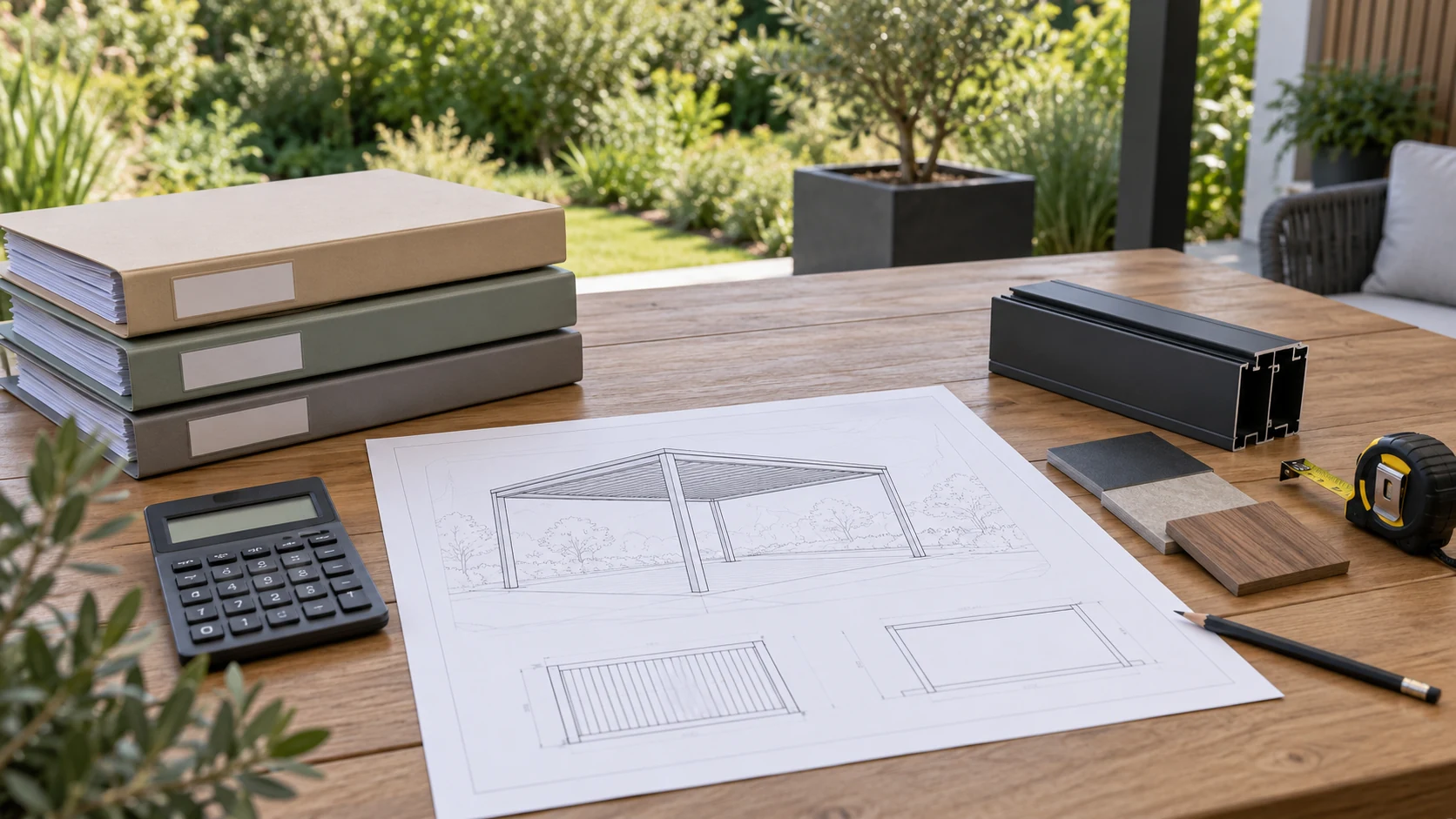
Start with the complete finish description
Sending the original colour name may not reproduce the appearance expected from a repeat aluminum pergola order. Colour reference, gloss, texture, coating system and substrate all influence the result. Smooth and textured surfaces under the same colour reference can look different in angled light, so the number alone cannot promise a visually indistinguishable match.
Retrieve the approved sample, finish description and delivery record. Establish whether the new structure will stand separately or connect directly beside an existing beam or post. Viewing distance and adjoining edges affect how noticeable differences are, so define the match requirement around the actual arrangement.
Recognize that an installed part may have changed
Sunlight, cleaning and environmental deposits may change the installed surface from its original sample. Shadows, sky reflections and phone white balance add uncertainty. Photographs are useful for location and overall condition, but should not become precise colour-matching standards. Record the current condition, then decide whether physical samples or a representative component are needed.
RAL describes digital colour presentation as approximate and recommends physical references for final decisions. Compare under consistent conditions rather than judging a clean new sample against a dirty old part. Any cleaning must follow the original maintenance requirements; do not use unconfirmed solvents merely to improve the comparison.
Compare a single replacement with a grouped update
Suppose a restaurant adds a side assembly beside an existing pergola. A joint in the main sightline may make a small gloss difference more apparent than it would be on a separate structure. Compare the sample beside the existing finish, then consider a matched colour, a deliberate contrast or a grouped replacement. Each option affects cost, downtime and spare requirements.
Do not automatically repaint every component in pursuit of absolute uniformity. Existing condition, disassembly and maintenance limits need assessment. Define acceptable appearance before manufacture and identify the approver, so the first real comparison does not happen after the goods arrive.
Leave better records for the next repeat order
Reference the original project in the repeat order while identifying the newly approved sample and its scope. Record where old and new batches are installed instead of copying an old batch ID onto new parts. Keep the approval date, viewing photographs and sample condition for future discussions.
Use the agreed comparison method at receiving. If a difference appears, check configuration, cleanliness and reference identity before deciding the review steps, rather than introducing a new standard under different lighting or distance.
- Recover the original colour, gloss, texture and approved reference.
- Compare together under conditions relevant to actual use.
- Record new batch locations and the agreed acceptance scope.
Will the same supplier and colour code guarantee an identical repeat part?
Those two conditions alone do not establish an identical appearance. Check the finish process, gloss, texture and reference sample; installed parts may also have changed in service. Compare a new sample beside the actual installation and approve the acceptable result before production rather than judging separate phone photographs.
More questions, practical answers →