Trade & procurement
Manage pergola changes before they become production disputes
Use a change order to connect pergola design revisions with affected parts, price, schedule and the current production authorization.
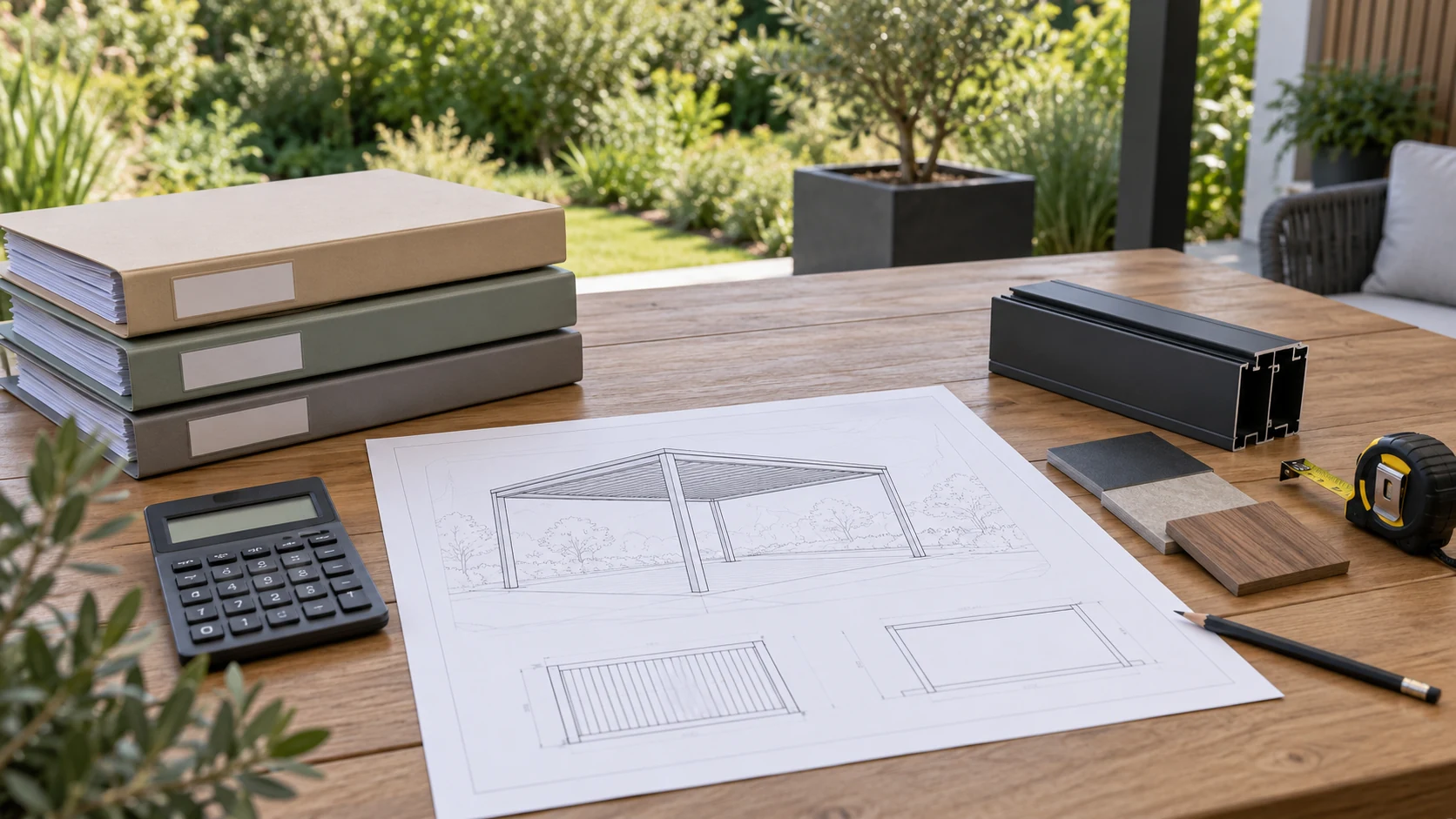
Separate a new idea from a production instruction
A customer may want a wider pergola after placing furniture, or request an additional screen late in the order. The difficulty is often not discussing the idea, but deciding when discussion becomes an instruction. A sales message saying an option can be considered may be interpreted as authorization while the original drawing is still active.
Create a clear entry point for changes. Record the requester, reason and proposed adjustment as awaiting assessment. Release an approved version only after the relevant people review dimensions, compatibility, cost and timing. The customer can explore options while the production team knows exactly when existing work should change.
Review the consequences beyond one dimension
A size change may affect beams, blade count, transmission parts or accessory openings. Adding an enclosure can involve interfaces, drainage, controls and circulation. The appropriate design and installation people must check the actual effects; a visually small alteration does not prove the original solution remains suitable. Purchased or processed materials also need a decision on continued use.
Review product, site, commercial and schedule effects in separate columns. A revised quotation should identify additions, cancellations and retained items rather than giving an unexplained difference. Keep unresolved conditions visible instead of agreeing a total and discovering omitted work afterward.
Connect the parties through one change reference
Suppose a dealer requests a reversed side opening after drawing approval. Sales updates the rendering, but the installer reserves wiring according to the old opening and manufacturing never receives the revision. Each party can work correctly from its own file while the combined delivery fails. One change reference should link the new drawing, quotation and site notice.
Record the approver, effective point and withdrawal of the old version. If some materials are already complete, document whether they will be retained or reworked and who handles that decision. Preserve the history so changes in cost and dates can be explained and implementation can be checked.
Check that approval reached the work
Approval is not the end of implementation. Review the affected purchasing, manufacturing, packing and installation records, especially part IDs, accessory quantities and interface notes. The final shipment check can reference the change ID to confirm that the goods match the current requirements.
Keep unapproved ideas outside the active production version. If another alternative is considered, create a traceable revision instead of repeatedly overwriting one file. A clear scope freeze tells everybody which configuration is actually being delivered.
- Register the proposal before reviewing product and site effects.
- Separate additions, cancellations, retained work and cost or timing changes.
- Update drawings and lists, then verify implementation.
Is a customer's agreement in a chat enough to release a change?
The question is whether both sides understand the exact revision and its consequences. Connect the confirmation to a change reference, drawing, cost and schedule adjustment, with approval from the designated order owner. Agreement on appearance alone should not be expanded into approval of unresolved manufacturing details.
More questions, practical answers →