Product insights
Planning a larger four-post pergola with TTH 200/220
TTH Pergola bioclimatic pergola guide: a clear-span appearance needs careful planning. Compare the TTH 200 and 220 profiles and prepare a complete project brief.
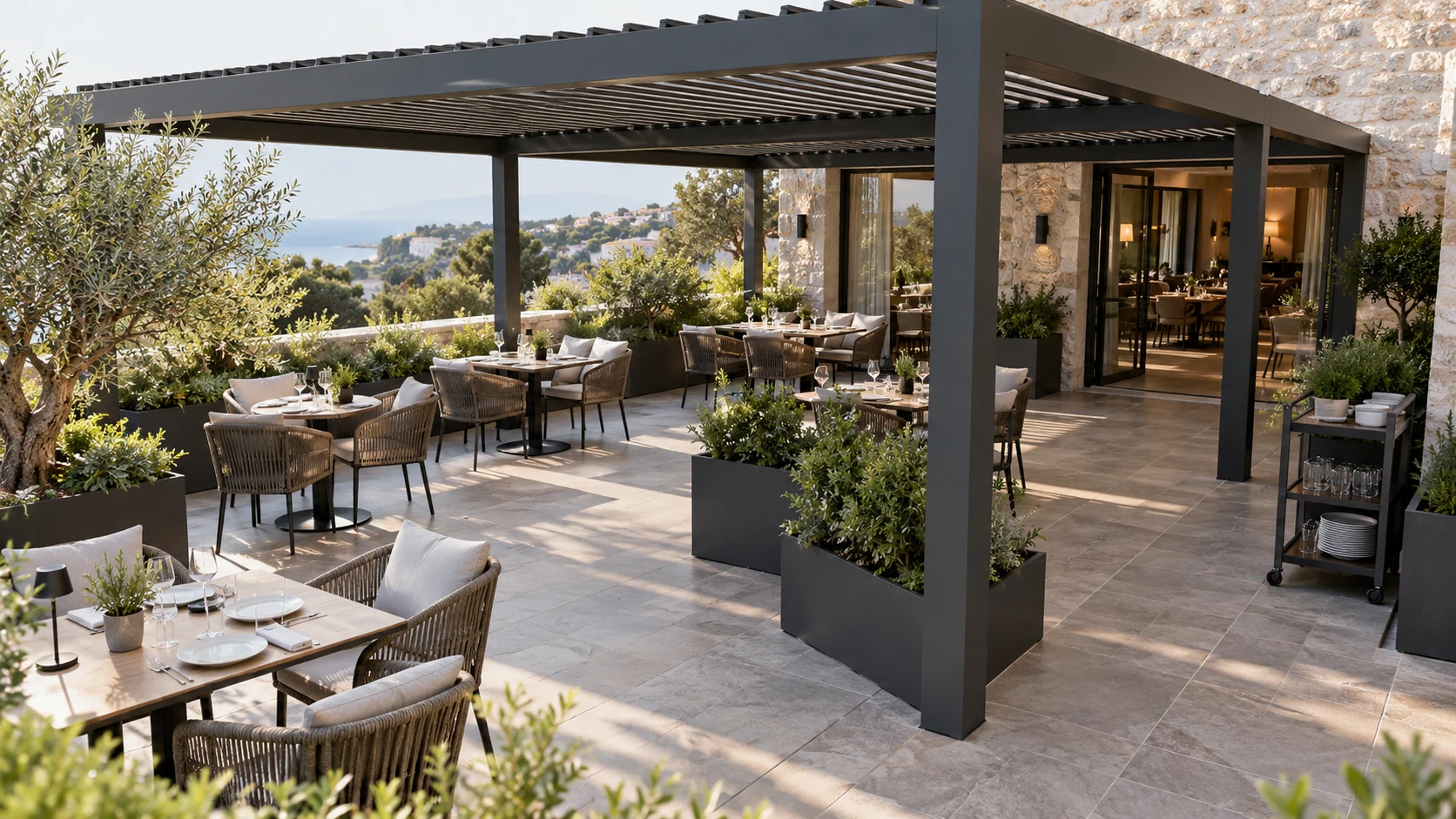
The appeal of four posts is the space between them
A generous outdoor room looks inviting because the centre is easy to use. Dining furniture, lounge seating and a route to the garden can sit beneath one roof without a central obstacle dividing the view. For a TTH 200/220 concept, begin by drawing those zones and the paths connecting them. A large roof over an awkward furniture plan will still feel inconvenient; an organised layout can make the same footprint feel calmer and more purposeful.
The engineering question comes after that spatial sketch, not after manufacture. Longer clear distances place different demands on beams, connections and foundations. The TTH 200 and TTH 220 tables show different documented sections and wall thicknesses, so the family photograph should never be treated as a universal span chart. On tthpergola.com, use the four-post image to discuss the desired appearance and the real beam-to-post photographs to understand where parts meet. Then identify the project location, intended dimensions and planned side accessories. This gives a reviewer a meaningful design brief instead of an isolated request for a bigger pergola. It also makes alternatives easier to compare if the original footprint needs adjustment.
Four posts describe a layout, not an unlimited span
A larger four-post pergola can create a clear view across a terrace and avoid a central support in the seating area. Whether that arrangement suits a particular project must be established from the dimensions, exposure, connections and foundation design. TTH 200/220 is presented as one product family, with separate profile specifications retained for each model. Select the final configuration through a project review rather than by copying the proportions of a scene image.
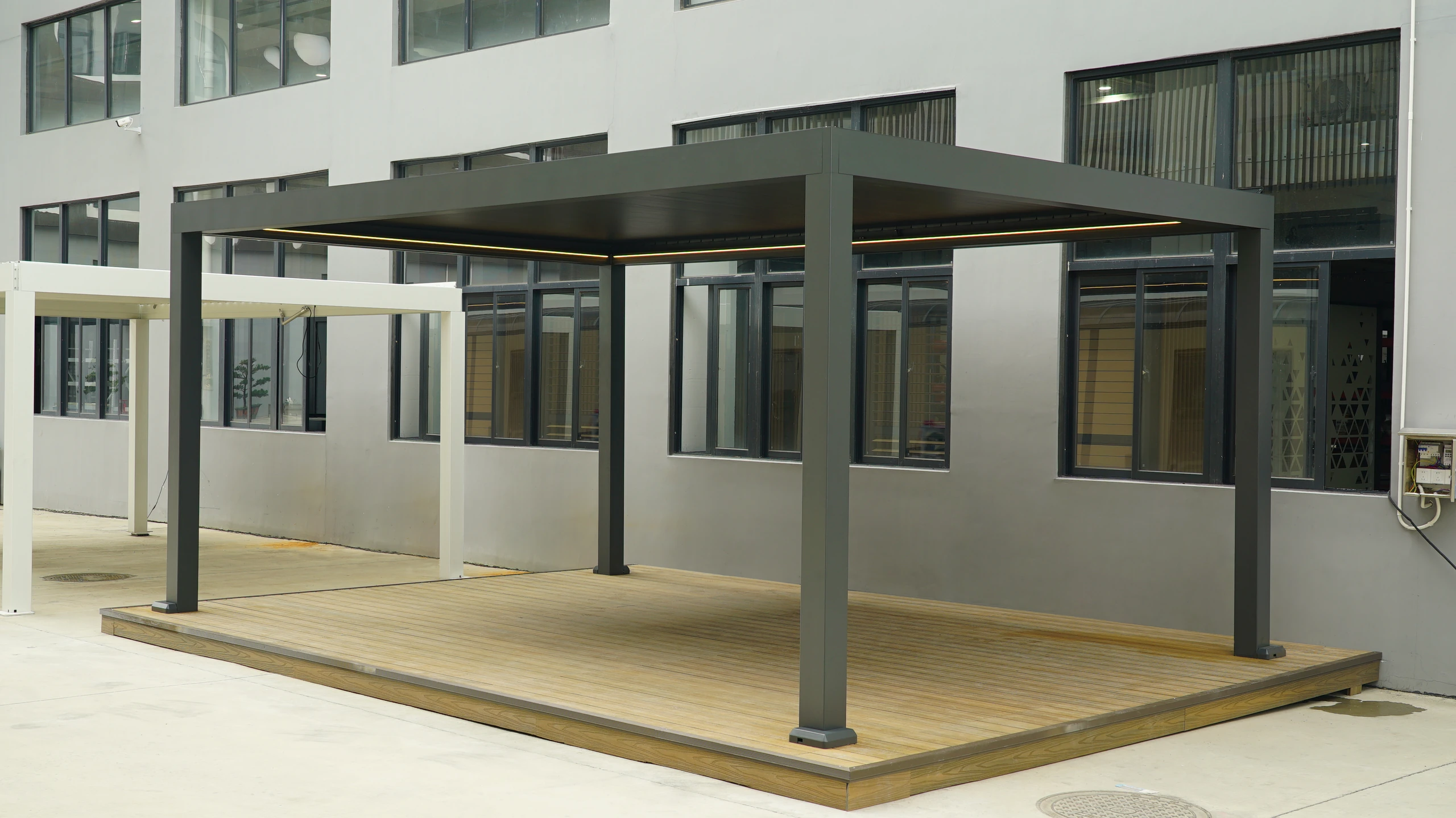
Compare the actual aluminium profiles
TTH 200 and TTH 220 share the documented 150 × 150 mm post section, but their wall thicknesses differ. Beam and blade sections also differ. A thicker wall is only one part of the structural picture, so it should not be converted into an unsupported percentage increase in capacity. The figures below describe the supplied profile information and do not establish an allowable roof area.
| Component | TTH 200 section / thickness | TTH 220 section / thickness |
|---|---|---|
| Post | 150 × 150 / 2.0 mm | 150 × 150 / 3.0 mm |
| Beam | 200 × 130 / 2.0 mm | 230 × 150 / 2.5 mm |
| Louver blade | 200 × 40 / 1.8 mm | 220 × 53 / 2.0 mm |
Make the larger footprint work for daily use
Start with the furniture layout and the most important sightline. Place posts where they frame the space without blocking doors or the route between indoor and outdoor areas. Next, coordinate roof movement, rainwater outlets, side screens and lighting. Large photographs can hide these practical relationships; a plan view and a simple elevation are more useful when checking whether the intended arrangement can actually be installed.
Ask for a configuration-specific review
Send the full outside dimensions and proposed clear height, not just a request for a large pergola. Identify whether the unit stands alone or sits close to a building, and explain how the space will be used. Confirm the approved post count and exact model on the final drawing. Any change to span, side enclosure or installation surface should be reviewed before production rather than treated as a cosmetic adjustment.
- Check beam positions against doors, glazing and external fixtures.
- Identify the intended drainage route and each outlet location.
- Confirm which drawings and site conditions the quotation is based on.
Can every TTH 200/220 layout use four posts?
The four-post scene is a design reference. Whether a particular footprint can use that arrangement depends on the approved project design, including loads, connections and foundations. Keep the desired clear space in the brief, but confirm the final support arrangement before ordering.