Hardtop pavilion planning
A potting bench under a pavilion: record usable daylight before placing it
Record task-surface light under a pavilion while treating plant requirements as a separate question.
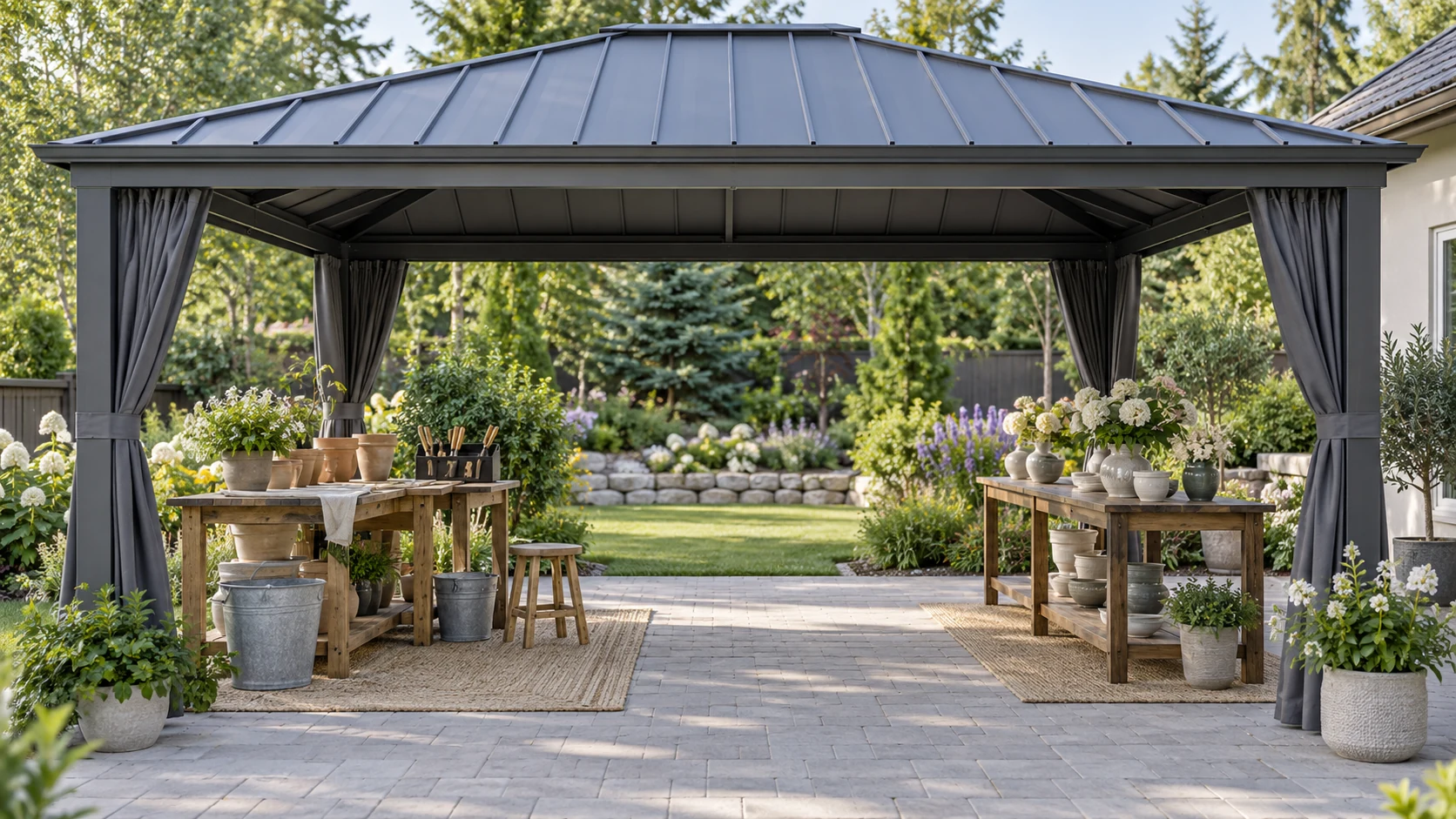
Distinguish a working bench from a growing position
First distinguish a bench used briefly for repotting or sorting from one that will hold seedlings long term. Visible task lighting and the requirements of particular plants are different questions even when they share a table. This guide provides neither a growth guarantee for a roof type nor a universal sunlight duration. Observe the proposed surface during actual use hours and describe the intended plants to a horticultural adviser. Shelter overhead alone does not define a suitable growing environment.
Record positions and times simply
Mark positions across the bench and note direct light and obstruction from the roof, walls or curtains at relevant times. Retain direction and time in photographs without treating phone brightness as a plant-light measurement. State season and conditions rather than extrapolating one day to the year. Identify whether the bench can move or is fixed. That record supports useful horticultural advice and prevents chasing light by moving equipment into a needed route.
Compare morning work with all-day growing
Imagine morning repotting followed by seedlings remaining on the bench all afternoon. Adequate visibility for the task does not establish appropriate conditions for those plants. Consider separate working and growing positions, or revise placement after horticultural advice instead of insisting everything remain centrally beneath the roof. If translucent roofing is proposed, confirm the actual available material and evidence; the word translucent does not establish improved growth for all varieties.
Let observations determine the bench role
Give the bench a defined role, such as short-duration garden work, and identify any plant holding that still needs confirmation. Retain positions for tools, buckets and movable racks so the observed useful area remains available during real work. Reobserve relevant hours after curtains, planters or surrounding growth change. Commercial classes should not promise universal growing suitability from a photograph full of plants.
Unsuitable long-term growing conditions need not invalidate the pavilion. The bench may still serve an appropriate working or organization role while plants occupy another confirmed position.
- Separate task visibility from long-term plant requirements.
- Observe positions, hours and obstruction states.
- Recheck use after curtain, planting or layout changes.
Does overhead shelter make a pavilion suitable for seedling racks?
Confirm the plants and location. Record relevant light conditions, distinguish brief working tasks from long-term growing and obtain suitable horticultural advice. Reassess after changes rather than relying on roof labels alone.
More questions, practical answers →