Large pergola projects
Seating Choices for Large Park Picnic Pergolas
Compare individual, group and inclusive table arrangements for a large park picnic pergola.
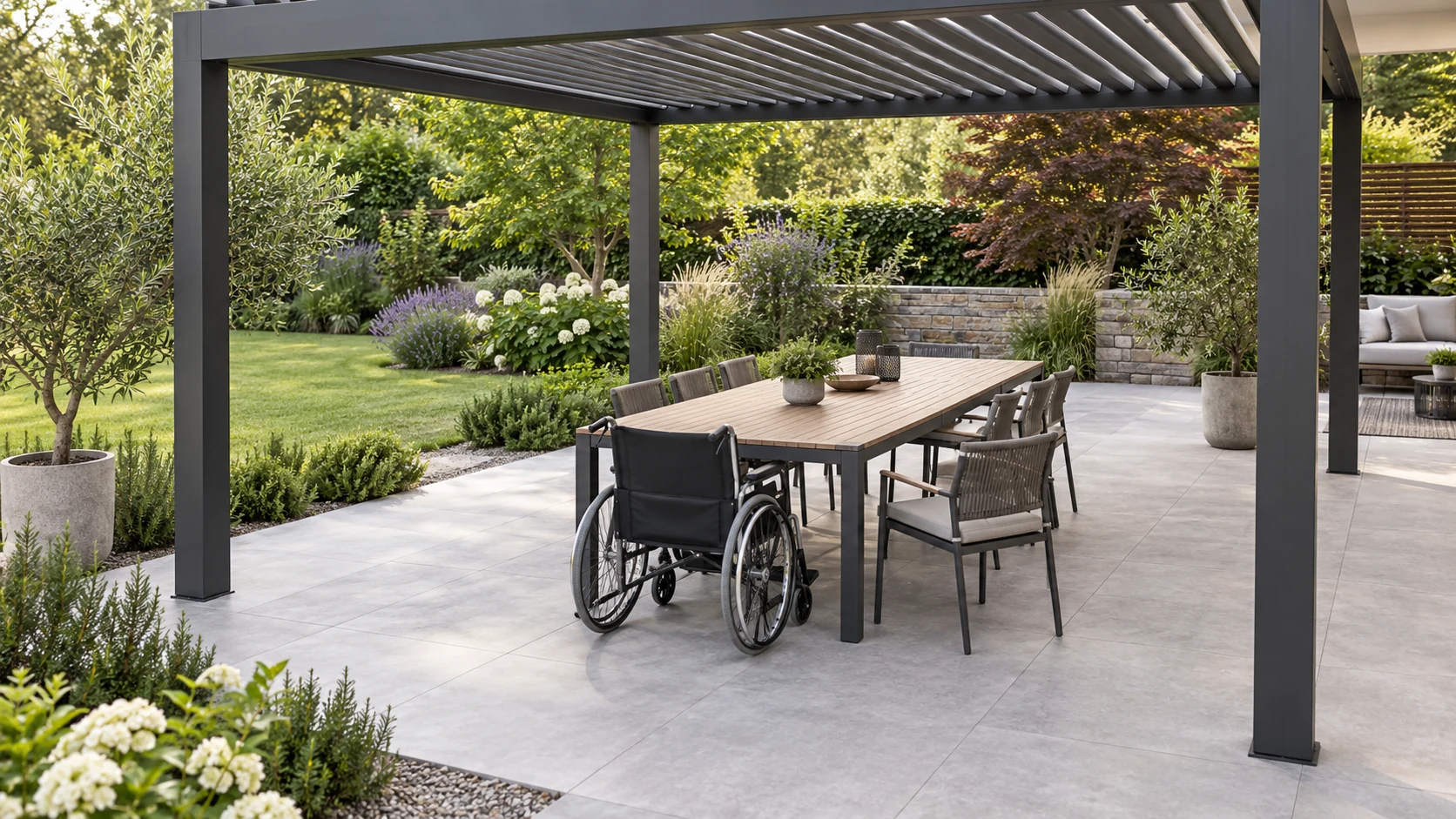
Start with how visitors share the space
Consider individual rest, family gatherings and shared meals involving visitors with different access needs. Repeating one long table may look orderly without supporting every kind of visit. Observe existing park use, group sizes and belongings before comparing communal tables, smaller tables and resting seats. TTH200/220 may be considered for a larger pergola, but its name or roof area cannot determine seat count. Paths, surfaces, furniture dimensions and local requirements affect the arrangement. Aim for visitors to arrive, participate and leave comfortably rather than filling every available patch beneath the roof.
Check places at tables and the space around them
Review the continuous route from park paths to a usable place at a table and whether a wheelchair user can naturally join companions, rather than assigning an isolated edge position. Check tables and routes against applicable requirements, using ADA standards only where relevant in the United States. Trial standing, pulled-out chairs, pushchairs and picnic belongings. Fixed seating helps preserve a plan but limits rearrangement; movable furniture offers flexibility while requiring storage and route management. Choose between them based on maintenance capacity and real activities rather than treating either form as universally preferable.
- Compare individual, small-group and communal-table needs.
- Test routes with seats occupied.
- Provide places for pushchairs and picnic belongings.
Trial a mixed family group
Imagine a family arriving with children, older relatives and a wheelchair user. A table reached only by crossing grass, or a wheelchair place separated from companions, may provide a poor experience despite ample covered area. A trial can compare table orientation, entrances and storage while professionals review surfaces and access. This scenario specifies no universal furniture dimensions or certified product. Asking actual users about arrival and seating difficulties reveals design questions that a plan showing only a seat total may miss. Record the observed obstacle before selecting a remedy.
Include cleaning and seasonal changes
Give designers furniture dimensions, cleaning and waste routes, expected activities and site information for foundations, drainage and tree review. Shade changes by time and season, so observe relevant use periods instead of promising all-day shade from one image. UK HSE venue guidance offers circulation principles without replacing local park requirements or permanent-structure design. After opening, check displaced furniture, leaves and belongings affecting routes, with a clear reporting channel. Do not automatically describe a picnic pergola as suitable for barbecues or arbitrary heating equipment; additional uses and equipment need their own review.
Is a large park pergola more useful with more tables and seats?
Not necessarily. More furniture can reduce room for standing, turning, pushchairs, wheelchairs and cleaning. Compare different group needs and trial occupied furniture. Establish seating through routes, furniture and applicable requirements rather than covered area alone.
More questions, practical answers →