Retractable awning choices
A motorized awning stops halfway: record the conditions before retrying
Record the stopping position, recent operation and indicators, following the model instructions for pausing and support instead of repeated forced cycling.
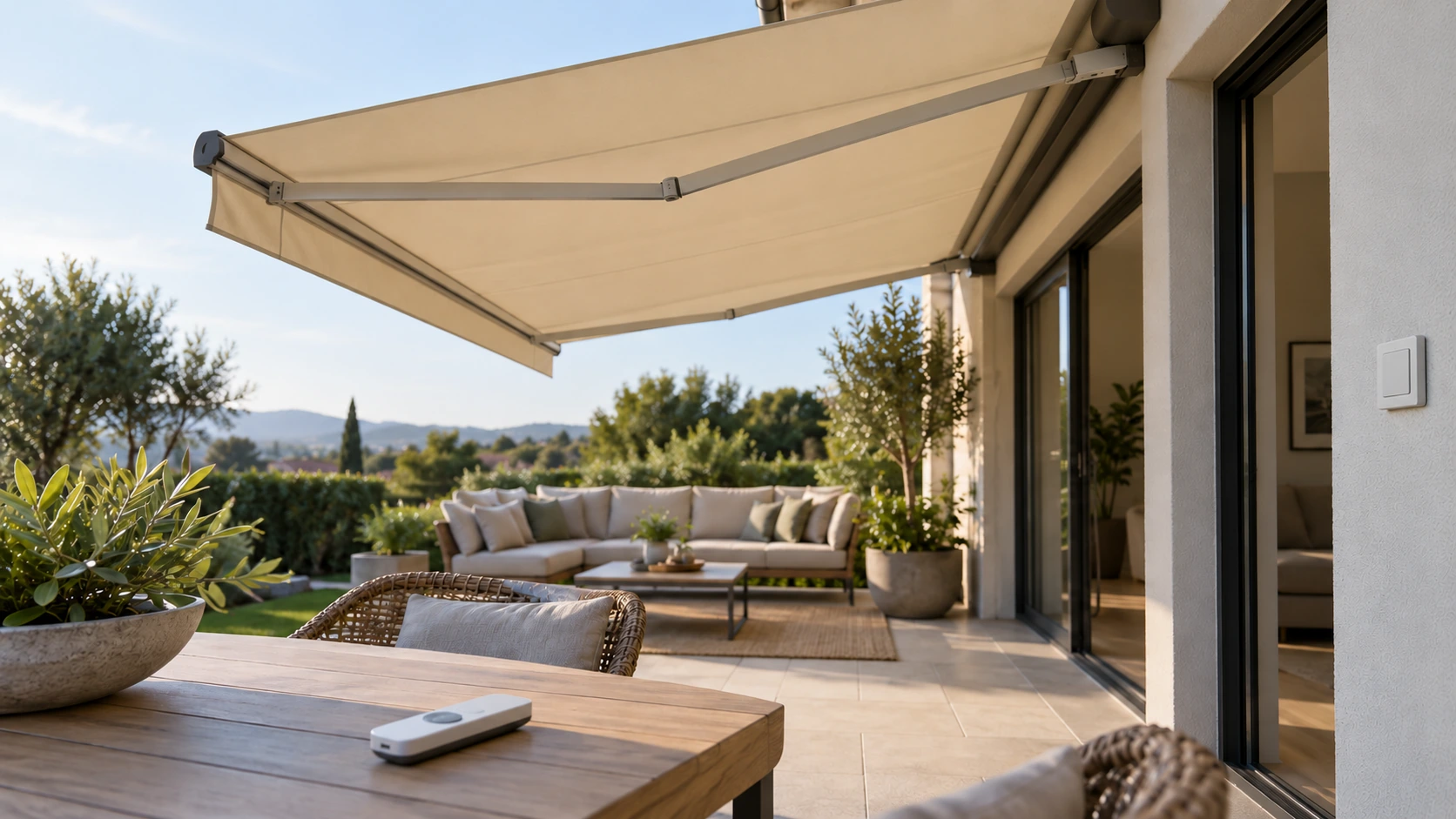
Record the complete stopping event
Record the starting state, stopping position, sounds, indicators and recent repeated operation. Owners can describe external behavior without diagnosing a motor, limit setting or another cause. Do not repeatedly command further movement or push the front bar to help. Working and waiting requirements vary, so consult the exact instructions and provider. Follow stop-use requirements when obstruction, damage or other abnormalities appear. A complete event record gives assessment a factual basis instead of allowing the first guess to determine which component everyone assumes needs replacement.
Observe site changes without interfering with the mechanism
From a safe position, look for newly placed objects, visible branches or contact in the movement area and note whether different controls show consistent behavior. Observe only accessible conditions; do not reach into moving parts, remove guards or adjust limits. Share dates and records of recent cleaning or recovering without declaring them the cause. Power or control checks should remain within explicitly permitted user steps. Distinguishing observed facts from matters needing professional assessment makes the support request more accurate and avoids unnecessary experiments that may change the original condition.
Use instructed waiting conditions rather than invented timing
A generic online suggestion that a motor needs rest should not replace the selected drive instructions. Give support the operation count and intervals so the relevant requirements can be assessed instead of attributing every stop to one protective behavior. If a documented retry is permitted under defined conditions, record the result. Persistent abnormality needs the instructed pause and further assessment. Repeated waiting and trying until one cycle succeeds does not establish resolution. That success is an observation, while the cause and conditions for continued use still need appropriate confirmation.
Make the service result clear about return to use
Provide identifiers, the event sequence, actions already taken and photographs, asking how the unit should remain and who performs the next step. After service, retain confirmed findings, changes and updated instructions, keeping unresolved issues visible. Support and attendance arrangements belong in procurement comparisons alongside button convenience. The aim is evidence-based handling without compounding an unknown problem. Movement resuming and an appropriate assessment being complete are distinct facts, and service records should explain both rather than using one successful cycle as the entire repair conclusion.
- Record position, preceding operation and indicators.
- Observe external changes without pushing or adjusting limits.
- Follow model-specific waiting or support instructions and retain findings.
Will pressing repeatedly solve an awning stopping halfway?
Do not use repeated commands as diagnosis. Record position, sounds, indicators and preceding operation and consult the actual instructions and provider. Perform only permitted checks without pushing, opening guards or altering limits. Occasional recovery after waiting does not establish the cause or the conditions for continued use.
More questions, practical answers →